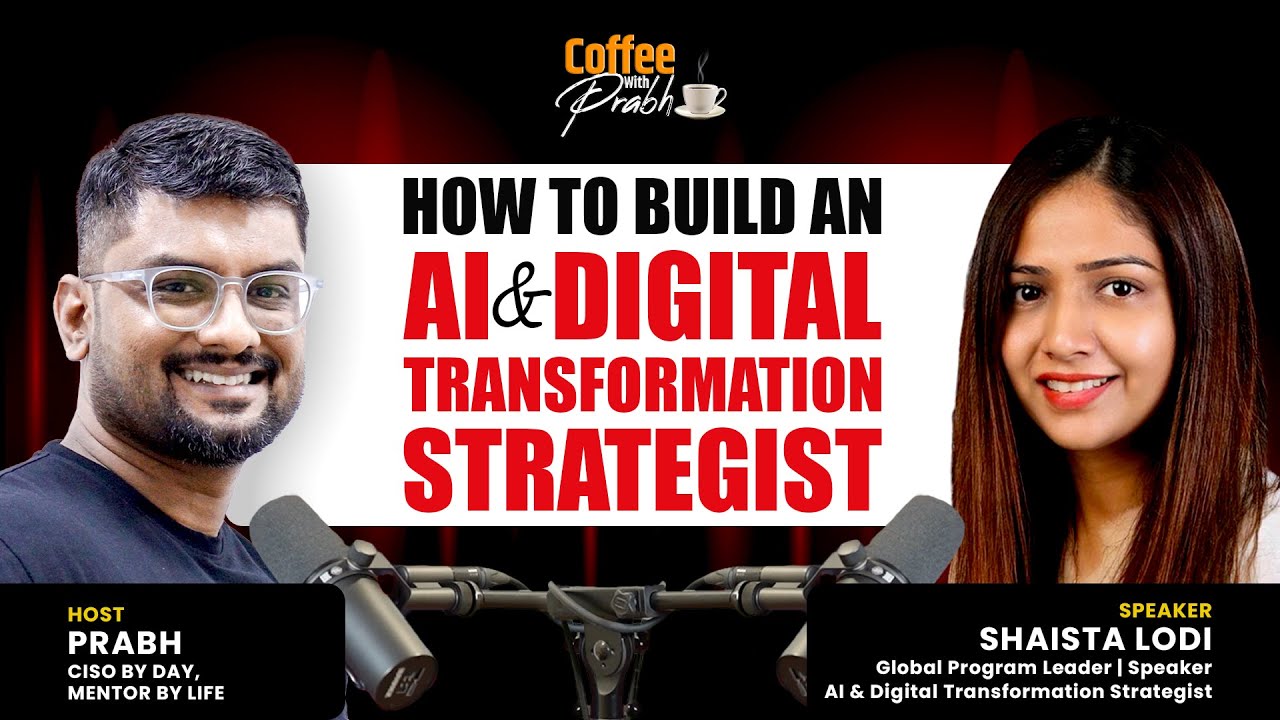
AI Strategy That Drive REAL Business Outcomes
Keywords
Summary
158 words
Critical Evaluation
Value of the Information & Strength of the Argument
The video provides valuable, actionable insights from a practitioner with extensive experience in AI-driven transformation, particularly in a regulated healthcare environment. The argumentation is coherent and grounded in real-world examples, such as reducing MRI downtime by 30% and achieving $20M in productivity. The speaker effectively argues that AI strategy must be tied to business outcomes and that human factors, such as organizational culture and decision-making, are often the biggest challenges. The step-by-step framework and the distinction between everyday and transformation AI offer practical guidance. However, the discussion is largely anecdotal and lacks empirical evidence or references to external research, which limits its scientific rigor.
Scientific Rigor, Source Quality, Title Accuracy
The video is an expert opinion piece, not a scientific study. The speaker’s credibility is established through her role at Philips and her track record, but no external sources are cited within the video. The description includes links to other videos and playlists on related topics, but these are not direct references to research. The title accurately reflects the content, which focuses on linking AI strategy to business outcomes. The content is well-structured and internally consistent, but the lack of verifiable sources reduces its scientific rigor. No comments were provided for analysis.
211 words
Title / Content Match
The title accurately reflects the content, which focuses on linking AI strategy to business outcomes.
Quality & Reliability
7/10
The video features an experienced global program leader at Philips sharing practical insights on AI strategy. The content is based on professional experience rather than peer-reviewed research, but it is coherent and actionable. No external sources are cited, limiting verifiability.
Chapters
- 03:40 - Introduction and Guest Credentials
- 11:00 - Shaista's Career Journey and the Shift to Strategy
- 18:00 - Defining and Structuring AI and Digital Transformation Strategy
- 29:40 - Step-by-Step Process for Creating an AI Strategy
- 36:59 - Top Challenges in Building an AI Strategy
- 42:58 - Ideal Content of an AI Strategy Document
- 49:25 - Opinion on build or buy or partner for AI solutions
- 55:17 - Business outcome to quality, latency, and cost, and who owns the weekly dashboards?
- 57:53 - Career accelerator to get someone board ready in six months
- 59:35 – End of the conversation by thanking Shaista Lodi and looking forward to doing more Podcast
- 01:02:23 - Key Takeaways and Advice
Cited Sources
- Gen AI Security — Related video on AI security mentioned in the description.
- AI Governance — Related video on AI governance mentioned in the description.
- CISO talks — Playlist of CISO talks mentioned in the description.
- NIST Series — NIST series video mentioned in the description.
- GRC Series — GRC series video mentioned in the description.
- ISO 27001 Video — ISO 27001 implementation video mentioned in the description.
- ISO 27001 Implementation Guide — ISO 27001 implementation guide video mentioned in the description.
- GRC Practical Series — GRC practical series playlist mentioned in the description.
- GRC Interview — GRC interview playlist mentioned in the description.
- Internal Audit — Internal audit playlist mentioned in the description.
- Study with Me Telegram Group — Telegram group for study resources mentioned in the description.
Concurring Sources
- AI Governance — Related video on AI governance that aligns with the discussion on governance and guardrails.
- NIST Series — NIST series video that may provide frameworks for AI readiness and governance.
Contribution & Novelties
The video offers a practical, experience-based framework for developing AI strategies that are directly tied to business outcomes. It distinguishes between ’everyday AI’ (quick wins) and ’transformation AI’ (step-change impacts), and emphasizes the importance of cross-functional teams, governance, and data readiness. The discussion on build vs buy vs partner and the role of an AI strategist as a translator between technology and business provides actionable insights for leaders.
Pour aller plus loin :
- AI governance framework — Overview of AI governance concepts.
- Digital transformation — Background on digital transformation.
- NIST AI Risk Management Framework — Relevant for governance and risk management.
101 words
Radar Profile
The radar profile shows high scores in information quantity and quality, reflecting the depth of practical insights. The technical level is moderate, suitable for a business audience. The reliability score is slightly lower due to the lack of external citations, but the expert's experience lends credibility.