Faculty Lecture Series: The Hidden Curriculum - Presented by Dr. Madalyn Caldwell & Dr. Luke Lee
Keywords
Summary
184 words
Critical Evaluation
Value of the Information & Strength of the Argument
The lecture provides valuable insights into the often-overlooked hidden curriculum and its effects on student mental health. The presenters effectively combine research statistics with personal anecdotes, making the argument relatable and compelling. They successfully argue that implicit expectations can disproportionately affect marginalized students, leading to stress and disengagement. The interactive scenario about office hours is a powerful illustration of how unspoken rules can create confusion and anxiety. The argumentation is solid, though it relies more on anecdotal evidence and general research rather than specific citations. The practical strategies offered are actionable and grounded in the presenters’ experience, adding value for educators seeking to improve their teaching practices.
Scientific Rigor, Source Quality, Title Accuracy
The lecture demonstrates a reasonable level of scientific rigor, referencing general research on student mental health and the hidden curriculum. However, it lacks specific citations or references to studies, which limits its scholarly depth. The presenters draw on their professional expertise and personal experiences, which adds authenticity but not empirical rigor. The title accurately reflects the content, focusing on the hidden curriculum and its impact on mental health. The lecture is well-structured and aligns with the stated objectives. While the sources are not explicitly cited, the information presented is consistent with existing literature on the topic. The adequacy between title and content is strong, with the lecture delivering on its promise to explore the hidden curriculum and its implications for student wellness.
244 words
Title / Content Match
The title accurately reflects the content, which focuses on the hidden curriculum and its impact on student mental health.
Quality & Reliability
7/10
The lecture is based on established research and personal experiences, but lacks explicit citations and rigorous scientific methodology. It is more of an expert opinion and practical guidance than a systematic review.
Key Moments
Markers derived by PSI from the transcript: the creator did not define chapters.
- Introduction by Dr. Jessardi, welcoming attendees and introducing the speakers.
- Dr. Caldwell and Dr. Lee introduce the topic of the hidden curriculum and its relevance to mental health.
- Discussion of statistics on student mental health, including prevalence of mental health issues and stress.
- Exploration of how hidden curriculum affects specific groups, such as first-generation and international students.
- Definition of hidden curriculum and contrast with explicit curriculum.
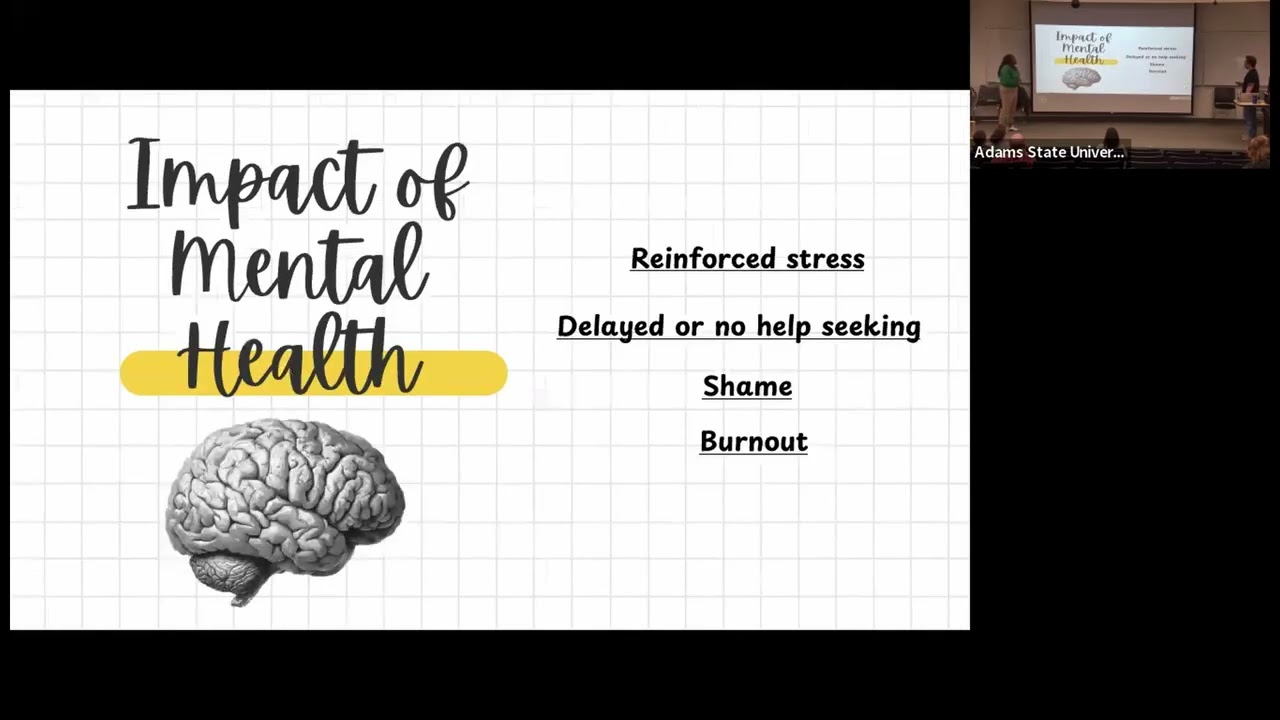
- Examples of implicit messages that reinforce stress and discourage help-seeking.
- Interactive scenario about office hours, with audience participation and discussion.
- Personal stories from presenters and audience members about navigating hidden curriculum.
- Discussion of power dynamics and the need for educators to make expectations explicit.
- Practical strategies for educators, including transparent course design and normalizing struggle.
Cited Sources
- No specific sources cited in the video — The presenters mention research on student mental health but do not provide specific citations.
Concurring Sources
- Hidden curriculum - Wikipedia — The lecture aligns with the general concept of hidden curriculum as described in this source.
- Impostor syndrome - Wikipedia — The lecture discusses impostor feelings among students, which is a well-documented phenomenon.
Contribution & Novelties
The lecture offers a practical perspective on the hidden curriculum, emphasizing its impact on mental health and providing actionable strategies for educators. It highlights the importance of making implicit expectations explicit and normalizing struggle, which is a valuable contribution to the discourse on student support.
Pour aller plus loin :
- Hidden curriculum - Wikipedia — Provides an overview of the concept and its origins.
- Impostor syndrome - Wikipedia — Related to the feelings of inadequacy discussed in the lecture.
- First-generation college students in the United States - Wikipedia — Discusses challenges faced by first-generation students, a key group mentioned.
99 words
Radar Profile
The radar profile shows moderate to high scores in information quantity and quality, with lower scores in technical level and reliability. This indicates a lecture that is informative and engaging but lacks deep technical depth and rigorous sourcing.