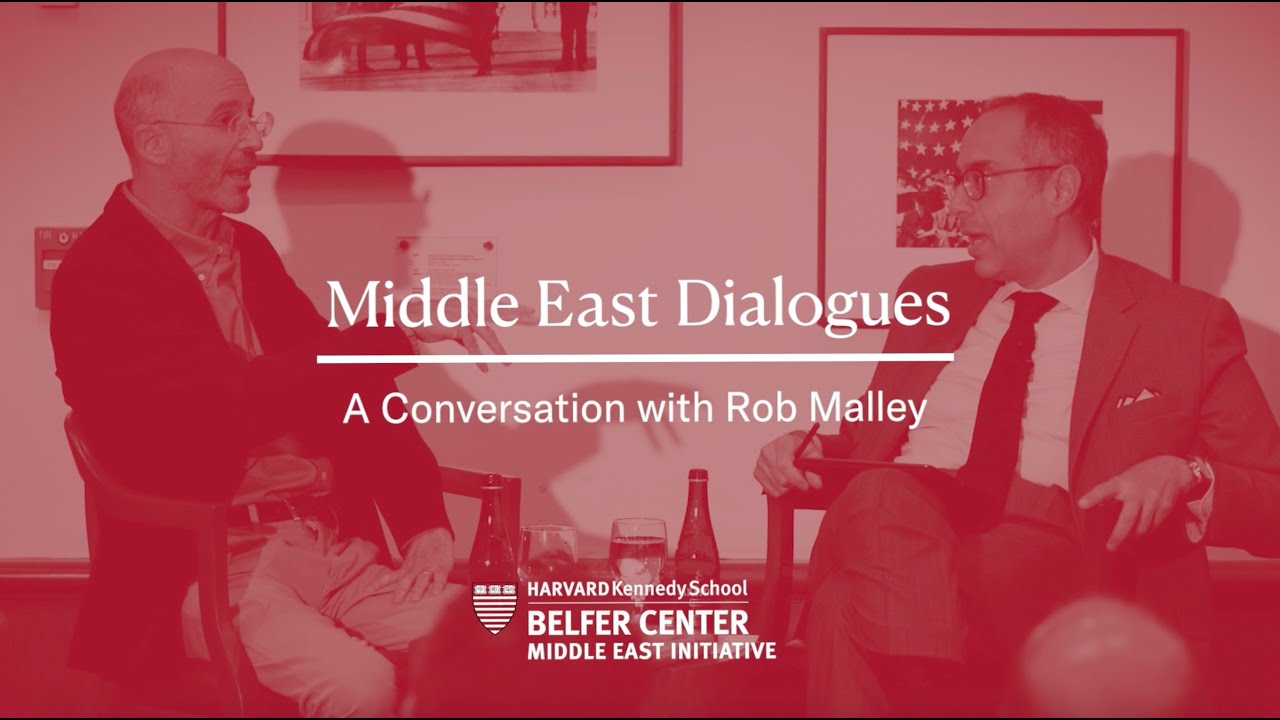
Middle East Dialogues: Tarek Masoud in Conversation with Robert Malley
Keywords
Summary
147 words
Critical Evaluation
Value of the Information & Strength of the Argument
The value of the information lies in its depth and nuance, offering insights from a seasoned diplomat and scholar. Malley’s argument that the conflict is rooted in historical narratives and emotions, rather than just territorial disputes, is compelling and well-articulated. He supports his points with references to specific events (e.g., Camp David, Taba) and personal experiences. The argumentation is solid, though it is a dialogue of opinions rather than a systematic analysis. Malley acknowledges the complexity and avoids simplistic solutions, which strengthens his credibility. However, some claims are contested by commenters, indicating that the argumentation, while persuasive, is not universally accepted.
Scientific Rigor, Source Quality, Title Accuracy
The discussion is rigorous in its use of historical and political context, drawing on Malley’s personal involvement in peace negotiations. The sources cited are primarily the speakers’ own expertise and the book ‘Tomorrow is Yesterday’. The title accurately reflects the content, as it is a dialogue between two experts. The video is produced by Harvard’s Middle East Initiative, adding institutional credibility. However, the lack of external citations and the reliance on personal interpretation limit the scientific rigor. The adequacy between title and content is high, as the video delivers exactly what the title promises.
210 words
Title / Content Match
The title accurately describes the content: a dialogue between Tarek Masoud and Robert Malley on Middle East issues, part of a series.
Quality & Reliability
8/10
The discussion features two recognized experts in Middle East politics, providing nuanced analysis grounded in historical and political context. The conversation is balanced, acknowledging multiple perspectives, and avoids sensationalism. However, it is a dialogue of opinions and interpretations rather than a peer-reviewed study, and some claims are contested by commenters.
Key Moments
Markers derived by PSI from the transcript: the creator did not define chapters.
- Introduction of Robert Malley and his background.
- Discussion on the meaning of the book title 'Tomorrow is Yesterday'.
- Exploration of Israeli and Palestinian aspirations and the two-state solution.
- Debate on the asymmetry of power and the role of the US.
- Analysis of the failure of past negotiations and the need for alternative frameworks.
- Discussion on the role of emotions and historical narratives in the conflict.
- Consideration of potential alternative solutions, such as confederation.
- Q&A session with the audience.
- Concluding remarks and reflections on the future.
Cited Sources
- Middle East Initiative - Programs — Referenced in the video description as the program hosting the event.
- Middle East Initiative - Mailing List Subscription — Referenced in the video description for staying updated on the initiative.
Concurring Sources
- Middle East Initiative - Programs — The program's official page supports the context of the discussion.
Dissenting Sources
- Commenter critique — Some commenters question Malley's framing and his record, suggesting a lack of neutrality and effectiveness.
Contribution & Novelties
The video provides a unique perspective by having a former U.S. official and a scholar discuss the conflict in depth, moving beyond typical media soundbites. Malley’s book ‘Tomorrow is Yesterday’ offers a framework for understanding the conflict as a continuation of historical dynamics. The discussion challenges conventional wisdom about the two-state solution and suggests that addressing emotional and historical narratives is crucial. It contributes to the ongoing debate by emphasizing the need for creative solutions that acknowledge both peoples’ aspirations.
Pour aller plus loin :
- Two-state solution — Provides background on the concept and its critiques.
- Oslo Accords — Essential to understanding the peace process discussed.
- Robert Malley’s book ‘Tomorrow is Yesterday’ — The book that forms the basis of the discussion.
122 words
Radar Profile
The radar profile shows high scores in information quantity and quality, reflecting the depth of the discussion. The technical level is moderate, as the content is accessible to a general audience but still intellectually rigorous. The overall reliability is high due to the speakers' expertise and institutional backing, though the subjective nature of the dialogue slightly lowers it.
💬 The comments are predominantly positive, with many viewers praising the depth and nuance of the discussion. Some critical comments question Malley's perspective and record, but the overall sentiment is appreciative of the thoughtful exchange.