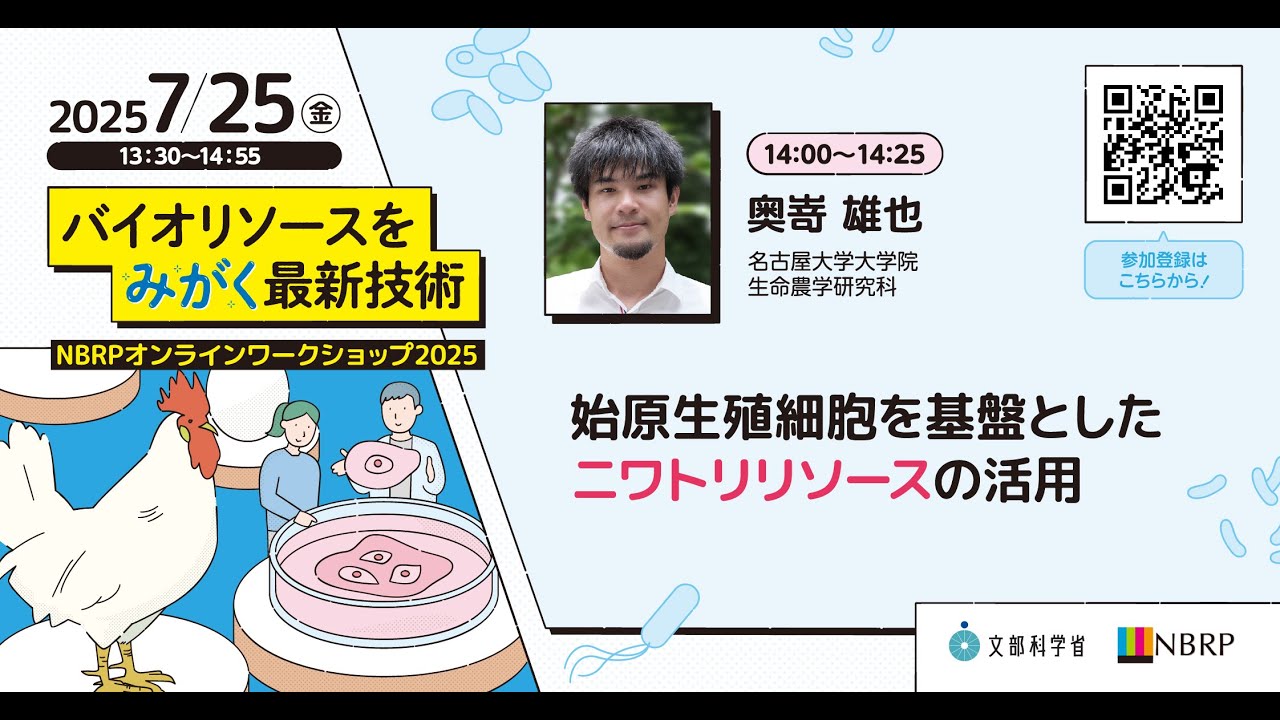
Utilization of Chicken Resources Based on Primordial Germ Cells
Keywords
Summary
187 words
Critical Evaluation
Value of the Information & Strength of the Argument
The talk provides valuable practical information on chicken PGC culture and genetic modification techniques, including specific protocols and troubleshooting tips. The argumentation is solid, based on the speaker’s experience and references to a key publication. The presentation of new transgenic lines demonstrates the application of the methods. However, some claims, such as the efficiency rates, are presented without detailed statistical backing, and the talk is more of a technical overview than a critical evaluation of the methods.
Scientific Rigor, Source Quality, Title Accuracy
The scientific rigor is high, with the speaker referencing a seminal 2015 paper and providing detailed technical descriptions. The sources are not explicitly cited in the video, but the description includes a link to the NBRP workshop page. The title accurately reflects the content. No comments were provided for analysis.
142 words
Title / Content Match
The title accurately reflects the content, which focuses on the use of primordial germ cells for chicken resource preservation and genetic modification.
Quality & Reliability
8/10
The speaker is a researcher at Nagoya University, presenting established methods and their own results. The talk is technical and specific, with references to a key publication (2015 Edinburgh group) and practical demonstrations. However, it is a seminar presentation without peer-reviewed publication of the specific data shown, and some claims (e.g., efficiency rates) are anecdotal.
Key Moments
Markers derived by PSI from the transcript: the creator did not define chapters.
- Introduction to the seminar and the importance of PGCs for chicken genetic modification and preservation.
- Explanation of why PGCs are used: difficulties with fertilized eggs and the unique properties of chicken PGCs.
- Description of the 2015 breakthrough in in vitro culture of chicken PGCs.
- Details of the culture medium and conditions for PGC proliferation.
- Cryopreservation of PGCs from various chicken strains and challenges with certain strains.
- Demonstration of the injection technique for transplanting PGCs into recipient embryos.
- Efficiency of producing transgenic chickens and factors affecting success.
- Introduction of new transgenic lines: Cas9-expressing and GCaMP6s-expressing chickens.
Cited Sources
- NBRP Workshop 2025 — The video is part of this workshop, and the link is provided in the description.
Concurring Sources
- NBRP Workshop 2025 — The video is part of this workshop, and the link is provided in the description.
Contribution & Novelties
The talk provides a practical overview of chicken PGC culture and genetic modification, highlighting recent advances and new transgenic resources. It emphasizes the importance of PGC cryopreservation for preserving genetic diversity and responding to disease outbreaks. The presentation of Cas9-expressing and GCaMP6s-expressing chickens offers new tools for the research community.
Pour aller plus loin :
- Primordial germ cell — Background on PGCs and their role in development.
- CRISPR gene editing — The technology used for genome editing in the presented lines.
- GCaMP — The calcium indicator used in the transgenic chicken line.
92 words
Radar Profile
The radar profile shows high scores in quantity and quality of information, and technical level, but slightly lower in global reliability due to the anecdotal nature of some claims. This indicates a technically rich but not fully peer-reviewed presentation.