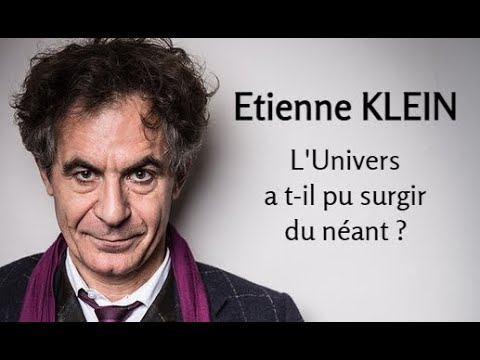
2020 - Etienne Klein - 2. L'Univers a-t-il pu surgir du néant ? (conférence)
Keywords
Summary
166 words
Critical Evaluation
Etienne Klein delivers a thought-provoking and philosophically rich lecture on the origin of the universe. As a physicist and philosopher, he brings a unique interdisciplinary perspective, seamlessly blending cosmology with metaphysics. The talk is well-structured, progressing from the paradox of creation ex nihilo to a discussion of historical philosophical positions, including those of Parmenides, Leibniz, and Heidegger. Klein’s argumentation is rigorous, and he carefully distinguishes between scientific descriptions of the early universe and the deeper question of why there is something rather than nothing. He rightly points out that science, while successful in tracing the universe’s history, does not provide a complete explanation for its ultimate origin. The lecture is accessible yet intellectually stimulating, avoiding oversimplification. However, some may find the lack of a definitive answer unsatisfying, but Klein is transparent about this from the start. The sources cited are primarily philosophical and historical, with no direct references to specific scientific papers, which is appropriate for the topic. The title accurately reflects the content, and the talk maintains a high level of intellectual integrity. Overall, this is an excellent contribution to the popular understanding of a profound question.
188 words
Title / Content Match
The title accurately reflects the content, which directly addresses the question of the universe's origin from nothing.
Quality & Reliability
8/10
The speaker is a physicist and philosopher of science, and the content is rigorous, referencing historical and philosophical sources, but it is a conference talk without peer review.
Key Moments
Markers derived by PSI from the transcript: the creator did not define chapters.
- Introduction: the question of the universe's origin from nothing.
- Discussion of the paradox of a pure beginning.
- Exploration of creation ex nihilo and its philosophical implications.
- Leibniz's question: why is there something rather than nothing?
- Review of historical cosmogonies and their avoidance of ex nihilo.
- Science's limitations in explaining ultimate origins.
- Conclusion: the mystery remains unresolved.
Cited Sources
- Ce qui est sans être tout à fait — Book by Etienne Klein on the void, mentioned as source of some ideas.
- Martin Heidegger — Philosopher quoted on the essence of being containing nothingness.
- Gottfried Wilhelm Leibniz — Philosopher who posed the question 'Why is there something rather than nothing?'
Concurring Sources
- Stephen Hawking — Physicist who discussed the universe's origin from nothing in his works.
- Lawrence Krauss — Physicist who wrote 'A Universe from Nothing'.
Dissenting Sources
- Creationist views — Some religious perspectives assert a divine creation ex nihilo, which contrasts with the philosophical difficulties raised.
Contribution & Novelties
The lecture provides a clear and accessible synthesis of philosophical and scientific perspectives on the origin of the universe, emphasizing the conceptual difficulties of ’nothingness’. It offers a valuable framework for understanding why this question remains open.
Pour aller plus loin :
- Ex nihilo — Wikipedia article on creation from nothing.
- Leibniz’s question — Wikipedia article on the question.
- Big Bang — Wikipedia article on the scientific theory of the universe’s origin.
72 words
Radar Profile
The radar profile shows high scores in information quality and reliability, with moderate scores in quantity and technical level, indicating a well-balanced and credible presentation.