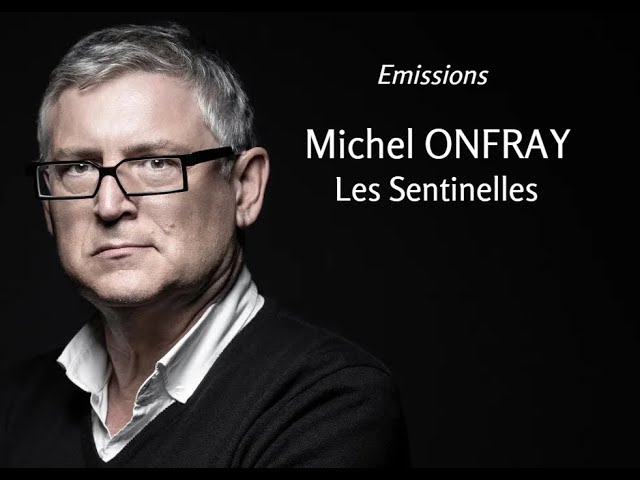
2019 - Michel Onfray - Les Sentinelles (émission)
Keywords
Summary
184 words
Critical Evaluation
The interview provides a valuable insight into Michel Onfray’s philosophical stance and his public persona. Onfray articulates his hedonism as a philosophy of conscious enjoyment, distinguishing it from mere sensual indulgence. He argues that true hedonism is about savoring one’s presence in the world, a theme that resonates with Epicurean and Cyrenaic traditions. His emphasis on the importance of philosophy for all, not just academics, is commendable and aligns with his mission to democratize philosophical thought. However, the interview is largely opinion-based, and Onfray’s arguments, while coherent, are not systematically supported by empirical evidence. He makes several controversial claims, such as his criticism of anti-vaccine movements, which he frames as anti-Enlightenment, but these are presented as personal convictions rather than well-reasoned positions. The discussion of his web TV and his choice of topics reveals a deliberate strategy to engage with popular culture and current events, which can be seen as both a strength and a weakness. On the one hand, it makes philosophy accessible; on the other, it risks trivializing complex issues. The interview also touches on his personal evolution, noting that his hedonism has become more ascetic with age, which adds a layer of authenticity. The title accurately reflects the content, and the interview is well-structured, though it lacks depth in some areas, such as the philosophical foundations of his hedonism. Overall, the content is thought-provoking but not rigorously scientific, making it a moderate-quality source for those interested in contemporary philosophy.
242 words
Title / Content Match
The title accurately reflects the content: a 2019 interview with Michel Onfray on the show 'Les Sentinelles'.
Quality & Reliability
6/10
The video is an interview with philosopher Michel Onfray discussing his hedonistic philosophy, his approach to philosophy for the general public, and his controversial public interventions. The content is primarily opinion and philosophical reflection, with some references to his own works and historical philosophers. The reliability is moderate as it is subjective and not based on empirical evidence, but it is coherent and well-argued.
Key Moments
Markers derived by PSI from the transcript: the creator did not define chapters.
- Introduction of Michel Onfray and the show's theme.
- Discussion of Onfray's controversial public statements and his web TV.
- Onfray explains his choice of topics and his approach to philosophy.
- Onfray clarifies his hedonism, distinguishing it from vulgar pleasure.
- Discussion of the evolution of his hedonism with age.
- Onfray talks about the role of the philosopher in society.
Cited Sources
- L'odyssée d'une conscience — Book by Michel Onfray mentioned in the description, related to the theme of the show.
Concurring Sources
- Hedonism — General concept of hedonism, which Onfray discusses and redefines.
Dissenting Sources
- Critique of Onfray's hedonism — Some critics argue that Onfray's hedonism is superficial and inconsistent with his later ascetic turn.
Contribution & Novelties
The interview offers a personal and contemporary perspective on hedonism, emphasizing the importance of conscious enjoyment and the evolution of philosophical practice. Onfray’s approach to bringing philosophy to the public via web TV is innovative, though not entirely new. The discussion of his controversial statements provides insight into the intersection of philosophy and media.
Pour aller plus loin :
- Hedonism — Overview of hedonism as a philosophical doctrine.
- Epicureanism — Ancient Greek philosophy that emphasizes pleasure and the avoidance of pain.
- Cyrenaics — Ancient school of philosophy that advocated the pursuit of immediate pleasure.
- Michel Onfray — Biography and overview of Onfray’s philosophical works.
104 words
Radar Profile
The radar profile shows a moderate balance across all dimensions, with slightly higher scores in quantity and quality of information, but lower in technical level and reliability, reflecting the opinion-based nature of the content.