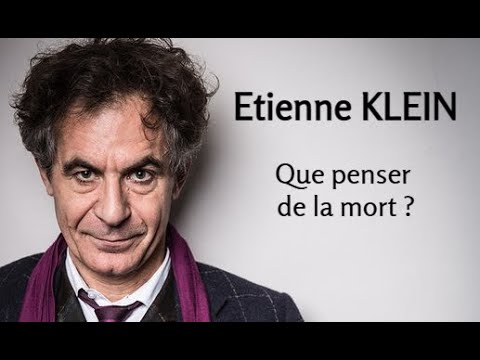
2017 - Etienne Klein - 2. Que penser de la mort ? (conférence)
Keywords
Summary
176 words
Critical Evaluation
Etienne Klein’s conference is a masterful blend of philosophy, physics, and biology, offering a nuanced perspective on death. The strength of the talk lies in its interdisciplinary approach: Klein seamlessly moves from ancient Greek atomism to modern cellular biology and nuclear physics, using each to illuminate different facets of mortality. His discussion of the transhumanist dream of immortality is particularly insightful, as he highlights the logical and existential problems with such a pursuit. The phenomenological description of death as an unlivable event is poignant and philosophically grounded. Klein’s use of the Ship of Theseus analogy to discuss cellular renewal is effective, and his explanation of apoptosis as a form of ‘constant brink of suicide’ is scientifically accurate and metaphorically powerful. The physics analogy of neutrons being ‘immortal part-time’ is a clever way to illustrate how stability can arise from instability, though it may be somewhat abstract for a general audience. The talk is well-structured, with a clear progression from the transhumanist promise to the scientific and philosophical underpinnings of death. However, it is more of an opinion piece than a systematic review, and Klein does not engage deeply with counterarguments or alternative perspectives. The sources cited are not explicitly mentioned, and the talk relies on Klein’s authority as a philosopher of science. Overall, the conference is intellectually stimulating and provides a unique perspective on death, but it could benefit from more explicit references and a more critical examination of the concepts presented. The title accurately reflects the content, and the talk is accessible to a general audience while still offering depth for those familiar with the topics.
267 words
Title / Content Match
The title accurately reflects the content: a philosophical and scientific exploration of death.
Quality & Reliability
8/10
Etienne Klein, philosopher of science and physicist, provides a thoughtful interdisciplinary reflection on death, drawing on physics, biology, and philosophy. The content is well-structured and intellectually rigorous, though it remains an opinion-based lecture rather than a systematic review.
Key Moments
Markers derived by PSI from the transcript: the creator did not define chapters.
- Introduction by the moderator, presenting Etienne Klein and the theme of death.
- Klein begins by discussing the transhumanist promise of immortality and its philosophical implications.
- Phenomenological description of death as an unlivable event and the mystery of the moment of death.
- Discussion of ancient atomism and the idea that atoms are eternal, making death a mere dissolution.
- Analogy of the Ship of Theseus applied to the constant renewal of cells in the body.
- Explanation of apoptosis and how cancer arises from cells that fail to die.
- Physics analogy: neutrons in atomic nuclei are 'immortal part-time' due to constant transformation.
- Conclusion: death as a phenomenon that reveals the interplay between stability and instability.
Cited Sources
- L'odyssée d'une conscience — Book mentioned in the description, related to the theme of reconstruction.
- Page Facebook de la communauté — Community page for the channel.
Concurring Sources
- Ship of Theseus — Philosophical paradox used by Klein to discuss identity and cellular renewal.
- Apoptosis — Programmed cell death, a key concept in the talk.
Dissenting Sources
- Transhumanism — Klein critiques the transhumanist promise of immortality, which some proponents might argue is oversimplified.
Contribution & Novelties
The talk offers a unique interdisciplinary perspective on death, connecting ancient atomism, modern biology, and physics. It challenges the transhumanist promise of immortality by highlighting logical and existential issues. The analogy of neutrons being ‘immortal part-time’ is a novel way to illustrate how stability can emerge from instability.
Pour aller plus loin :
- Ship of Theseus — Relevant to the discussion of identity and renewal.
- Apoptosis — Key biological concept discussed in the talk.
- Transhumanism — Central to the critique of immortality promises.
83 words
Radar Profile
The radar profile shows high scores in quality of information and reliability, reflecting Klein's expertise and the depth of the content. The quantity of information is moderate, and the technical level is balanced, making it accessible yet substantive.