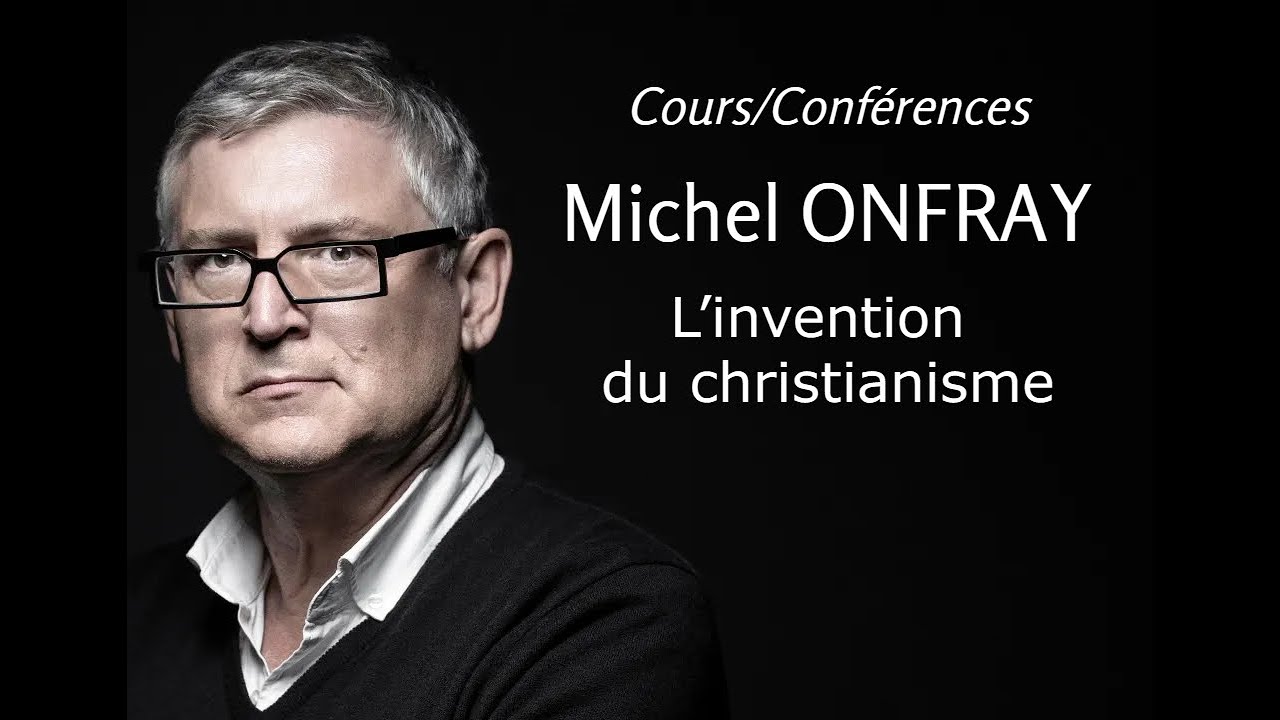
L’invention du christianisme
Keywords
Summary
108 words
Critical Evaluation
Michel Onfray’s lecture is a provocative and engaging piece of intellectual history, but it is far from a rigorous scholarly analysis. Onfray’s approach is heavily influenced by Nietzsche and Freud, and he applies psychoanalytic theories to historical figures without sufficient evidence. His diagnosis of Paul’s hysteria and sexual impotence is speculative and based on selective readings of biblical texts. While he acknowledges the lack of direct evidence, he proceeds to build an entire argument on this shaky foundation. The lecture also simplifies complex historical processes, such as Constantine’s conversion, reducing them to political expediency. Onfray’s rhetorical style is persuasive but often relies on caricature and anecdote rather than systematic historical analysis. The sources he cites are not explicitly referenced in the lecture, and he does not engage with alternative scholarly interpretations. Despite these weaknesses, the lecture offers a thought-provoking perspective that challenges traditional narratives and encourages critical thinking about the origins of Christianity. However, for a viewer seeking a balanced and well-documented account, this lecture falls short.
167 words
Title / Content Match
The title accurately reflects the content, as the lecture focuses on the construction of Christianity by Paul and Constantine.
Quality & Reliability
6/10
The lecture presents a highly subjective and speculative interpretation of Paul and Constantine, lacking rigorous historical evidence and relying on psychoanalytic theories. While intellectually stimulating, it is not a balanced scholarly analysis.
Key Moments
Markers derived by PSI from the transcript: the creator did not define chapters.
- Introduction: Onfray sets the stage, referencing the previous lecture on Jesus as a conceptual figure.
- Onfray begins his analysis of Paul's body, describing him as a small, bald, and hysterical figure.
- Discussion of Paul's conversion on the road to Damascus, interpreted as an hysterical episode.
- Onfray lists various medical diagnoses for Paul's 'thorn in the flesh', suggesting sexual impotence.
- Explanation of the 'fox and grapes' complex and its application to Paul's anti-hedonism.
- Onfray transitions to Constantine, discussing his political motives for adopting Christianity.
Cited Sources
- Michel Onfray official website — Official website of Michel Onfray, providing information about his works and lectures.
Concurring Sources
- Nietzsche's The Antichrist — Nietzsche's critique of Christianity aligns with Onfray's negative view of Paul.
- Freud's Moses and Monotheism — Freud's psychoanalytic approach to religion parallels Onfray's method.
Dissenting Sources
- The Acts of the Apostles — The biblical account of Paul's conversion and life, which Onfray interprets selectively.
- Scholarly works on Constantine — Academic histories of Constantine often present a more nuanced view of his conversion.
Contribution & Novelties
Onfray’s lecture offers a unique and provocative interpretation of early Christianity, combining psychoanalysis and philosophy to argue that Paul’s personal issues shaped Christian doctrine. This perspective is original but controversial.
Pour aller plus loin :
- Nietzsche’s The Antichrist — Nietzsche’s critique of Christianity, which heavily influences Onfray’s approach.
- Freud’s Moses and Monotheism — Freud’s psychoanalytic interpretation of religious origins, similar to Onfray’s method.
- The Historical Jesus — Scholarly research on the historical Jesus, providing context for Onfray’s claims.
78 words
Radar Profile
The radar profile shows moderate scores across all dimensions, with a slight peak in quantity of information and a dip in reliability. This reflects a lecture that is rich in ideas but lacks solid sourcing and balanced argumentation.
💬 The comments are predominantly positive, with many viewers expressing appreciation for Onfray's intellectual style and the lecture's content. Some critical voices question the lack of sources and the speculative nature of his claims.