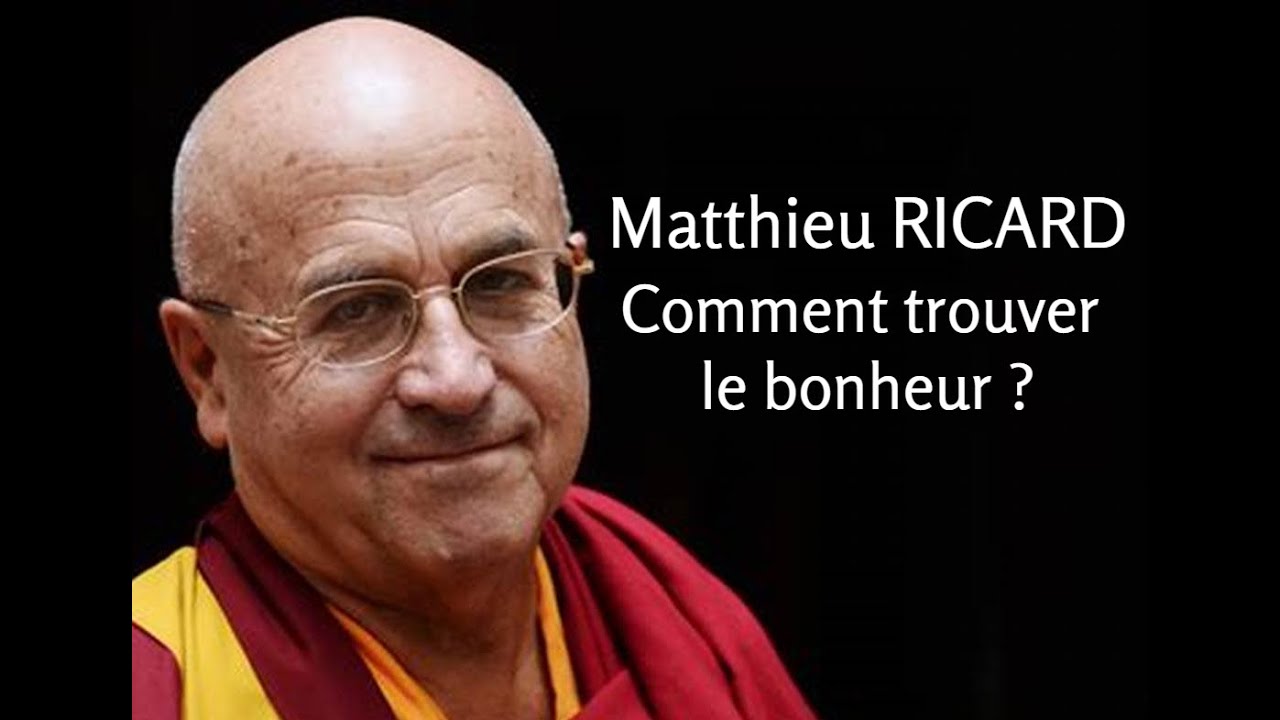
2008 - Matthieu Ricard - Comment trouver le bonheur ?
Keywords
Summary
161 words
Critical Evaluation
The video presents a clear and articulate exposition of Buddhist views on happiness, delivered by Matthieu Ricard, who is both a former scientist and a respected Buddhist monk. The content is philosophically rich and internally consistent, drawing on traditional Buddhist concepts such as mental toxins, renunciation, and the distinction between pleasure and happiness. Ricard’s argumentation is logical and well-structured, using metaphors like the moon in water to illustrate the stability of genuine happiness. However, from a scientific perspective, the claims are not supported by empirical evidence or references to psychological or neuroscientific research. While Ricard’s background in biology adds some credibility, the discourse remains within the realm of personal experience and religious philosophy. The video does not engage with contemporary scientific studies on happiness, such as those in positive psychology or contemplative neuroscience, which could have strengthened the argument. The production quality is typical of a documentary, with scenic shots and a calm narrative. The title accurately reflects the content, and the video serves as an accessible introduction to Buddhist thought on happiness. Overall, it is a valuable resource for understanding a philosophical perspective, but it should not be mistaken for a scientific review.
194 words
Title / Content Match
The title accurately reflects the content: Matthieu Ricard explains how to find happiness from a Buddhist perspective.
Quality & Reliability
8/10
Matthieu Ricard, a former molecular biologist and a renowned Buddhist monk, presents a coherent and well-structured exposition of Buddhist philosophy on happiness. His scientific background and long-term practice lend credibility. The content is based on traditional Buddhist teachings and his personal experience, but lacks empirical evidence or citations to scientific studies. The video is a documentary excerpt, and the information is presented as expert opinion rather than peer-reviewed research.
Key Moments
Markers derived by PSI from the transcript: the creator did not define chapters.
- Introduction to the documentary, showing Matthieu Ricard in Dordogne, France, and introducing the theme of happiness.
- Ricard defines happiness as a state of being, not just pleasure, and discusses its characteristics.
- Explanation of the main obstacles to happiness: mental toxins (ignorance, desire, hatred).
- Discussion on the relationship between happiness and enlightenment, and the concept of Buddha as the ultimate state.
- Clarification of renunciation: not giving up what is good, but abandoning the causes of suffering.
- Distinction between pleasure and genuine well-being, with examples of how pleasure fades and can even lead to aversion.
- Ricard emphasizes that genuine happiness is reinforced by experience and radiates to others.
Cited Sources
- Bouddhisme et bonheur (DVD) — The video is an excerpt from this DVD, which is available for purchase.
Concurring Sources
- The Art of Happiness — A book by the Dalai Lama and Howard Cutler that discusses similar themes of happiness and compassion.
Dissenting Sources
Contribution & Novelties
This video offers a clear and accessible explanation of Buddhist concepts related to happiness, presented by a recognized authority. It contributes to the popularization of Buddhist philosophy in the West, bridging Eastern and Western thought. The discussion on the distinction between pleasure and happiness is particularly insightful.
Pour aller plus loin :
- Positive psychology — A scientific field that studies well-being and happiness, complementing the philosophical perspective.
- Mindfulness-based stress reduction — A clinical program that incorporates meditation, relevant to the practical applications of Buddhist practices.
- Altruism — A key concept in Ricard’s discourse, with scientific studies on its effects on well-being.
101 words
Radar Profile
The radar profile shows high scores in quality of information and reliability, reflecting Ricard's expertise and coherent presentation. The quantity of information is moderate, and the technical level is low, making it accessible to a general audience. The overall reliability is high for a philosophical discourse, but not for empirical science.
💬 No comments were provided for analysis.