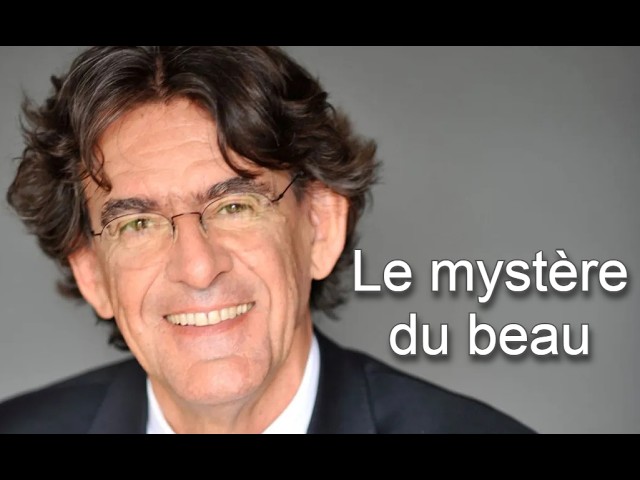
Luc Ferry - Le mystère du beau (conférence)
Keywords
Summary
187 words
Critical Evaluation
The lecture provides a compelling and accessible overview of the philosophical origins of aesthetics. Ferry demonstrates deep knowledge of the history of philosophy, particularly the contributions of Baumgarten, Kant, and Hegel. His argument that aesthetics represents a revolution in thinking about beauty is well-supported by historical evidence. The distinction between the traditional definition of art as incarnation and the modern focus on subjective sensibility is clearly articulated. However, the lecture is primarily an expert opinion rather than a rigorous academic analysis. Ferry does not provide citations or references to specific texts, and his interpretations are presented without critical engagement with alternative viewpoints. The discussion of the three responses to the criteria of beauty is somewhat brief and could benefit from more detailed examples. Additionally, the lecture focuses heavily on Western philosophy, neglecting non-Western perspectives on beauty. Despite these limitations, the content is intellectually stimulating and offers valuable insights into the philosophical questions surrounding art and beauty. The adequacy between title and content is strong, as the lecture directly addresses the mystery of beauty through the lens of aesthetics. Overall, the lecture is a valuable resource for those interested in philosophy, but it should be complemented with primary sources for a more rigorous understanding.
203 words
Title / Content Match
The title accurately reflects the content, which explores the philosophical mystery of beauty through the birth of aesthetics.
Quality & Reliability
8/10
The speaker is a well-known philosopher with academic credentials. The content is historically grounded, referencing key figures like Baumgarten, Kant, and Hegel. However, it is an opinion-based lecture without formal citations or peer-reviewed sources.
Key Moments
Markers derived by PSI from the transcript: the creator did not define chapters.
- Introduction to the topic: the birth of aesthetics and the criteria of beauty.
- Discussion of the historical context: reflections on beauty since antiquity.
- Introduction of Baumgarten's 'Aesthetica' (1750) as the first book on aesthetics.
- Explanation of the term 'aesthetics' and its connection to sensibility.
- The problem of consensus in taste and the emergence of the concept of 'sensus communis'.
- Introduction of the three major responses to the criteria of beauty.
- Traditional definition of art as incarnation of ideas in sensible matter.
- The double revolution: spectator as man of taste, artist as genius.
- Comparison of art with philosophy and science in terms of accessibility.
- Conclusion: the enduring mystery of beauty and the consensus around great works.
Cited Sources
- Aesthetica — Mentioned as the first book titled 'Aesthetica' by Alexander Gottlieb Baumgarten, published in 1750.
- Lectures on Aesthetics — Referenced as Hegel's lectures on aesthetics, which discuss the definition of art.
Concurring Sources
- Stanford Encyclopedia of Philosophy: Aesthetics — Provides an academic overview of the field of aesthetics, supporting the historical narrative presented.
- Internet Encyclopedia of Philosophy: Aesthetics — Offers a detailed account of the history of aesthetics, aligning with the lecture's claims.
Dissenting Sources
- The Abuse of Beauty: Aesthetics and the Concept of Art — Some contemporary philosophers argue that the focus on beauty is limiting and that aesthetics should encompass broader concepts, which contrasts with the lecture's emphasis on beauty.
Contribution & Novelties
The lecture offers a clear and engaging synthesis of the historical development of aesthetics, emphasizing the shift from objective to subjective criteria of beauty. It highlights the interconnected concepts of aesthetics, taste, and genius, providing a framework for understanding modern debates on art.
Pour aller plus loin :
- Alexander Gottlieb Baumgarten — Overview of the philosopher who coined ‘aesthetics’.
- Immanuel Kant’s Critique of Judgment — Kant’s major work on aesthetics and teleology.
- Georg Wilhelm Friedrich Hegel’s Lectures on Aesthetics — Hegel’s comprehensive lectures on the philosophy of art.
88 words
Radar Profile
The radar profile shows high scores in information quantity and quality, reflecting the lecture's rich historical content. The technical level is moderate, indicating accessibility to a general audience. Overall, the lecture is reliable and informative, with a strong philosophical foundation.