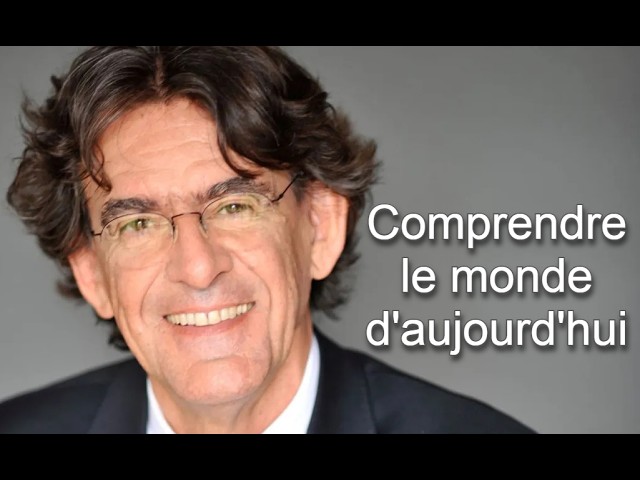
2026 - Luc Ferry - Comprendre le monde d'aujourd'hui (conférence)
Keywords
Summary
189 words
Critical Evaluation
The conference presents a compelling and eloquent defense of the idea of progress, but it is more a personal and philosophical essay than a rigorous scientific analysis. Ferry’s argumentation is persuasive in its rhetorical style, but it relies heavily on selective data and anecdotal evidence. For instance, he cites statistics on life expectancy and standard of living to demonstrate progress, but he does not address counterarguments such as inequality, environmental degradation, or the psychological costs of modernity. His claim that ‘we have conquered Hitler and Stalin’ and will similarly overcome terrorism is a rhetorical simplification that overlooks the complexity of contemporary threats. The discussion of the third industrial revolution is informative but remains at a high level, lacking technical depth. Ferry mentions AI, biotech, and big data but does not delve into the mechanisms or potential risks. The philosophical reflection on the paradox of Nazism and the relationship between culture and barbarism is thought-provoking, but it is not developed systematically. The talk is also highly personal, with Ferry sharing anecdotes from his own life, which adds charm but also biases the analysis. The sources cited are few and not always verifiable; he references books and authors but does not provide specific citations. The title ‘Comprendre le monde d’aujourd’hui’ is somewhat broad, and the talk does not cover all aspects of the contemporary world, focusing instead on progress and technology. Overall, the conference is intellectually stimulating and offers a valuable perspective, but it should be viewed as an opinion piece rather than a balanced scientific analysis. The public comments reflect a generally positive reception, with some critical notes on factual accuracy and ideological bias.
273 words
Title / Content Match
The title suggests a broad analysis of the contemporary world, which the talk delivers, though it focuses more on philosophical and technological progress.
Quality & Reliability
6/10
The speaker is a well-known philosopher and former minister, but the talk is largely opinion-based with some factual claims and personal anecdotes. Sources are mentioned but not systematically cited. Some historical claims are debatable, and the tone is polemical.
Key Moments
Markers derived by PSI from the transcript: the creator did not define chapters.
- Introduction: two revolutions that will change our lives - the revolution of love and the third industrial revolution.
- Definition of nostalgia and its historical origins.
- Critique of French pessimism and comparison with other countries.
- Statistical evidence of progress: life expectancy, standard of living, women's rights.
- The paradox of Nazism: culture does not prevent barbarism.
- The crisis of the idea of progress due to globalization and loss of national leverage.
- Introduction to the third industrial revolution: biotech, AI, IoT, big data.
- The power of GAFA and the collaborative economy.
- The revolution of love and the modern family.
- Conclusion: embracing change and the future.
Cited Sources
- L'odyssée d'une conscience: thérapeutique de l'adversité — Mentioned in the video description as a related book by the speaker.
Concurring Sources
- The Prosperity of Vice — Ferry cites Daniel Cohen's work on economic growth.
Dissenting Sources
- Comment on the claim about Stalin's death — A commenter points out that Stalin died in his bed, contradicting Ferry's implication that he was 'conquered'.
Contribution & Novelties
The talk offers a philosophical defense of progress against contemporary pessimism, integrating personal reflections with historical and technological observations. It highlights the third industrial revolution as a transformative force and discusses the paradox of culture and barbarism.
Pour aller plus loin :
- The Idea of Progress — A historical overview of the concept.
- Third Industrial Revolution — Context on the technological shifts discussed.
- Artificial Intelligence — Key technology mentioned in the talk.
72 words
Radar Profile
The radar profile shows moderate scores across all dimensions, with a slightly higher score in quantity of information and lower in technical level, reflecting the talk's broad but non-specialized nature.
💬 Positive: The majority of the 30 comments express appreciation for the conference, praising its interest and the speaker's eloquence, though a few raise factual objections or ideological critiques.