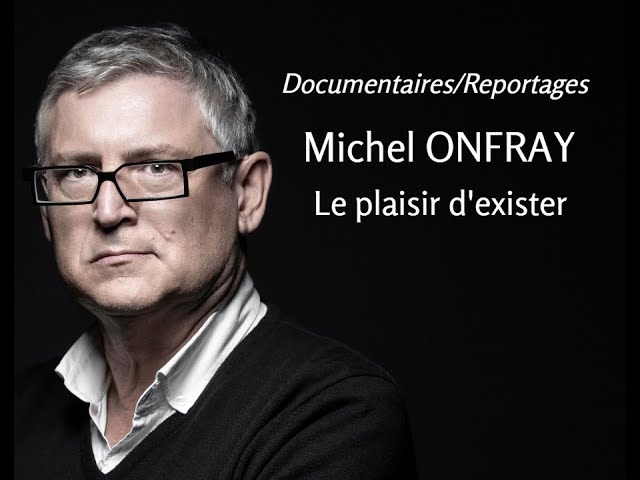
2006 - Michel Onfray - Le plaisir d'exister (documentaire)
Keywords
Summary
193 words
Critical Evaluation
The documentary offers a valuable insight into Michel Onfray’s pedagogical project and his philosophical approach. It is well-produced, with a clear narrative that combines interviews, lecture excerpts, and observational footage. The strength of the film lies in its authentic portrayal of the Université Populaire, showing the enthusiasm and intellectual engagement of its participants. Onfray’s arguments for a philosophy that is accessible yet rigorous are compelling, and his critique of both academic elitism and superficial ‘café philo’ is thought-provoking. The documentary also provides a glimpse into Onfray’s working methods, which adds credibility to his intellectual rigor. However, the film is essentially a promotional piece for Onfray’s ideas; it does not offer critical perspectives or address potential criticisms of the Université Populaire, such as its reliance on a charismatic leader or the sustainability of its volunteer model. The philosophical content, while interesting, is presented in a simplified manner, suitable for a general audience but lacking depth for those already familiar with the topics. The documentary’s focus on Onfray’s personality and his ‘micro-resistance’ concept may overshadow the broader educational and social implications of the project. Nevertheless, as a documentary, it succeeds in conveying the spirit of the initiative and the importance of lifelong learning. The sources cited are limited to Onfray’s own website and the distributor of the DVD, which is appropriate for a documentary but does not provide external verification of the claims made. Overall, the documentary is a valuable resource for understanding Onfray’s philosophy and the Université Populaire, but it should be complemented with other sources for a more balanced view.
260 words
Title / Content Match
The title accurately reflects the content, focusing on Onfray's philosophy of pleasure and existence through the lens of the Université Populaire.
Quality & Reliability
8/10
The documentary presents a firsthand account of Michel Onfray's Université Populaire, with direct testimonies and footage. The philosophical content is coherent and well-argued, though it is primarily a presentation of Onfray's own views rather than a balanced academic analysis.
Key Moments
Markers derived by PSI from the transcript: the creator did not define chapters.
- Introduction with music and scenes of Caen.
- Onfray speaks about the Université Populaire and its principles.
- Onfray explains his decision to leave teaching and found the Université Populaire.
- Discussion on the concept of micro-resistance.
- Lecture excerpt on the Marquis de Sade.
- Onfray shows his research and note-taking methods.
- Testimonials from attendees about the impact of the courses.
- Onfray discusses the importance of philosophy in everyday life.
- Footage of a lecture and interaction with the audience.
- Conclusion and closing remarks.
Cited Sources
- Michel Onfray's official website — Official site of the philosopher, providing information about his work and publications.
- Le plaisir d'exister (DVD) — Distributor page for the documentary DVD.
Concurring Sources
- Michel Onfray's official website — Official site confirming Onfray's philosophical stance and activities.
Contribution & Novelties
The documentary provides an intimate look at the Université Populaire, a unique educational initiative that combines philosophical rigor with accessibility. It showcases Onfray’s pedagogical approach and his commitment to free, high-level education for all. The film also highlights the concept of ‘micro-resistance’ as a practical application of Deleuzian thought.
Pour aller plus loin :
- Université populaire (Wikipedia) — Overview of the concept and history of popular universities.
- Michel Onfray (Wikipedia) — Biography and philosophical ideas of the philosopher.
- Gilles Deleuze (Wikipedia) — Philosopher whose ideas on micro-politics and resistance are referenced in the documentary.
94 words
Radar Profile
The radar profile shows high scores in quantity and quality of information, reflecting the documentary's rich content and coherent presentation. The technical level is moderate, as the philosophical concepts are explained in an accessible way. The overall reliability is high, given the direct testimonies and primary source material.