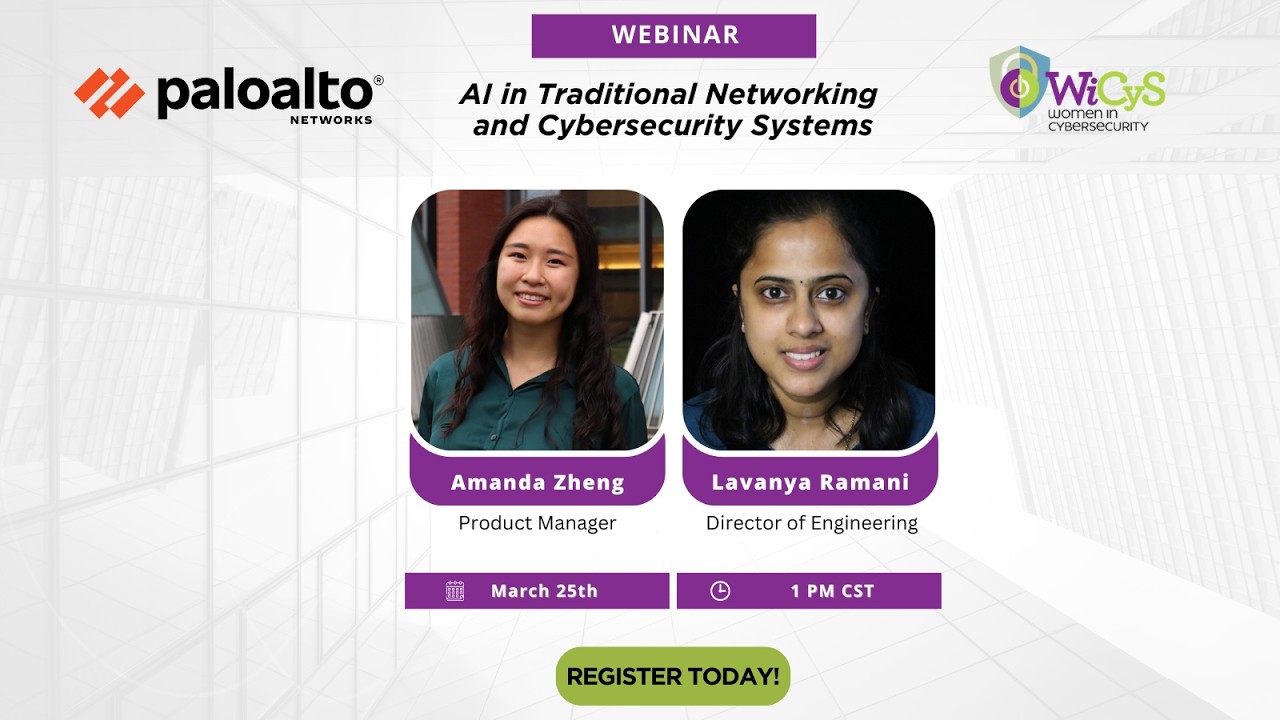
Palo Alto Networks Webinar | AI in Traditional Networking and Cybersecurity Systems
Keywords
Summary
137 words
Critical Evaluation
Value of the Information & Strength of the Argument
The webinar provides valuable insights into the practical applications of AI in networking and cybersecurity, drawing from the speakers’ professional experiences. The argumentation is generally coherent, but it relies heavily on anecdotal evidence and general industry trends rather than rigorous data or case studies. The discussion of the OSI model is clear and accessible, but the analysis of AI’s impact on each layer is somewhat superficial, lacking technical depth. The speakers effectively communicate the urgency of AI security but do not provide concrete solutions or detailed examples.
Scientific Rigor, Source Quality, Title Accuracy
The webinar does not cite specific scientific sources, but it references industry trends and real-world incidents (e.g., Deloitte, Samsung) to support its points. The title accurately reflects the content. The presentation is more of an expert opinion and industry overview than a rigorous scientific analysis. The lack of citations and reliance on anecdotal evidence limit the scientific rigor.
160 words
Title / Content Match
The title accurately reflects the content, which discusses AI in traditional networking and cybersecurity systems.
Quality & Reliability
6/10
The webinar provides a broad overview of AI's impact on networking and cybersecurity, with insights from industry professionals. However, it lacks in-depth technical detail and relies on anecdotal evidence and general trends rather than rigorous scientific data. The presentation is more of a high-level discussion than a detailed technical analysis.
Key Moments
Markers derived by PSI from the transcript: the creator did not define chapters.
- Introduction by Morgan Garland, WiCyS board liaison, and overview of WiCyS organization.
- Amanda Zang introduces the topic and discusses AI's impact on business and security challenges.
- Amanda shares personal experiences using AI tools as a product manager.
- Lavanya Ramani begins explaining the OSI model and its relevance to AI.
- Discussion of AI innovations in layer 1 (physical layer) and GPU advancements.
- Explanation of AI-driven changes in layers 3 and 4 (network and transport layers).
- Discussion of AI's impact on layers 5-7 and the move towards self-healing networks.
Cited Sources
- WiCyS Webinars Channel — Referenced in the video description as a source for more webinars from WiCyS strategic partners.
Concurring Sources
- WiCyS Webinars Channel — Referenced in the video description as a source for more webinars from WiCyS strategic partners.
Contribution & Novelties
The webinar offers a practical perspective on AI’s integration into networking and cybersecurity, highlighting real-world applications and challenges. It provides a structured overview of the OSI model and how AI is transforming each layer, which is useful for professionals seeking a high-level understanding. However, it does not introduce novel concepts or deep technical insights.
Pour aller plus loin :
- OSI model — Provides a detailed explanation of the seven layers, useful for understanding the context.
- AI in Cybersecurity — NIST Cybersecurity Framework, relevant for understanding AI security considerations.
- Generative AI and Security — OWASP Top 10 for LLM applications, relevant to AI security risks mentioned.
105 words
Radar Profile
The radar profile shows moderate scores across all dimensions, indicating a balanced but not exceptional presentation. The webinar provides a reasonable overview but lacks depth and rigorous sourcing, resulting in a moderate overall quality.