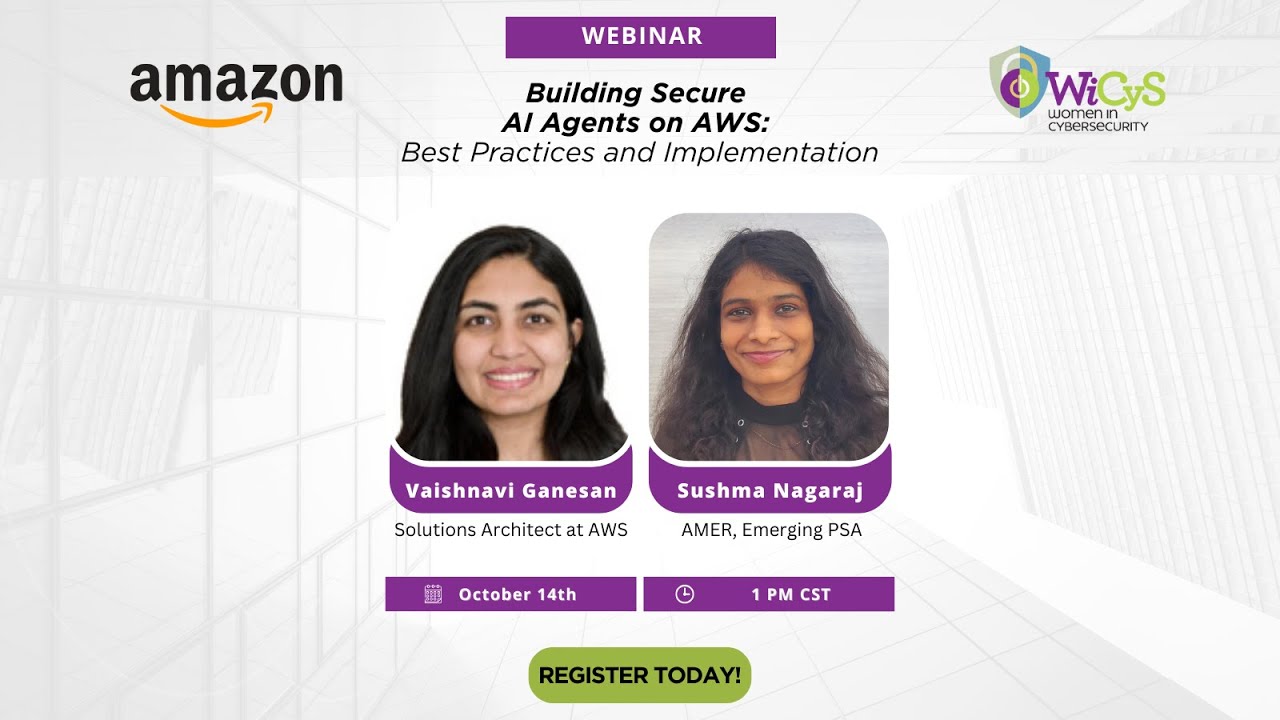
Amazon Web Services Webinar | Building Secure AI Agents on AWS: Best Practices and Implementation
Keywords
Summary
131 words
Critical Evaluation
Value of the Information & Strength of the Argument
The webinar provides a high-level overview of AWS’s approach to securing AI agents, emphasizing the importance of security in enterprise deployments. The argumentation is largely based on AWS’s own products and best practices, which may introduce bias. The live demo adds practical value, but the depth of technical explanation is limited. The speaker does not engage with alternative approaches or potential drawbacks, reducing the critical value of the content. The session is more of an introduction than a comprehensive technical guide.
Scientific Rigor, Source Quality, Title Accuracy
The webinar relies primarily on AWS’s official documentation and services, which are authoritative within the AWS ecosystem but not independent. The title accurately describes the content, which focuses on AWS-specific tools and practices. The presentation does not cite external research or case studies, limiting its scientific rigor. The Q&A session may provide additional insights, but the overall sourcing is vendor-centric.
156 words
Title / Content Match
The title accurately reflects the content, which covers AWS-specific tools and best practices for secure AI agent deployment.
Quality & Reliability
5/10
The webinar is a promotional and educational session by AWS, focusing on best practices for building secure AI agents. It includes a live demo and references to AWS services, but lacks rigorous scientific depth and independent verification. The content is largely based on vendor expertise and may have a marketing bias.
Key Moments
Markers derived by PSI from the transcript: the creator did not define chapters.
- Introduction by WiCyS coordinator, overview of WiCyS organization and strategic partners.
- Speaker introduction and personal background, transition to main topic.
- Definition of imposter syndrome and its relevance in cybersecurity.
- Discussion on why imposter syndrome is common in tech and cybersecurity.
- Introduction of five types of imposter syndrome by Dr. Valerie Young.
- Personal story about mentorship and its impact on overcoming imposter syndrome.
- Presentation of five science-based strategies to manage imposter syndrome.
- Live demo of building a secure AI agent on AWS using Bedrock AgentCore.
- Best practices for security in AI agents, including IAM and data protection.
- Q&A session addressing participant questions.
Cited Sources
- WiCyS Strategic Partner Webinars — Link to more webinars from WiCyS strategic partners, mentioned in the description.
Concurring Sources
- AWS Documentation on Amazon Bedrock — Official documentation for Amazon Bedrock, which aligns with the webinar's content.
Contribution & Novelties
The webinar provides a practical introduction to AWS’s tools for building secure AI agents, specifically Amazon Bedrock AgentCore and the Strands Agents SDK. It offers a live demo and best practices, which may be useful for practitioners. However, the content is not highly novel, as it aligns with AWS’s existing documentation and marketing materials.
Pour aller plus loin :
- Amazon Bedrock — Official AWS service page for building generative AI applications.
- OWASP Top 10 for Large Language Model Applications — Industry standard for LLM security risks.
- NIST AI Risk Management Framework — Framework for managing AI risks.
97 words
Radar Profile
The radar profile shows moderate scores across all dimensions, indicating a balanced but not exceptional webinar. The highest score is in quantity of information, reflecting the breadth of topics covered, while quality and reliability are lower due to the promotional nature and lack of independent sources.
💬 No comments were provided for analysis.