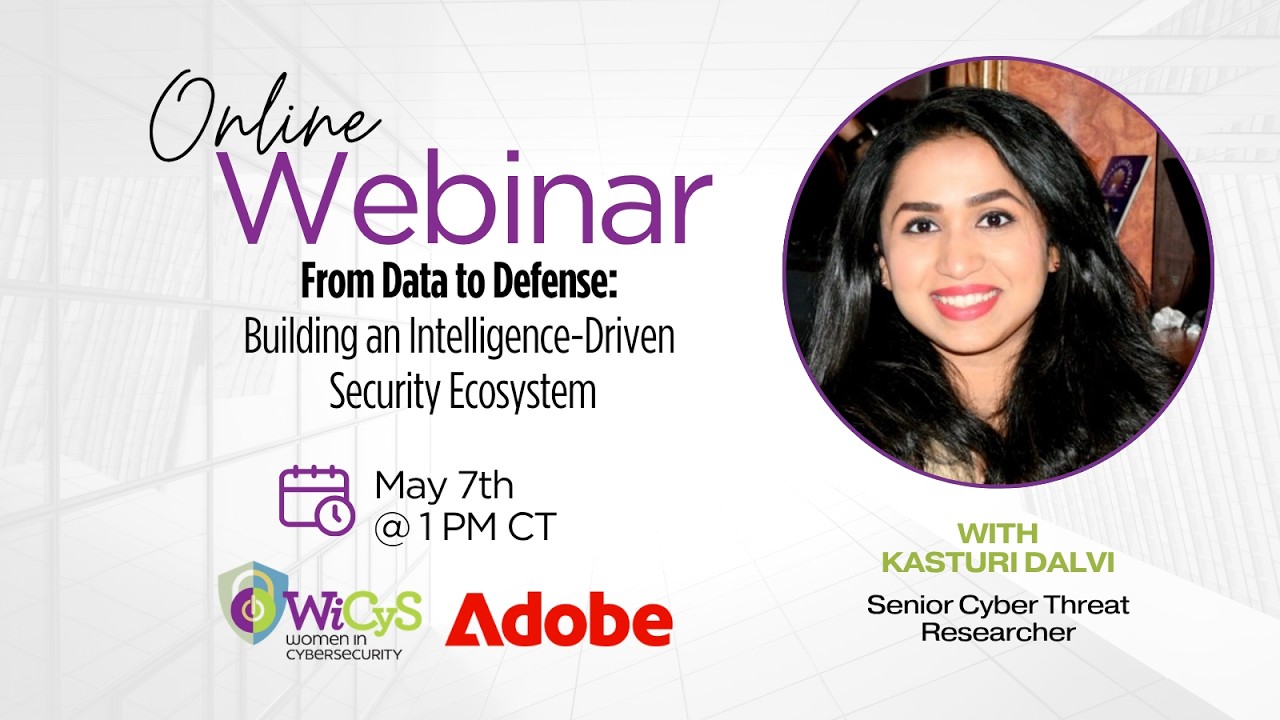
Adobe Webinar | From Data to Defense: Building an Intelligence-Driven Security Ecosystem
Keywords
Summary
139 words
Critical Evaluation
Value of the Information & Strength of the Argument
The webinar provides valuable, actionable insights for organizations looking to operationalize threat intelligence. Dalvi’s argumentation is solid, grounded in her professional experience and industry best practices. She effectively explains the challenges of reactive security and offers concrete workflows to address them. The emphasis on practical implementation, such as integrating threat feeds into sign-up processes and using exploitability signals for vulnerability prioritization, adds significant value. The presentation is well-structured and persuasive, though it could benefit from more specific examples or case studies to further strengthen the argument.
Scientific Rigor, Source Quality, Title Accuracy
The scientific rigor is moderate; the content is based on the speaker’s expertise and industry knowledge, but no formal sources are cited. The title accurately reflects the content, which focuses on building an intelligence-driven security ecosystem. The webinar is a professional presentation rather than a peer-reviewed study, so its rigor is appropriate for its format. The lack of external references is a limitation, but the practical insights are valuable for practitioners.
172 words
Title / Content Match
The title accurately reflects the content, which focuses on building an intelligence-driven security ecosystem from data to defense.
Quality & Reliability
7/10
The speaker is a senior cyber threat researcher at Adobe with over 10 years of experience, providing practical insights and frameworks. The content is based on professional experience and industry best practices, but lacks formal citations or references to external research.
Key Moments
Markers derived by PSI from the transcript: the creator did not define chapters.
- Introduction to the webinar and WiCyS organization
- Discussion of the intelligence gap and reactive security
- Explanation of the four types of threat intelligence
- Overview of the intelligence lifecycle
- Introduction to four practical workflows
- Deep dive into curated threat feeds and their integration
- Intelligence-driven vulnerability management
- Adversary emulation and campaign-based exercises
- Dark web monitoring and its challenges
- Measuring impact and roadmap for threat intelligence program
Cited Sources
- WiCyS Strategic Partner Webinars — Mentioned in the description as a source for more webinars from WiCyS strategic partners.
Concurring Sources
- Threat Intelligence: A Comprehensive Guide — Provides a general overview of threat intelligence concepts and best practices, aligning with the webinar's content.
Contribution & Novelties
The webinar provides a practical framework for operationalizing threat intelligence, emphasizing actionable workflows that can be implemented immediately. It bridges the gap between data collection and proactive defense, offering concrete examples such as integrating threat feeds into sign-up processes and using exploitability signals for vulnerability prioritization. The focus on collaboration between threat intelligence and other security functions (e.g., red team, vulnerability management) is a valuable contribution.
Pour aller plus loin :
- Threat Intelligence Lifecycle — Overview of the intelligence lifecycle and its phases.
- CVSS — Understanding CVSS scores and their limitations.
- MITRE ATT&CK — Framework for adversary tactics and techniques, useful for adversary emulation.
- Dark Web Monitoring — Background on the dark web and monitoring challenges.
116 words
Radar Profile
The radar profile shows high scores in quality of information and fiabilite, reflecting the speaker's expertise and practical insights. The quantity of information is moderate, and the technical level is appropriate for a professional audience. The overall balance indicates a valuable resource for cybersecurity practitioners.
💬 No comments were provided for analysis.