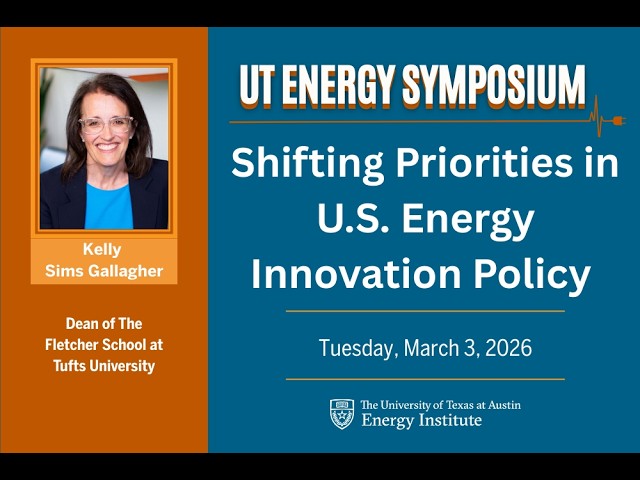
Shifting Priorities in U.S. Energy Innovation Policy
Keywords
Summary
160 words
Critical Evaluation
Value of the Information & Strength of the Argument
The talk provides valuable data-driven insights into U.S. energy innovation policy, drawing on the speaker’s research and official sources. The argumentation is solid, with clear explanations of trends and their implications. The speaker acknowledges uncertainties, such as the difficulty in obtaining Chinese R&D data, which adds credibility. The analysis is balanced, noting both challenges and areas where the U.S. remains competitive.
Scientific Rigor, Source Quality, Title Accuracy
The presentation is rigorous, citing data from UN Comtrade, IEA, DOE, and the speaker’s own research. The sources are credible and relevant. The title accurately reflects the content. The speaker’s expertise and experience lend authority to the analysis. No major discrepancies between title and content were noted.
123 words
Title / Content Match
The title accurately reflects the content, which focuses on shifts in U.S. energy innovation policy priorities.
Quality & Reliability
8/10
The speaker is a recognized expert in energy and environmental policy, with academic credentials and policy experience. The talk is based on data from her research lab and official sources, but some data (e.g., Chinese R&D) are uncertain. The presentation is well-structured and transparent about limitations.
Key Moments
Markers derived by PSI from the transcript: the creator did not define chapters.
- Introduction and speaker biography
- Comparative advantage in low-carbon tech products
- US-China comparison in clean energy tech
- Public energy R&D investments and trends
- Impact of Trump administration budget requests
- Deployment trends and private sector investment
- EV adoption and international comparison
- Policy environment and legislative changes
- Summary and risks to US competitiveness
Cited Sources
- UN Comtrade — Data on trade in low-carbon technology products
- International Energy Agency (IEA) — Data on clean energy investment and capacity
- U.S. Department of Energy — Assessment of US competitiveness in clean energy technologies
- The Conversation — Op-ed on US auto industry and EV innovation
Concurring Sources
- IEA World Energy Investment — Confirms trends in global clean energy investment.
Contribution & Novelties
The talk provides a comprehensive overview of U.S. energy innovation policy, synthesizing data from multiple sources to highlight trends and shifts. It offers a unique perspective from a policy expert with direct experience in government. The analysis of R&D investment patterns and their implications for competitiveness is particularly insightful.
Pour aller plus loin :
- Energy Innovation and Carbon Dividend Act — A policy proposal related to carbon pricing.
- International Energy Agency - Energy Technology Perspectives — A key reference for technology pathways.
- U.S. Department of Energy - Office of Science — Information on DOE’s basic energy sciences programs.
98 words
Radar Profile
The radar profile shows high scores in information quantity, quality, and reliability, with a slightly lower score in technical level. This indicates a talk that is rich in data and well-sourced, but not overly technical, making it accessible to a broad audience.
💬 No comments were provided for analysis.