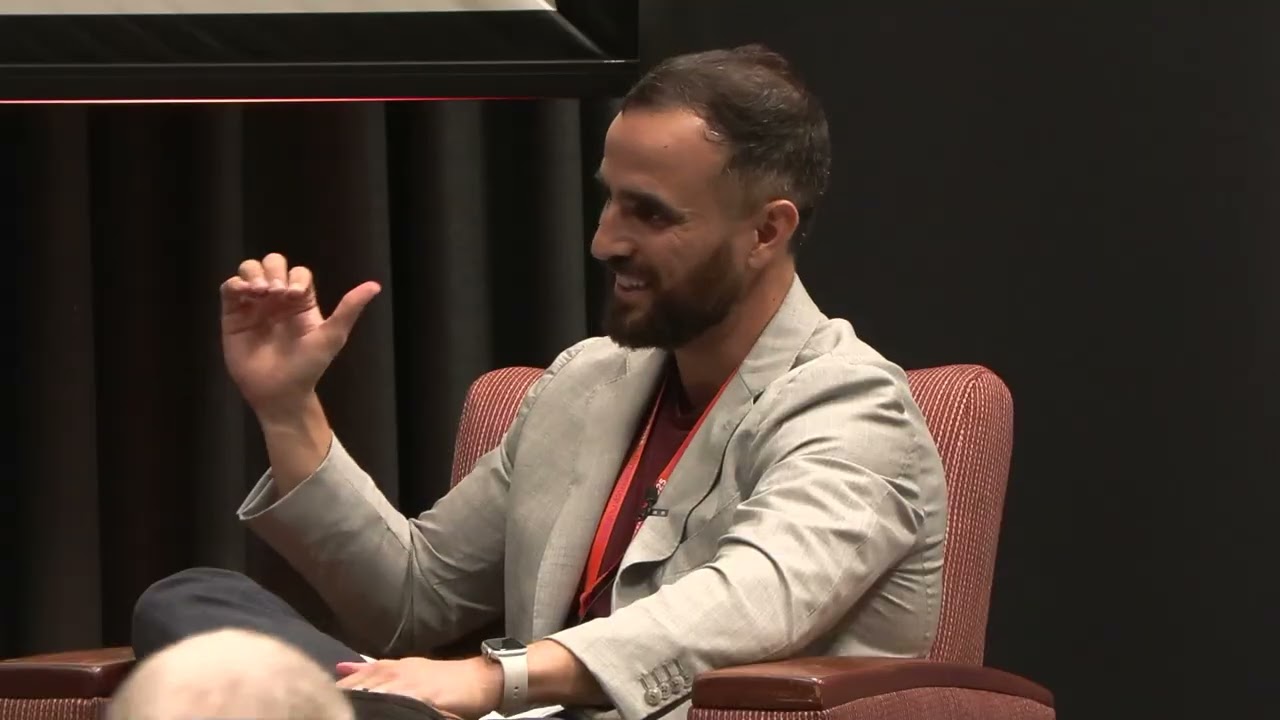
Hydrogen Day 2025: Hydrogen Discussion Panel 3
Keywords
Summary
156 words
Critical Evaluation
Value of the Information & Strength of the Argument
The panel provides valuable insights from industry practitioners with direct experience in hydrogen projects. The discussion is grounded in practical realities, with specific examples such as the 44% hydrogen blend project with EPRI and the New York Power Authority, and the scale of hydrogen consumption in gas turbines. The argumentation is coherent and evidence-based, though it relies on anecdotal experience rather than formal data. The panelists offer diverse perspectives from different regions (Europe, Morocco, US, Asia), enriching the discussion. However, the lack of quantitative analysis and reliance on personal opinions limits the depth of the argumentation.
Scientific Rigor, Source Quality, Title Accuracy
The panel is composed of experts from reputable organizations, lending credibility to the discussion. However, no specific sources are cited, and the content is largely based on personal experience and general knowledge. The title accurately reflects the content, which is a panel discussion on hydrogen scaling. The discussion is well-structured and stays on topic, though it lacks formal references to scientific literature or policy documents.
176 words
Title / Content Match
The title accurately reflects the content: a panel discussion on hydrogen challenges and opportunities, part of a larger Hydrogen Day event.
Quality & Reliability
7/10
Panel of industry experts with direct experience in hydrogen projects, providing practical insights and concrete data. However, no formal citations or references are given, and the discussion is largely anecdotal and opinion-based.
Key Moments
Markers derived by PSI from the transcript: the creator did not define chapters.
- Introduction of panelists and their backgrounds.
- Felipe Costa discusses challenges and low-hanging fruits in Europe, including ports and refineries.
- Yassine from OCP talks about Morocco's potential and the importance of predictable regulation.
- Jeff Goldmeer provides data on hydrogen consumption in gas turbines and infrastructure needs.
- Discussion on international trade, regional markets, and the role of ammonia.
- Panelists discuss the future of hydrogen derivatives and competition for carbon.
Contribution & Novelties
The panel provides a current snapshot of the hydrogen industry’s challenges and opportunities from the perspective of key stakeholders. It highlights the importance of regional differences and the need for infrastructure coordination. The discussion on ammonia as a shipping fuel and the competition for carbon adds a forward-looking dimension.
Pour aller plus loin :
- Hydrogen economy — Overview of hydrogen as an energy carrier.
- Ammonia as an energy carrier — Discussion of ammonia’s role in energy storage and transport.
- Gas turbine — Technical background on gas turbines and their fuel flexibility.
91 words
Radar Profile
The radar profile shows balanced scores across information quantity, quality, technical level, and reliability, indicating a well-rounded discussion. The slightly lower reliability score reflects the lack of formal citations, while the technical level is moderate, suitable for a general audience.