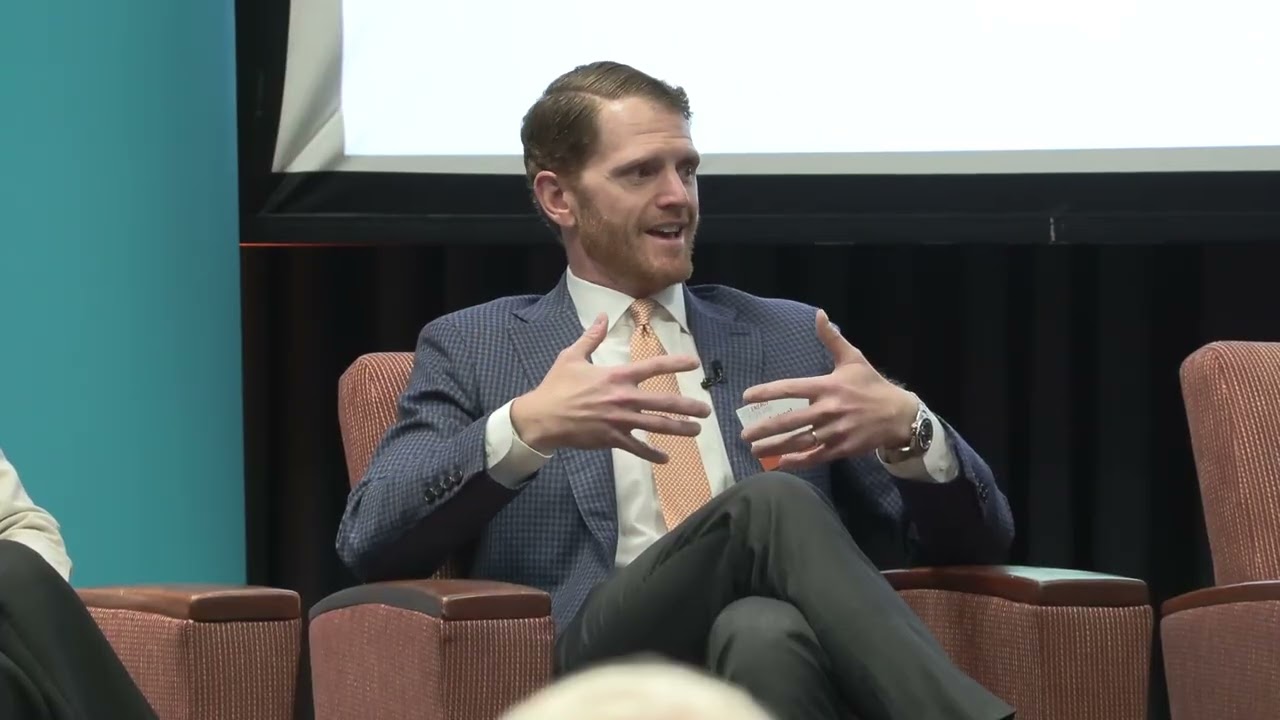
UT Energy Week 2026: Infrastructure Build-Out as a Foundation for the US and Texas AI Opportunity
Keywords
Summary
146 words
Critical Evaluation
Value of the Information & Strength of the Argument
The discussion provides valuable insights from industry insiders on the practical challenges of meeting AI-driven energy demand. The panelists offer a balanced perspective, acknowledging the uncertainty in demand forecasts while emphasizing the real capital investments being made. Their arguments are grounded in their professional experiences, such as the specifics of interconnection queues and the operational realities of natural gas plants. The reasoning is coherent, with each panelist building on the others’ points, though some claims lack empirical backing and rely on anecdotal evidence.
Scientific Rigor, Source Quality, Title Accuracy
The panelists do not cite specific sources, but their expertise lends credibility. The discussion is consistent with known industry trends, such as the surge in data center power demand and the challenges of grid interconnection. The title accurately reflects the content, focusing on infrastructure as a foundation for AI opportunity. The lack of formal citations is typical for a panel discussion, but the absence of data references reduces the scientific rigor.
169 words
Title / Content Match
The title accurately reflects the panel discussion on infrastructure build-out for AI-driven energy demand.
Quality & Reliability
7/10
Panel of industry experts with relevant experience; discussion grounded in practical knowledge, but lacks formal citations and data verification.
Key Moments
Markers derived by PSI from the transcript: the creator did not define chapters.
- Introduction of panelists and their backgrounds.
- Discussion on electricity demand drivers, including data centers and electrification.
- Debate on the accuracy of demand forecasts and the issue of speculative interconnection queue applications.
- Teresa discusses the evolution of data center sizes and the impact of ChatGPT.
- Sam explains Vistra's approach to meeting customer needs, including behind-the-meter solutions and nuclear uprates.
- Michael outlines WTG's market thesis, focusing on natural gas pipeline infrastructure.
- Discussion on cost implications for consumers and the role of regulation in cost allocation.
- Concluding remarks on the need for infrastructure investment and market-based solutions.
Contribution & Novelties
The panel provides a practical, industry-focused perspective on the AI-energy nexus, highlighting the gap between speculative demand forecasts and real infrastructure needs. It underscores the importance of customer-driven development and the role of natural gas as a bridge fuel. The discussion offers a nuanced view on cost allocation and grid utilization, which is valuable for policymakers and industry stakeholders.
Pour aller plus loin :
- ERCOT — Official site for Texas grid operator, relevant for understanding interconnection queues and demand forecasts.
- Data Center Knowledge — Industry news site covering data center trends and energy consumption.
- U.S. Energy Information Administration (EIA) — Provides data on electricity demand and generation, useful for verifying demand growth claims.
113 words
Radar Profile
The radar profile shows high scores in information quantity and quality, reflecting the panel's depth of expertise. Technical level is moderate, suitable for a general audience. Reliability is strong due to the panelists' industry positions, though the lack of formal citations slightly reduces the score.
💬 No comments were provided for analysis.