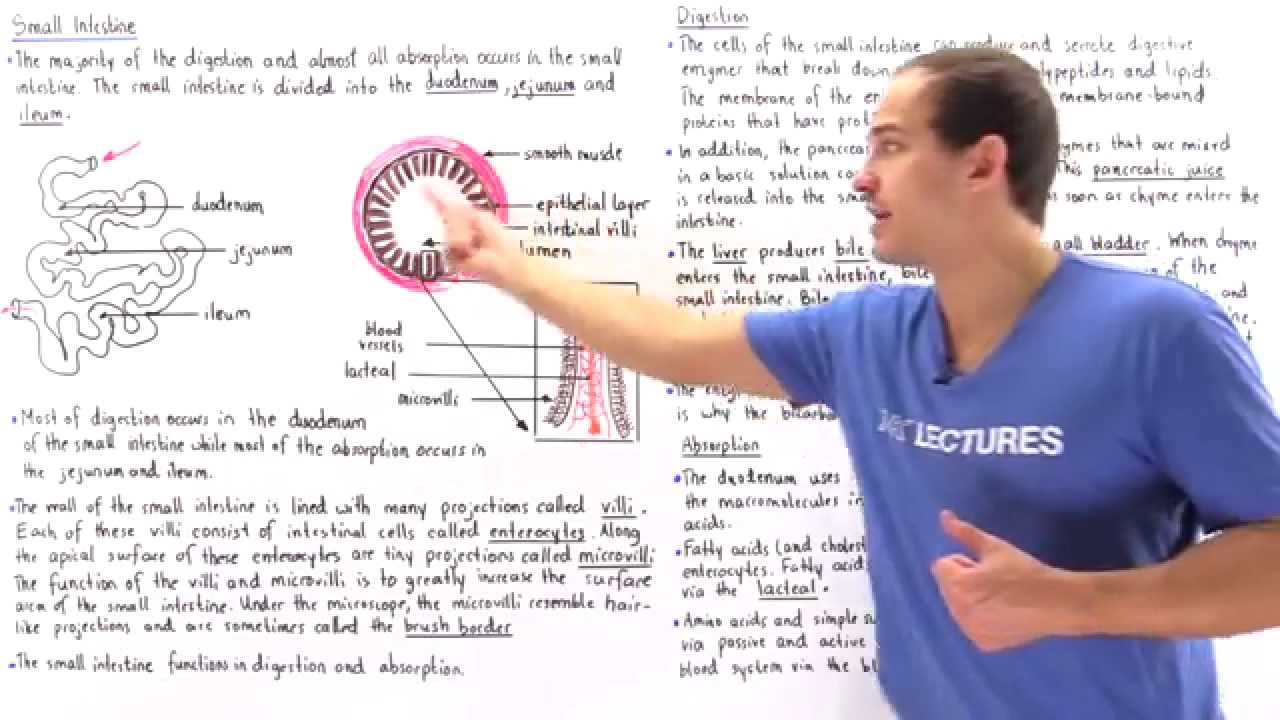
Introduction to the Small Intestine
Keywords
Summary
123 words
Critical Evaluation
Value of the Information & Strength of the Argument
The video provides a solid foundational explanation of the small intestine’s structure and function, effectively using diagrams to illustrate key concepts. The argumentation is logical, moving from anatomy to physiology, and clearly explains the roles of digestive enzymes, bile, and the brush border. The value lies in its clarity and pedagogical approach, making complex processes accessible. However, it lacks depth on specific enzymatic mechanisms and does not cite primary sources, limiting its value for advanced learners.
Scientific Rigor, Source Quality, Title Accuracy
The scientific content is accurate and aligns with standard textbook knowledge, though no specific sources are cited. The title accurately reflects the content, which is an introductory overview. The video is a tutorial, and the lack of citations is typical for such formats. The description includes links to the creator’s website, which may offer additional resources, but these are not directly referenced in the video.
156 words
Title / Content Match
The title accurately reflects the content, which is an introductory overview of the small intestine's structure and function.
Quality & Reliability
7/10
The video provides a clear and accurate overview of small intestine anatomy and physiology, consistent with established biological knowledge. It is a didactic presentation without citations to primary literature, but the content is standard and reliable for educational purposes.
Key Moments
Markers derived by PSI from the transcript: the creator did not define chapters.
- Introduction to the small intestine and its three sections: duodenum, jejunum, ileum.
- Cross-section of the small intestine showing smooth muscle, epithelial layer, and villi.
- Microscopic structure of a villus, highlighting enterocytes and microvilli.
- Explanation of the brush border and its role in digestion and absorption.
- Role of pancreatic juice and bicarbonate in maintaining pH 8.5.
- Bile production, storage in gallbladder, and emulsification of lipids.
- Goblet cells and mucus secretion for protection.
- Absorption of fatty acids into lacteals and amino acids/monosaccharides into blood.
- Summary and preview of next lecture on specific enzymes.
Cited Sources
- AK Lectures - Small Intestine — The video is part of the AK Lectures series; this page likely contains the lecture and related materials.
- AK Lectures Website — Main website of the content creator, offering additional lectures and resources.
- Donate Page — Donation page for supporting the channel.
Concurring Sources
- Small intestine - Wikipedia — Confirms the anatomical divisions and functions described in the video.
- Digestion and Absorption - NCBI Bookshelf — Supports the physiological processes of digestion and absorption mentioned.
Contribution & Novelties
The video offers a clear, structured introduction to the small intestine, effectively using diagrams to explain complex structures like villi and microvilli. Its novelty lies in its pedagogical clarity, making it a useful resource for students. However, it does not present new scientific findings.
Pour aller plus loin :
- Small intestine - Wikipedia — Provides comprehensive details on anatomy and function.
- Digestion and Absorption - NCBI Bookshelf — A detailed review of digestive processes.
- Brush border - Wikipedia — Explains the structure and function of microvilli.
86 words
Radar Profile
The radar profile shows balanced scores, with slightly higher quality of information and technical level, indicating a well-structured educational video. The lower quantity of information reflects its introductory nature, while reliability is solid due to accurate content.