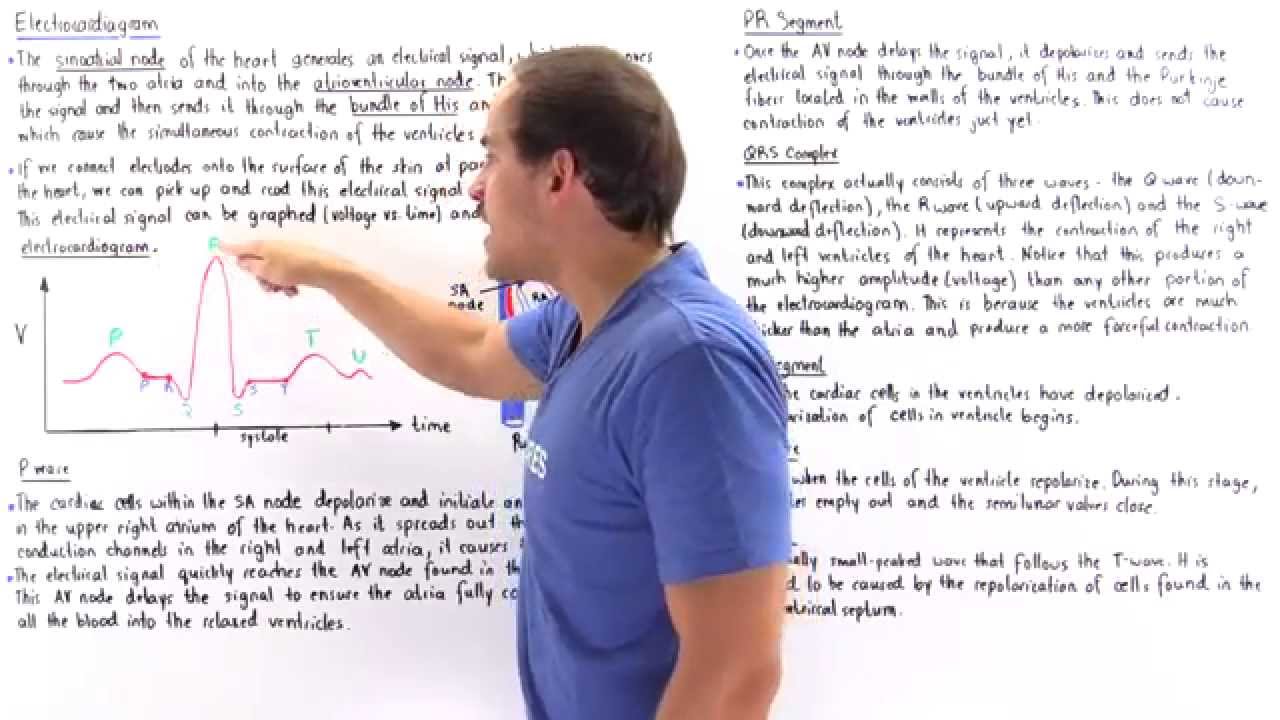
Introduction to Electrocardiogram
Keywords
Summary
159 words
Critical Evaluation
Value of the Information & Strength of the Argument
The video offers a solid introduction to the ECG, explaining the physiological basis of each wave and segment. The argumentation is logical, building from the generation of the electrical signal to its manifestation on the ECG. It effectively uses analogies and clear descriptions to convey the sequence of events during the cardiac cycle. However, the video does not delve into clinical applications or abnormalities, limiting its value for advanced learners. The explanation of the U wave is presented as a hypothesis, which is appropriate. Overall, the information is accurate and well-structured, though it could benefit from visual aids or animations to enhance understanding.
Scientific Rigor, Source Quality, Title Accuracy
The video is scientifically accurate and aligns with standard medical knowledge. However, it does not cite specific sources or references, which reduces its scientific rigor. The title accurately reflects the content, as it is an introduction to the ECG. The video’s educational value is high for beginners, but it lacks depth and does not address potential variations or pathological conditions. The absence of citations is a notable weakness for a scientific audience.
190 words
Title / Content Match
The title accurately reflects the content, which is an introductory overview of the electrocardiogram.
Quality & Reliability
7/10
The video provides a clear and accurate explanation of the normal ECG, covering the main waves and segments. The content is consistent with standard medical knowledge, but it lacks references to primary sources and does not discuss limitations or variations.
Key Moments
Markers derived by PSI from the transcript: the creator did not define chapters.
- Introduction to the electrocardiogram and its purpose.
- Explanation of how electrodes are placed and the ECG is recorded.
- Overview of the ECG waveform and its components.
- Detailed explanation of the P wave and atrial depolarization.
- Discussion of the PR segment and AV node delay.
- Explanation of the QRS complex and ventricular depolarization.
- Description of the ST segment, T wave, and U wave.
Cited Sources
- AK Lectures - Introduction to Electrocardiogram — The video is hosted on this website, which provides additional resources.
- AK Lectures — The main website of the channel, offering more lectures.
Concurring Sources
- Electrocardiography - Wikipedia — Confirms the standard interpretation of ECG waves and segments.
External References
Contribution & Novelties
The video provides a clear and concise introduction to the ECG, explaining the physiological basis of each wave and segment. It is particularly useful for students new to cardiology. The explanation of the U wave as repolarization of the interventricular septum is a notable point, though it is presented as a hypothesis.
Pour aller plus loin :
- Electrocardiography - Wikipedia — Provides a comprehensive overview of ECG, including history and clinical applications.
- Cardiac action potential - Wikipedia — Explains the cellular mechanisms underlying the ECG.
- Sinoatrial node - Wikipedia — Details the primary pacemaker of the heart.
97 words
Radar Profile
The radar profile shows high scores in quality of information and technical level, indicating a solid educational resource. The lower score in quantity of information reflects the introductory nature of the video, which does not cover advanced topics. Overall, the video is a reliable starting point for learning about ECG.