Glycolysis
Keywords
Summary
153 words
Critical Evaluation
Value of the Information & Strength of the Argument
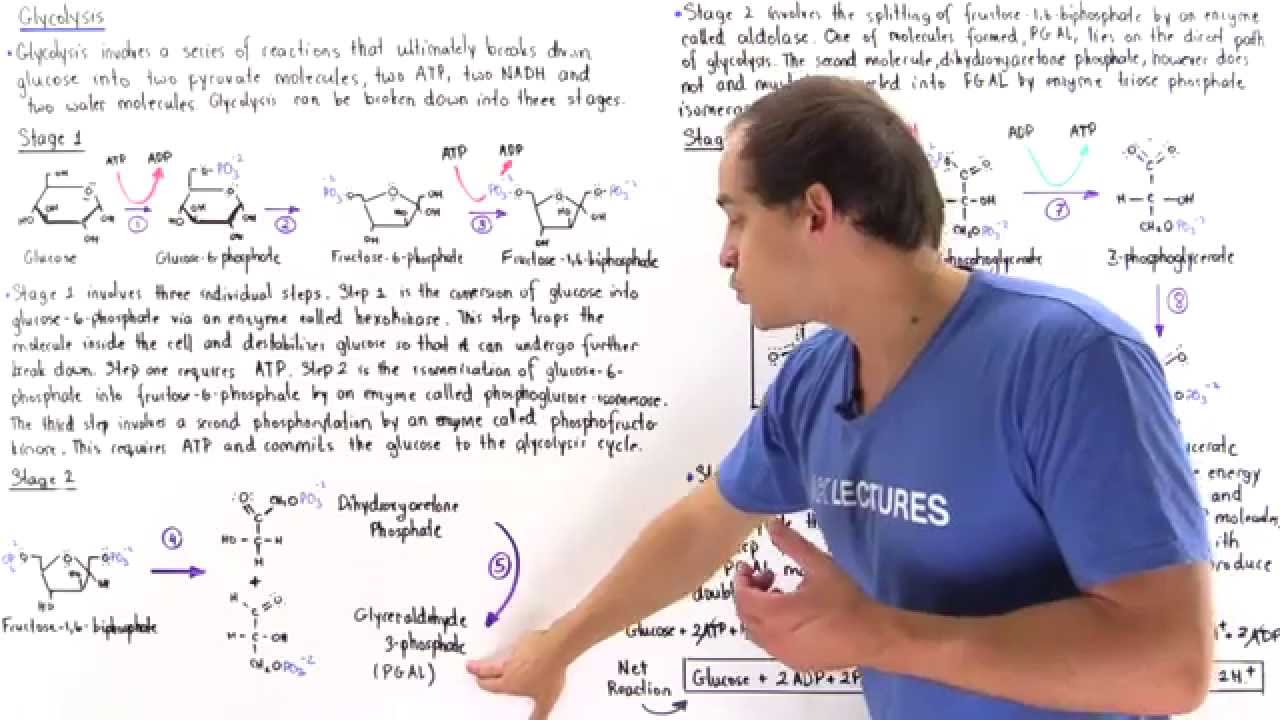
The video offers a comprehensive and accurate explanation of glycolysis, systematically covering each step and its purpose. It effectively highlights the energy investment and payoff phases, and clarifies the net production of ATP and NADH. The argumentation is logical, building from the initial phosphorylation to the final product, and the presenter emphasizes the importance of key enzymes and regulatory steps. The content is scientifically sound and provides a solid foundation for understanding cellular respiration.
Scientific Rigor, Source Quality, Title Accuracy
The video demonstrates scientific rigor by accurately describing the biochemical pathway and its components. The sources cited are the presenter’s own educational website, which likely contains additional resources. The title ‘Glycolysis’ is perfectly aligned with the content, as the video focuses exclusively on this pathway. The presentation is well-structured and technically accurate, making it a reliable educational resource.
147 words
Title / Content Match
The title 'Glycolysis' accurately reflects the content, which focuses exclusively on the glycolytic pathway.
Quality & Reliability
8/10
The video provides a clear, step-by-step explanation of glycolysis, accurately describing the enzymatic steps, energy investment and payoff phases, and the net products. The content aligns with standard biochemistry knowledge and is presented in a structured manner. Minor simplifications (e.g., not detailing all regulatory aspects) are acceptable for an introductory tutorial.
Key Moments
Markers derived by PSI from the transcript: the creator did not define chapters.
- Introduction to glycolysis and its net result.
- Overview of the three stages of glycolysis.
- Stage 1: Phosphorylation of glucose to glucose-6-phosphate.
- Stage 1: Isomerization to fructose-6-phosphate and second phosphorylation.
- Stage 2: Cleavage of fructose-1,6-bisphosphate into two triose phosphates.
- Stage 3: Oxidation and phosphorylation of PGAL to 1,3-BPG.
- Stage 3: First ATP production and conversion to 3-phosphoglycerate.
- Stage 3: Conversion to 2-phosphoglycerate and enolase reaction.
- Stage 3: Second ATP production and formation of pyruvate.
- Balancing the overall equation and net products of glycolysis.
Cited Sources
- AK Lectures - Glycolysis — The video is part of the AK Lectures series, and this page likely contains additional details and diagrams.
- AK Lectures - Donate — The presenter encourages donations to support the educational content.
- AK Lectures - Main Website — The main website provides access to a wide range of educational videos and resources.
Concurring Sources
- Glycolysis - Wikipedia — The video's description of glycolysis matches the standard biochemical pathway as detailed in this reference.
- Biochemistry Textbook (e.g., Stryer) — The content aligns with standard biochemistry textbooks, which describe the same steps and net products.
Contribution & Novelties
The video provides a clear and systematic explanation of glycolysis, breaking down the pathway into three stages and detailing each enzymatic step. It emphasizes the energy investment and payoff phases, and highlights the regulatory step catalyzed by phosphofructokinase. The explanation is accessible yet technically accurate, making it a valuable resource for students.
Pour aller plus loin :
- Glycolysis - Wikipedia — Comprehensive overview of the pathway, including regulation and clinical significance.
- Krebs Cycle - Wikipedia — The next stage of cellular respiration, which processes pyruvate.
- Cellular Respiration - Khan Academy — Interactive tutorials and quizzes on glycolysis and related topics.
100 words
Radar Profile
The radar profile shows high scores in information quantity, quality, technical level, and reliability, indicating a well-rounded educational video. The balanced profile suggests that the video is both informative and accurate, with a strong technical depth suitable for students.