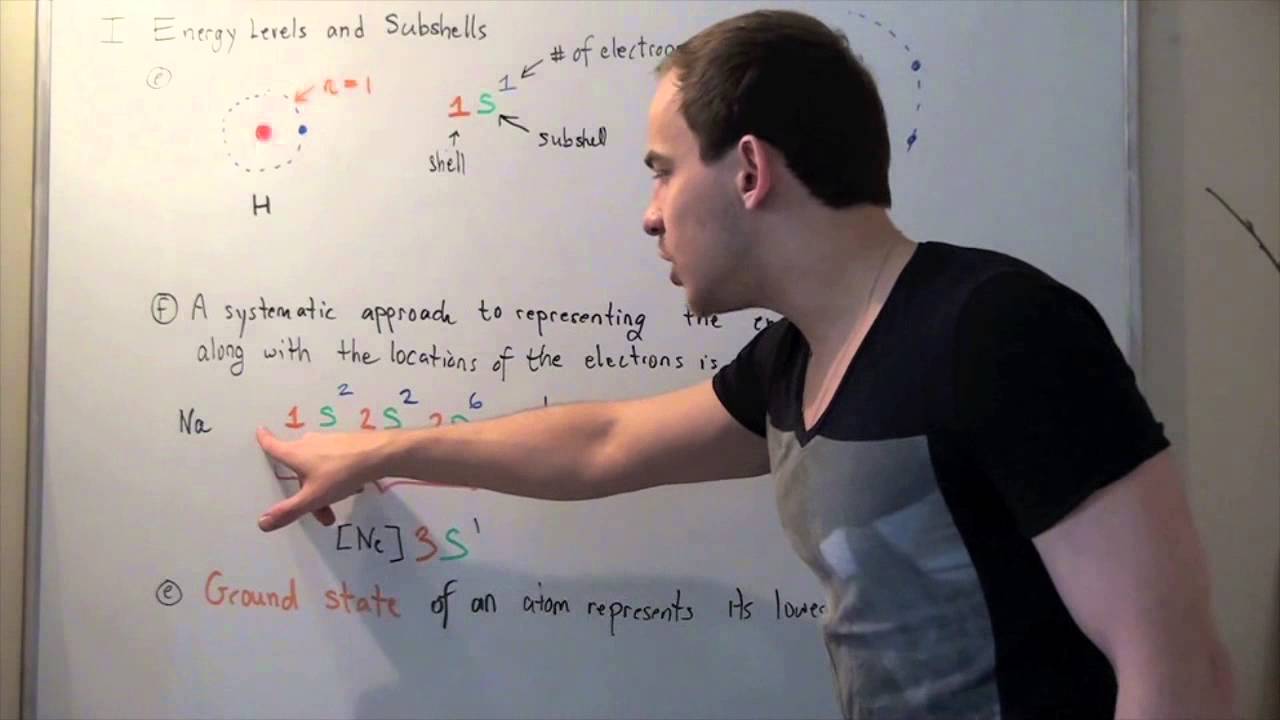
Aufbau Principle and Electron Configuration
Keywords
Summary
137 words
Critical Evaluation
Value of the Information & Strength of the Argument
The video provides a solid foundation in understanding electron configuration, using logical reasoning based on Coulomb’s law to justify why electrons fill lower energy levels first. The argumentation is coherent and builds step-by-step, making it accessible. However, it does not delve into exceptions to the Aufbau principle (e.g., chromium, copper) or the underlying quantum mechanical basis, which limits its depth. The examples are well-chosen and illustrate the concepts effectively.
Scientific Rigor, Source Quality, Title Accuracy
The scientific rigor is adequate for an introductory tutorial, with accurate explanations of quantum numbers and orbital filling. However, no external sources are cited, and the video relies solely on the instructor’s explanations. The title accurately reflects the content, which is focused on the Aufbau principle and electron configuration. The description provides links to the instructor’s website and donation page, but no specific references to scientific literature.
151 words
Title / Content Match
The title accurately reflects the content, which focuses on the Aufbau principle and its application to electron configurations.
Quality & Reliability
7/10
The video provides a clear and accurate explanation of the Aufbau principle and electron configuration, with correct use of quantum numbers and examples. However, it lacks citations to external sources and does not address exceptions to the Aufbau principle (e.g., chromium, copper), which limits its completeness.
Key Moments
Markers derived by PSI from the transcript: the creator did not define chapters.
- Introduction to the Aufbau principle and its importance for electron configuration.
- Explanation of why electrons fill lower energy levels first using Coulomb's law.
- Definition of electron configuration and example with hydrogen.
- Example with oxygen, showing how to distribute electrons in orbitals.
- Introduction to noble gas configuration using sodium as an example.
- Discussion on ground and excited states, and how ions are represented.
- Explanation that electron configurations can be written in any order, not necessarily increasing energy.
- Example with bromine and its ion configurations.
Cited Sources
- AK Lectures - Aufbau Principle and Electron Configuration — The video is hosted on this page, which may contain additional resources.
- AK Lectures Website — The instructor's website with more lectures and materials.
- Donation Page — Support page for the channel.
Concurring Sources
- Aufbau principle - Wikipedia — Confirms the principle and its applications.
- Electron configuration - Wikipedia — Provides standard notation and examples.
Contribution & Novelties
The video provides a clear and systematic introduction to electron configuration, emphasizing the Aufbau principle and its physical basis. It is particularly useful for beginners, as it explains the reasoning behind the filling order using Coulomb’s law. However, it does not cover exceptions to the Aufbau principle or advanced topics like Hund’s rule in detail.
Pour aller plus loin :
- Aufbau principle - Wikipedia — Provides a comprehensive overview, including exceptions and the Madelung rule.
- Electron configuration - Wikipedia — Detailed explanation of electron configurations, including notation and examples.
- Hund’s rule - Wikipedia — Explains the rule for filling degenerate orbitals, which is briefly mentioned in the video.
108 words
Radar Profile
The radar profile shows a balanced performance across all dimensions, with slightly higher scores in information quality and reliability, indicating a solid educational resource. The lower score in technical level suggests it is more introductory, which is appropriate for the target audience.