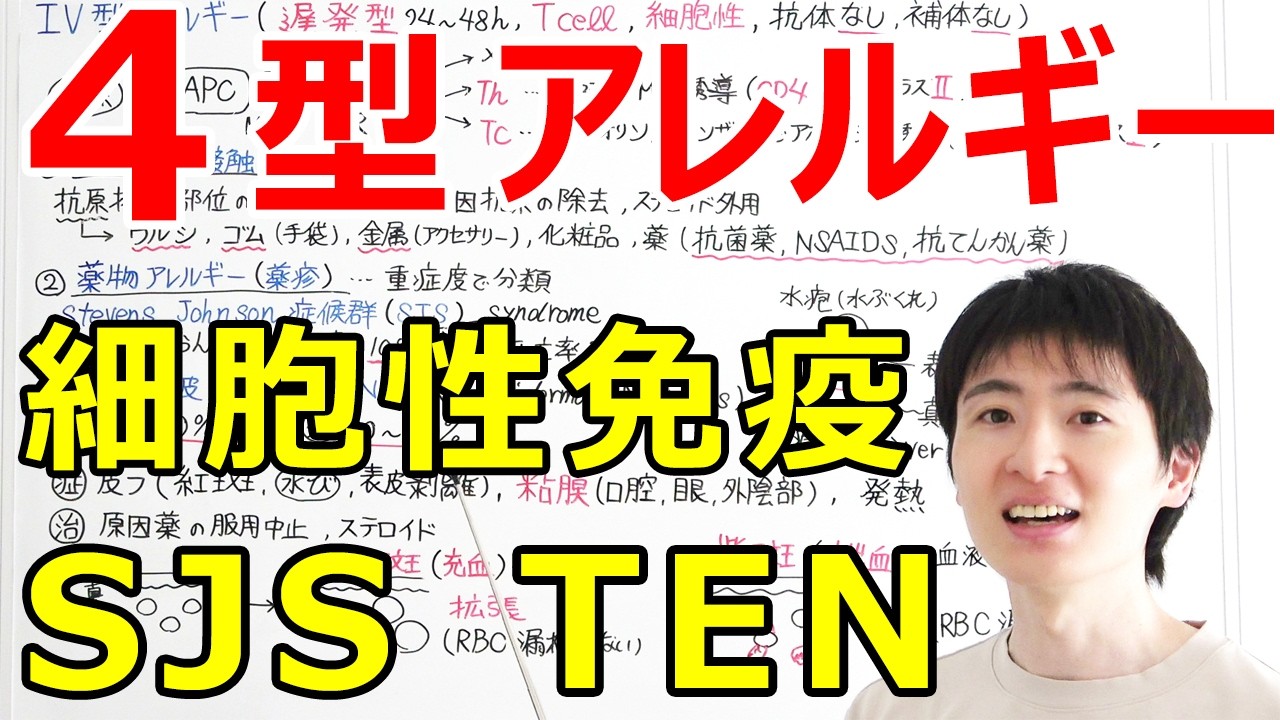
新規マイビデオプロジェクト 7
Keywords
Summary
113 words
Critical Evaluation
Value of the Information & Strength of the Argument
The video provides a solid educational overview of type IV hypersensitivity, breaking down complex mechanisms into understandable segments. The argumentation is logical, progressing from basic principles to clinical examples. It effectively uses analogies (e.g., comparing apoptosis and necrosis) to aid comprehension. However, it lacks critical discussion of controversies or nuances, and the presentation is one-sided without addressing alternative viewpoints.
Scientific Rigor, Source Quality, Title Accuracy
The scientific content is accurate and aligns with standard immunology textbooks. However, no sources are cited within the video or description, limiting verifiability. The title is generic and does not reflect the specific topic, which could mislead viewers. The video’s educational value is high, but the lack of references reduces its scientific rigor.
127 words
Title / Content Match
The title is generic and not descriptive of the content, which focuses on type IV allergies.
Quality & Reliability
7/10
The video provides a clear and structured explanation of type IV hypersensitivity, covering key mechanisms and clinical examples. The content is accurate and aligns with standard immunology knowledge, though it lacks citations and depth in some areas.
Key Moments
Markers derived by PSI from the transcript: the creator did not define chapters.
- Introduction to type IV allergy and key features.
- Explanation of delayed onset and T cell involvement.
- Detailed mechanism: antigen presentation, TCR, co-stimulation, and cytokines.
- Discussion of allergic contact dermatitis and common triggers.
- Introduction to drug allergies: SJS and TEN, with severity criteria.
- Treatment approaches and clarification of terms like erythema and erosion.
Contribution & Novelties
The video offers a clear, structured explanation of type IV hypersensitivity, making it accessible for students. It effectively distinguishes between SJS and TEN based on body surface area, which is clinically relevant. The use of analogies and visual descriptions aids retention.
Pour aller plus loin :
- Type IV hypersensitivity — Overview and mechanisms.
- Stevens-Johnson syndrome — Clinical features and management.
- Toxic epidermal necrolysis — Severe form of drug reaction.
69 words
Radar Profile
The radar profile shows balanced scores across information quantity, quality, technical level, and reliability, indicating a well-rounded educational video. The high technical level and quality suggest it is suitable for intermediate learners, while the moderate quantity and reliability reflect the lack of citations and depth.