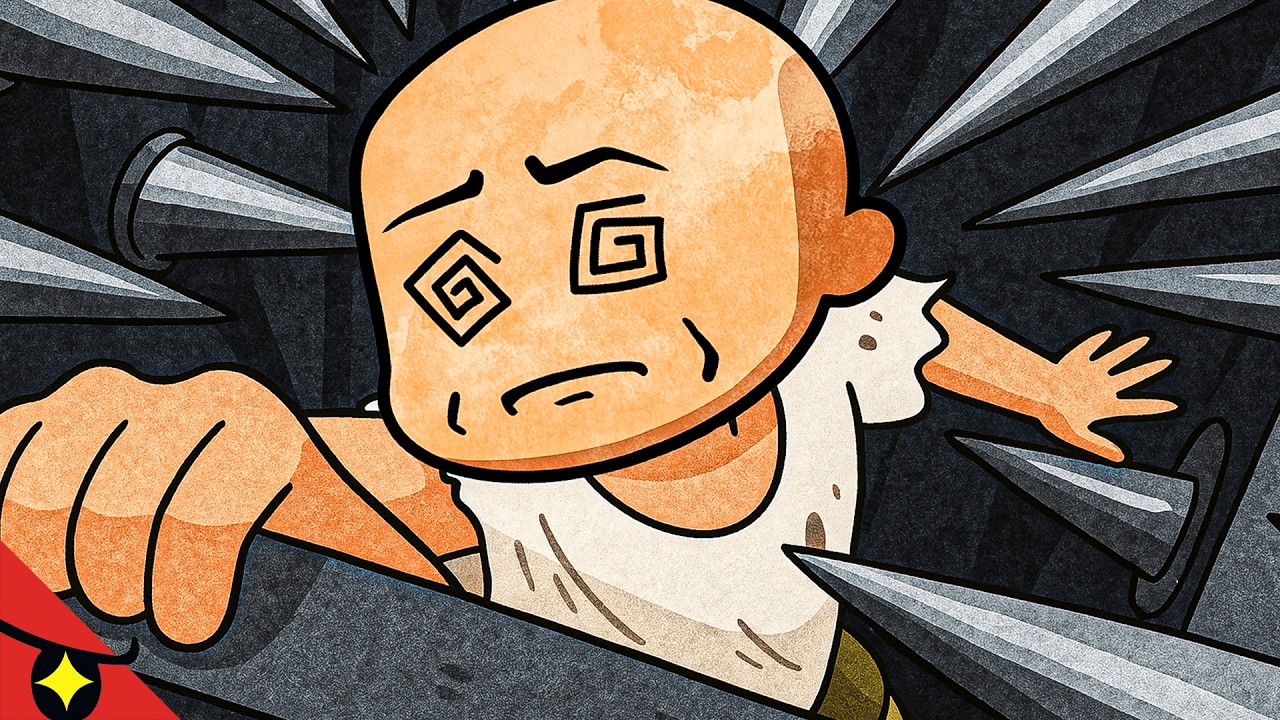
Ces ÉVÈNEMENTS auraient pu causer la FIN DE L'HUMANITÉ 💀
Keywords
Summary
117 words
Critical Evaluation
The video provides an engaging overview of several historical events that could have had catastrophic consequences for humanity. It effectively combines historical facts with speculative scenarios, making it accessible to a general audience. However, the scientific rigor is moderate: some claims are oversimplified or contain minor inaccuracies. For instance, the video states that Cuba became communist with Fidel Castro’s election, but it was actually his brother Raúl who was the communist, and Castro’s alignment with the USSR was a later development. Additionally, the comparison of death tolls between the Spanish flu and the Black Death is debated; the Black Death killed a higher percentage of the global population at the time. The video also relies on dramatized accounts, such as the HBO series ‘Chernobyl’, which may exaggerate certain aspects. The sources are not explicitly cited, but the video references general historical knowledge and scientific studies. The sponsorship segment is clearly separated and does not interfere with the content. Overall, the video is informative and thought-provoking, but viewers should be aware of its simplifications and potential biases.
176 words
Title / Content Match
The title is somewhat clickbait but accurately reflects the content: a list of events that could have ended humanity.
Quality & Reliability
6/10
The video covers historical and scientific events with a mix of accurate facts and some simplifications or errors (e.g., Cuban Missile Crisis details, plague mortality comparisons). It relies on popular narratives and dramatizations, but generally aligns with established historical accounts. Sources are not explicitly cited, and the sponsorship segment is clearly separated.
Key Moments
Markers derived by PSI from the transcript: the creator did not define chapters.
- Introduction to the topic: events that could have ended humanity.
- Discussion of Chernobyl and the potential second explosion.
- Sponsorship segment for HOLY drinks.
- Introduction to pandemics: Spanish flu and its impact.
- Discussion of the Black Death and its societal consequences.
- Introduction to the Carrington Event and solar storms.
- Potential effects of a modern Carrington Event.
- Cuban Missile Crisis: background and tensions.
- Resolution of the crisis and the role of diplomacy.
- Stanislav Petrov and the 1983 nuclear false alarm.
Cited Sources
- HOLY drinks official website — Sponsorship link mentioned in the video description.
- Trash YouTube channel — Link to other Trash channels, mentioned in the description.
Concurring Sources
- Cuban Missile Crisis - Wikipedia — Confirms the general timeline and key events of the crisis.
- Stanislav Petrov - Wikipedia — Confirms the story of the 1983 false alarm and Petrov's role.
- Carrington Event - Wikipedia — Provides scientific background on the solar storm and its potential effects.
Dissenting Sources
Contribution & Novelties
The video synthesizes multiple historical and scientific events into a cohesive narrative about humanity’s fragility, emphasizing the role of chance and human decisions. It offers a balanced perspective, acknowledging both the dangers and the resilience of human societies.
Pour aller plus loin :
- Cuban Missile Crisis — Provides detailed historical context and analysis.
- Stanislav Petrov — Biography of the officer who prevented a potential nuclear war.
- Carrington Event — Scientific details of the 1859 solar storm and its potential modern impact.
81 words
Radar Profile
The radar profile shows a balanced distribution across dimensions, with slightly higher scores in information quantity and reliability, reflecting the video's broad coverage and generally accurate historical facts, but lower technical depth and some simplifications.
💬 Très positif. Sur les 30 commentaires analysés, les spectateurs expriment majoritairement leur appréciation de la vidéo, soulignant la qualité de la narration et la conclusion inspirante, avec quelques demandes de sujets futurs et des corrections factuelles mineures.