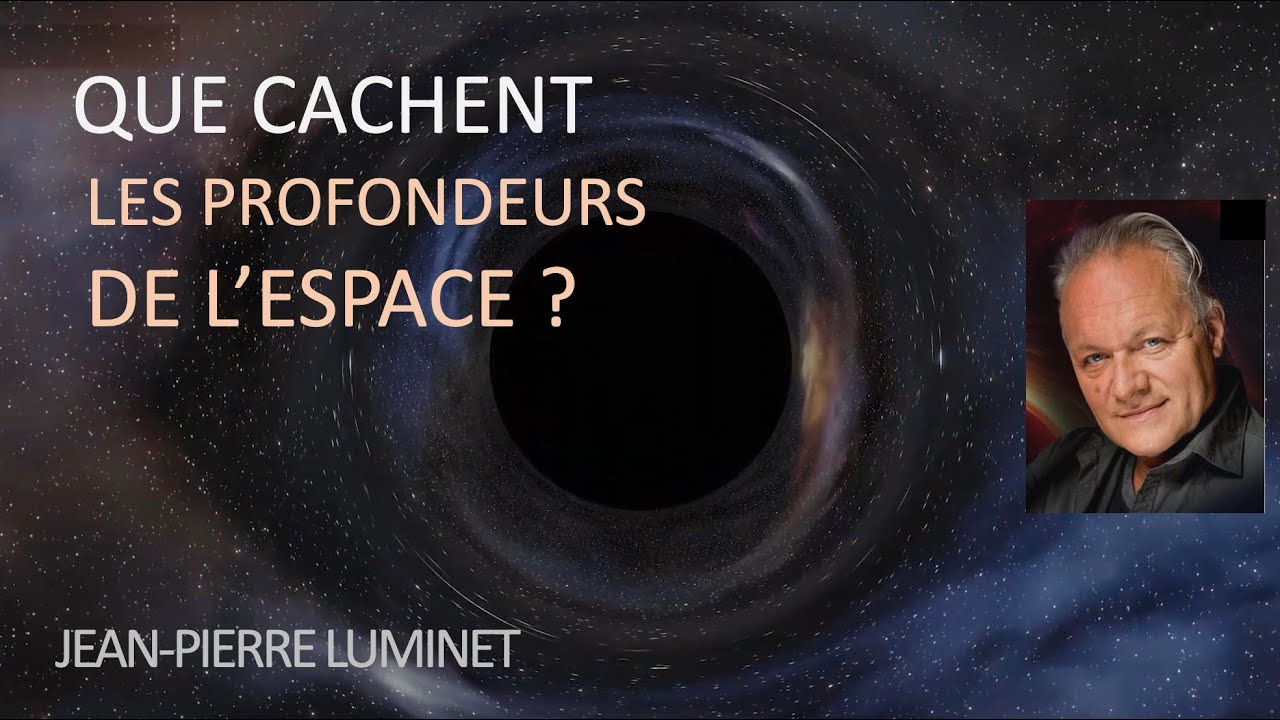
De l'astrophysique relativiste à la gravité quantique : le rôle des trous noirs
Keywords
Summary
131 words
Critical Evaluation
The interview provides a comprehensive overview of black hole physics and related topics, delivered by a leading expert. Luminet’s explanations are clear and accessible, yet technically accurate, reflecting his deep understanding of the subject. He successfully conveys the evolution of black hole research from theoretical predictions to observational confirmations, such as the first image of a black hole by the Event Horizon Telescope. The discussion of quantum gravity is particularly valuable, as it highlights the current state of the field and the unresolved challenges, such as the information paradox. Luminet’s personal anecdotes and historical context add depth to the narrative, making the content engaging. The sources cited are his own publications and well-known scientific concepts, lending credibility. However, the interview format limits the depth of technical details, and some topics, like dark matter, are only briefly mentioned. Overall, the content is highly reliable and informative, suitable for a scientifically literate audience.
151 words
Title / Content Match
The title accurately reflects the content, which covers the transition from relativistic astrophysics to quantum gravity, with black holes as the central theme.
Quality & Reliability
9/10
The speaker is a renowned astrophysicist with extensive research experience, and the content is based on established physics and his own published work. The interview format allows for in-depth explanations, and the information is consistent with current scientific understanding.
Key Moments
Markers derived by PSI from the transcript: the creator did not define chapters.
- Introduction and presentation of Jean-Pierre Luminet
- Luminet discusses his academic background and shift to astrophysics
- Explanation of his first simulation of a black hole in 1978
- Discussion on tidal disruption events (TDEs) and his predictions
- Introduction to cosmic topology and the shape of the universe
- Details on the Poincaré dodecahedral space model and its implications
- Transition to quantum gravity and the information paradox
- Overview of different approaches to quantum gravity
- Discussion on wormholes and their theoretical possibility
- Mention of dark matter and gravitational waves
- Luminet talks about the music of pulsars and its scientific value
Cited Sources
- L'écume de l'espace-temps — Luminet's book on quantum gravity, mentioned in the interview
Concurring Sources
- Event Horizon Telescope — Provides observational evidence of black holes, confirming Luminet's theoretical predictions.
Dissenting Sources
- String Theory — While Luminet mentions string theory as one approach, he does not endorse it as the sole solution, and some physicists may disagree with his emphasis on alternative approaches.
Contribution & Novelties
The interview provides a unique perspective from a scientist who has been at the forefront of black hole research for decades. Luminet’s personal insights into the development of black hole visualization and his contributions to cosmic topology offer valuable historical context. The discussion of quantum gravity is particularly insightful, as it presents multiple approaches beyond the mainstream string theory, encouraging a broader view of the field.
Pour aller plus loin :
- Event Horizon Telescope — The project that captured the first image of a black hole, directly related to Luminet’s early simulations.
- Loop Quantum Gravity — A major approach to quantum gravity discussed in the interview.
- Information Paradox — A key puzzle in theoretical physics, central to the interview’s discussion.
120 words
Radar Profile
The radar profile shows high scores across all dimensions, indicating a well-balanced and reliable content. The high 'quantite_information' and 'qualite_information' reflect the depth and accuracy of the discussion, while 'niveau_technique' is appropriately high for an expert audience. The 'fiabilite_globale' is excellent, given the speaker's credentials and the scientific consensus on the topics covered.