Tout ce que vous aimeriez savoir sur les trous noirs (sans oser le demander)
Keywords
Summary
281 words
Critical Evaluation
This video is an excellent example of science communication by a leading expert in the field. Jean-Pierre Luminet, a renowned astrophysicist and pioneer in black hole visualization, provides a clear and accurate overview of black hole physics. The content is well-structured, following a logical progression from historical context to current understanding and speculative ideas. Luminet’s explanations are grounded in established scientific principles, and he carefully distinguishes between what is observationally confirmed, what is theoretically predicted, and what remains speculative. For instance, he clearly explains that the existence of stellar-mass black holes is supported by X-ray observations, while the existence of microscopic black holes is purely theoretical. He also addresses common misconceptions, such as the idea that black holes are cosmic vacuum cleaners, by emphasizing that their gravitational influence is limited to their immediate vicinity. The discussion of Hawking radiation and the information paradox is particularly well-presented, highlighting the ongoing debate in theoretical physics. Luminet’s personal anecdotes, such as his early computer simulations and the origin of the term ‘black hole’, add a human touch and enhance the educational value. The video’s production quality is high, with clear visuals and a well-paced narration. The only minor weakness is that the video does not provide detailed mathematical derivations, but this is appropriate for a general audience. Overall, this is a reliable and informative resource that successfully conveys the fascination and complexity of black holes.
232 words
Title / Content Match
The title accurately reflects the content: the video answers eight common questions about black holes in an accessible yet scientifically rigorous manner.
Quality & Reliability
9/10
The content is presented by a renowned astrophysicist (Jean-Pierre Luminet) with deep expertise in black hole theory and simulation. The explanations are scientifically accurate, well-structured, and based on established physics (general relativity, quantum mechanics). The speaker clearly distinguishes between established facts, theoretical predictions, and speculative ideas. The video is a high-quality educational resource with reliable information.
Key Moments
Markers derived by PSI from the transcript: the creator did not define chapters.
- Introduction: Luminet explains his early interest in black holes and his pioneering computer simulations.
- Historical background: 18th-century speculations by Michell and Laplace, and the term 'black hole' coined by John Wheeler.
- Observational evidence: X-ray astronomy and the first black hole candidates in the 1970s.
- Radius of action: Black holes only affect their immediate vicinity; replacing the Sun with a black hole would not change Earth's orbit.
- Motion of black holes: Stellar-mass black holes orbit the galactic center; supermassive black holes move with their galaxies.
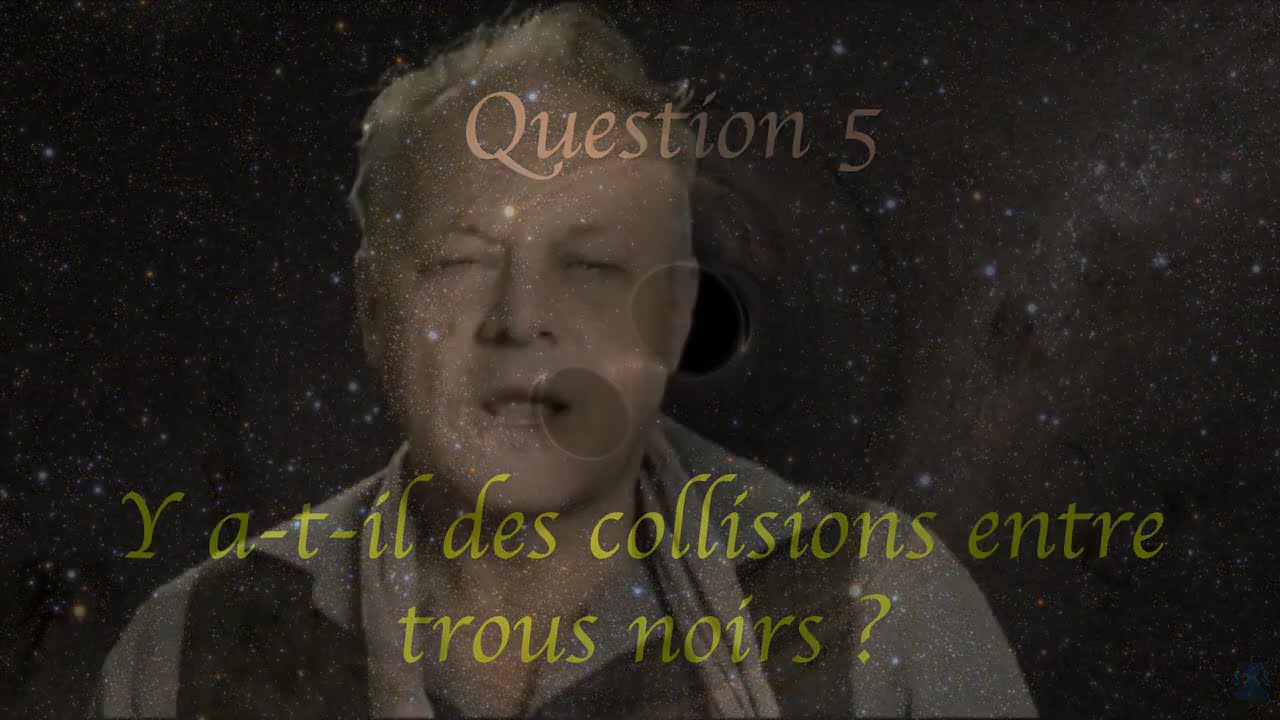
- Collisions and mergers: Black holes can merge, and the resulting black hole is more massive than the sum of its progenitors.
- Hawking radiation and the information paradox: Microscopic black holes and quantum evaporation.
- Black holes as computers: The holographic principle and speculative ideas about black hole computing.
- Teleportation via black holes and wormholes: Theoretical possibilities and limitations.
Cited Sources
- Video description — The video description lists the eight questions addressed in the video.
Concurring Sources
- Black hole - Wikipedia — Provides general information on black holes, consistent with the video's content.
- Hawking radiation - Wikipedia — Explains the concept of Hawking radiation, which the video discusses.
Dissenting Sources
- No known discordant sources — The video's content is consistent with mainstream scientific consensus.
Contribution & Novelties
This video provides a comprehensive and accessible overview of black hole physics, synthesizing historical context, observational evidence, and theoretical concepts. It is particularly valuable for its clear explanations of complex topics such as Hawking radiation, the information paradox, and the holographic principle, making them understandable to a general audience. The speaker’s personal insights and pioneering work in black hole visualization add a unique perspective.
Pour aller plus loin :
- Black hole - Wikipedia — Comprehensive overview of black hole properties and history.
- Hawking radiation - Wikipedia — Detailed explanation of the quantum process by which black holes emit radiation.
- Information paradox - Wikipedia — Discussion of the paradox and proposed resolutions.
- Holographic principle - Wikipedia — Theoretical framework suggesting that black holes encode information on their boundaries.
127 words
Radar Profile
The radar profile shows high scores in quality of information and reliability, reflecting the expert presentation and accurate content. The quantity of information is moderate, as the video covers eight questions in a concise format. The technical level is appropriate for a general audience, balancing accessibility with scientific depth.
💬 No comments were provided for analysis.