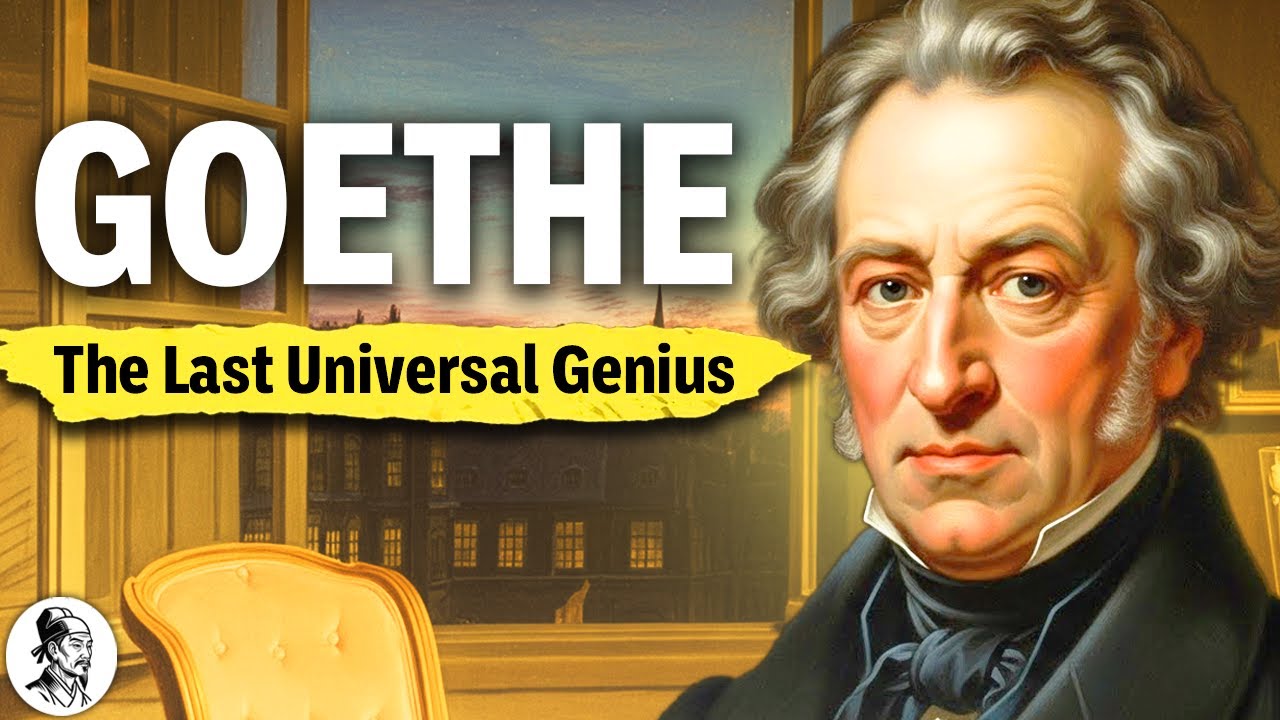
Goethe Documentary to Fall Asleep To
Keywords
Summary
121 words
Critical Evaluation
Value of the Information & Strength of the Argument
The documentary provides a rich and engaging narrative of Goethe’s life, offering valuable insights into his personal development, his major works, and his intellectual evolution. The argumentation is coherent and well-structured, presenting Goethe’s life as a series of transformative experiences that shaped his worldview and creative output. The value lies in its accessibility and its ability to convey the complexity of Goethe’s character without oversimplifying. However, the argumentation is primarily narrative rather than analytical, and it does not engage deeply with scholarly debates or alternative interpretations. The documentary’s strength is its storytelling, which effectively brings Goethe’s world to life, but it may not satisfy viewers seeking critical analysis or rigorous historical examination.
Scientific Rigor, Source Quality, Title Accuracy
The documentary demonstrates a solid grasp of Goethe’s biography, drawing on well-established historical facts and widely accepted anecdotes. It does not cite specific sources, but the information presented aligns with mainstream biographical accounts. The title accurately reflects the content, and the documentary’s purpose as a sleep aid is evident in its pacing and tone. The lack of explicit citations and the use of dramatized elements slightly reduce its scientific rigor, but it remains a reliable overview for a general audience. The documentary does not engage with primary sources directly, but it synthesizes secondary literature effectively. Overall, the title-content alignment is strong, and the scientific quality is adequate for its intended purpose.
238 words
Title / Content Match
The title accurately reflects the content: a comprehensive biographical documentary about Goethe designed to be soothing and suitable for falling asleep.
Quality & Reliability
7/10
The documentary provides a detailed and engaging narrative of Goethe's life, drawing on well-known historical facts and anecdotes. It maintains a high level of accuracy in its portrayal of major events and works, though it simplifies some complex aspects for narrative flow. The lack of explicit citations and the presence of dramatized elements slightly reduce its reliability as a strictly factual source.
Key Moments
Markers derived by PSI from the transcript: the creator did not define chapters.
- Introduction: Goethe's birth and early childhood in Frankfurt.
- Goethe's education and early literary influences.
- Goethe's time in Leipzig and his first love experiences.
- Goethe's illness and interest in alchemy.
- Goethe's encounter with Herder in Strasbourg and the Sturm und Drang movement.
- Goethe's early plays and the success of 'Götz von Berlichingen'.
- Goethe's time in Wetzlar and his love for Charlotte Buff.
- The suicide of Jerusalem and the writing of 'The Sorrows of Young Werther'.
- The publication and impact of 'Werther'.
- Goethe's move to Weimar and his role as a statesman.
Cited Sources
- Mind Palace YouTube Channel — The channel is mentioned in the video description as the source of the documentary.
Concurring Sources
- Johann Wolfgang von Goethe - Britannica — Provides a comprehensive and authoritative biography of Goethe, consistent with the documentary's narrative.
Dissenting Sources
- Goethe's Scientific Work - Wikipedia — The documentary briefly mentions Goethe's scientific pursuits, but some scholars argue that his scientific contributions are undervalued. This source provides a more detailed account of his scientific work, which may be seen as discordant with the documentary's emphasis on his literary achievements.
Contribution & Novelties
The documentary provides a comprehensive and accessible overview of Goethe’s life, synthesizing well-known biographical facts into a coherent narrative. Its original contribution lies in its presentation style, which is designed to be soothing and suitable for falling asleep, making it unique in the genre of biographical documentaries. It does not introduce new research but rather repackages existing knowledge in an engaging format.
Pour aller plus loin :
- Johann Wolfgang von Goethe - Wikipedia — Provides a detailed and well-referenced overview of Goethe’s life and works.
- Sturm und Drang - Wikipedia — Explores the literary movement that Goethe was part of.
- Faust - Wikipedia — Offers information on Goethe’s most famous work.
111 words
Radar Profile
The radar profile shows high scores in quantity of information and reliability, reflecting the documentary's comprehensive coverage and generally accurate content. The lower score in technical level indicates that the documentary is accessible to a general audience, without deep scientific or technical detail. Overall, the profile suggests a well-rounded, informative, and reliable biographical documentary.