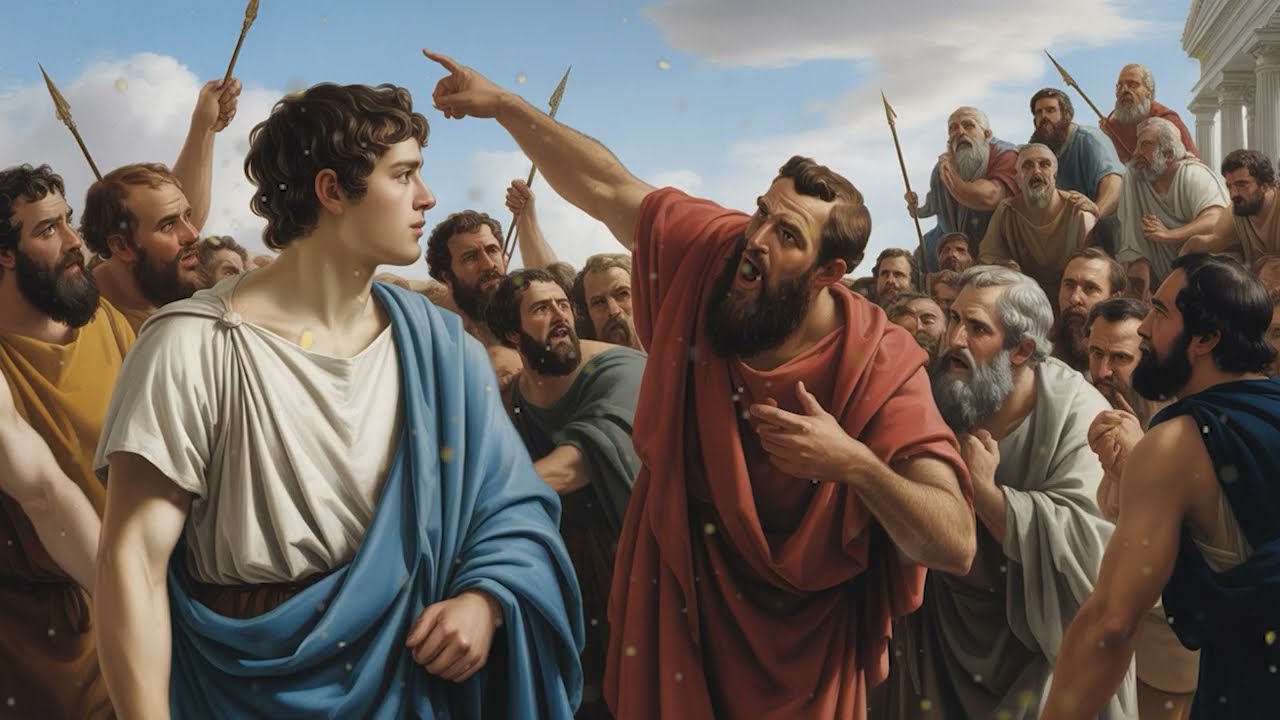
Plato Documentary to Fall Asleep To
Keywords
Summary
156 words
Critical Evaluation
Value of the Information & Strength of the Argument
The documentary provides a rich narrative that contextualizes Plato’s philosophy within the historical events of his time, such as the Peloponnesian War and the trial of Socrates. It effectively argues that Plato’s experiences with Athenian democracy and its failures influenced his philosophical critiques. The argumentation is coherent and well-structured, presenting a compelling case for Plato’s enduring relevance. However, it relies heavily on narrative storytelling rather than rigorous analysis, and some claims are presented without direct evidence, though they align with mainstream historical scholarship.
Scientific Rigor, Source Quality, Title Accuracy
The documentary demonstrates a reasonable level of scientific rigor, adhering to widely accepted historical accounts of Plato’s life. However, it does not explicitly cite sources within the video, and the description only provides a general overview. The title accurately reflects the content, as it is a documentary about Plato designed for relaxation. The content aligns with the title, though the ‘fall asleep to’ aspect is a stylistic choice rather than a substantive deviation.
171 words
Title / Content Match
The title accurately reflects the content: a documentary about Plato designed for relaxation and sleep.
Quality & Reliability
7/10
The documentary presents a coherent narrative of Plato's life based on historical consensus, but lacks explicit citations and includes some speculative elements. It is generally reliable for a general audience.
Key Moments
Markers derived by PSI from the transcript: the creator did not define chapters.
- Introduction to Plato's birth and aristocratic background.
- Discussion of the Peloponnesian War and its impact on Athens.
- First encounter with Socrates and the Socratic method.
- The reign of the Thirty Tyrants and Socrates' refusal to participate.
- The trial and execution of Socrates.
- Plato's travels and studies in various Mediterranean regions.
- Founding of the Academy and Plato's teachings.
- Explanation of the Theory of Forms and the Allegory of the Cave.
- Plato's political philosophy in 'The Republic'.
- Plato's later years, death, and legacy.
Cited Sources
- Mind Palace YouTube Channel — Channel subscription link provided in the video description.
Concurring Sources
- Plato - Stanford Encyclopedia of Philosophy — Provides scholarly consensus on Plato's life and philosophy, aligning with the documentary's narrative.
Contribution & Novelties
The documentary offers a comprehensive and accessible overview of Plato’s life, synthesizing historical events and philosophical ideas into a cohesive narrative. Its main contribution is making Plato’s complex philosophy understandable to a general audience, particularly through the lens of his personal experiences. It does not present new research but rather a well-structured summary of existing knowledge.
Pour aller plus loin :
- Plato - Stanford Encyclopedia of Philosophy — Comprehensive academic resource on Plato’s life and works.
- The Academy - Wikipedia — Detailed information on the Academy’s history and significance.
- Allegory of the Cave - Wikipedia — Explanation of one of Plato’s most famous metaphors.
104 words
Radar Profile
The radar profile shows high scores in quantity of information and global reliability, but lower in technical level, indicating a broad but non-specialized presentation. This aligns with its purpose as a documentary for general audiences.