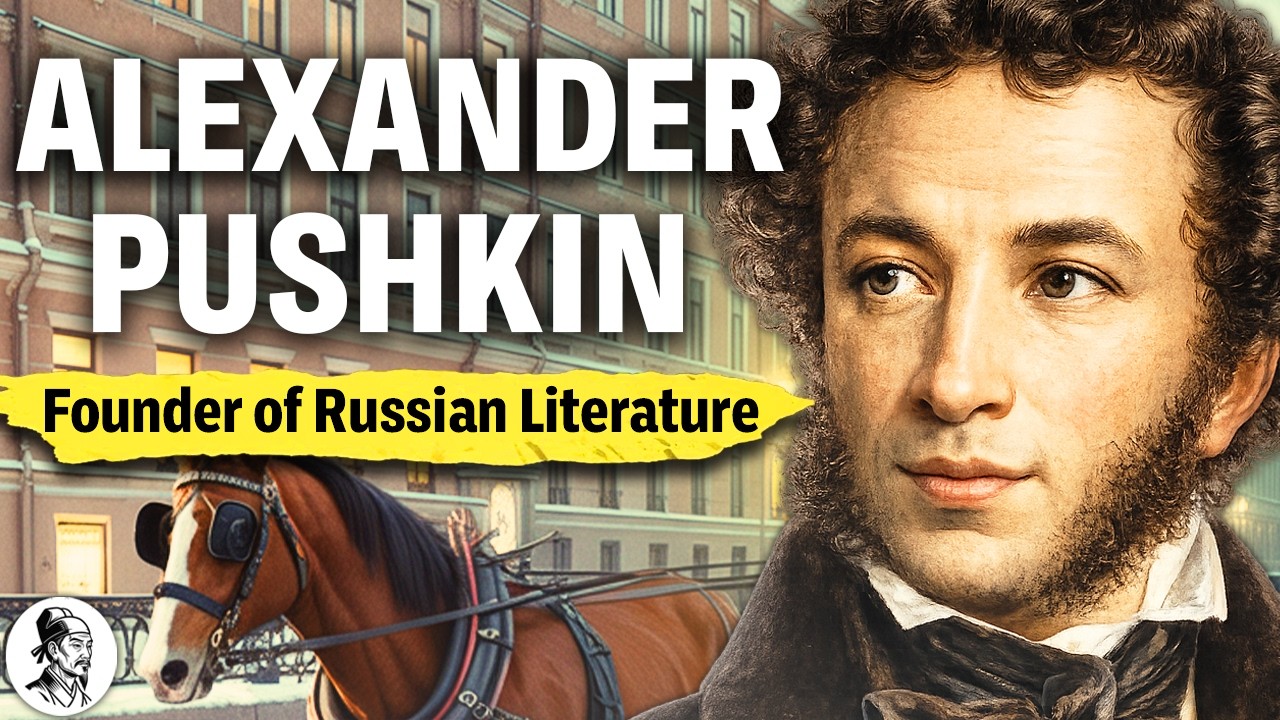
Alexander Pushkin Documentary to Fall Asleep To
Keywords
Summary
114 words
Critical Evaluation
Value of the Information & Strength of the Argument
The documentary provides a rich and detailed account of Pushkin’s life, offering valuable insights into his personal struggles and creative evolution. The argumentation is coherent and well-structured, presenting Pushkin’s life as a series of transformative events that shaped his literary output. The use of historical context, such as the Decembrist uprising, adds depth to the narrative. However, the documentary occasionally relies on dramatic storytelling rather than rigorous analysis, and it does not critically examine conflicting historical interpretations.
Scientific Rigor, Source Quality, Title Accuracy
The documentary demonstrates a solid grasp of Pushkin’s biography, but it does not explicitly cite sources. The information is generally accurate, but the lack of references makes it difficult to verify specific claims. The title is appropriate, as the content is a comprehensive biography presented in a calm, soothing manner. The documentary does not engage with academic debates or provide a critical perspective on Pushkin’s life, but it serves as a reliable introductory overview.
166 words
Title / Content Match
The title accurately reflects the content: a comprehensive biography of Pushkin designed for relaxation and sleep, with a calm narration and no abrupt interruptions.
Quality & Reliability
7/10
The documentary provides a detailed and engaging narrative of Pushkin's life, grounded in well-known historical facts. It avoids sensationalism and maintains a sober tone. However, it lacks explicit citations to primary sources or academic references, and some dramatic elements are presented without nuance.
Key Moments
Markers derived by PSI from the transcript: the creator did not define chapters.
- Introduction to Pushkin's birth and family background.
- Pushkin's education at the Imperial Lyceum.
- Early literary success and publication of 'Ruslan and Ludmila'.
- Exile to southern Russia and writing 'The Prisoner of the Caucasus'.
- Transfer to Odessa and affair with Countess Vorontsova.
- Exile to Mikhailovskoye and composition of 'Boris Godunov'.
- Decembrist uprising and Pushkin's meeting with Tsar Nicholas I.
- Return to Moscow and life under imperial censorship.
- Marriage to Natalia Goncharova and later years.
- Pushkin's duel and death.
Cited Sources
- Mind Palace YouTube Channel — Channel link provided in the video description.
Concurring Sources
- Alexander Pushkin - Wikipedia — General biographical information aligns with the documentary.
Contribution & Novelties
The documentary offers a comprehensive and accessible overview of Pushkin’s life, synthesizing known biographical facts into a coherent narrative. It emphasizes the influence of his African heritage and his nurse’s folk tales on his literary development, providing a nuanced perspective. The ‘Pour aller plus loin’ section suggests further exploration of Pushkin’s works and historical context.
Pour aller plus loin :
- Eugene Onegin — The novel in verse, considered Pushkin’s masterpiece.
- Boris Godunov (play) — A historical drama that broke with classical conventions.
- Decembrist revolt — The uprising that influenced Pushkin’s political views.
92 words
Radar Profile
The radar profile shows high scores in quantity of information and reliability, with moderate technical depth. This indicates a comprehensive and trustworthy overview, but with limited analytical or technical sophistication.
💬 No comments were provided for analysis.