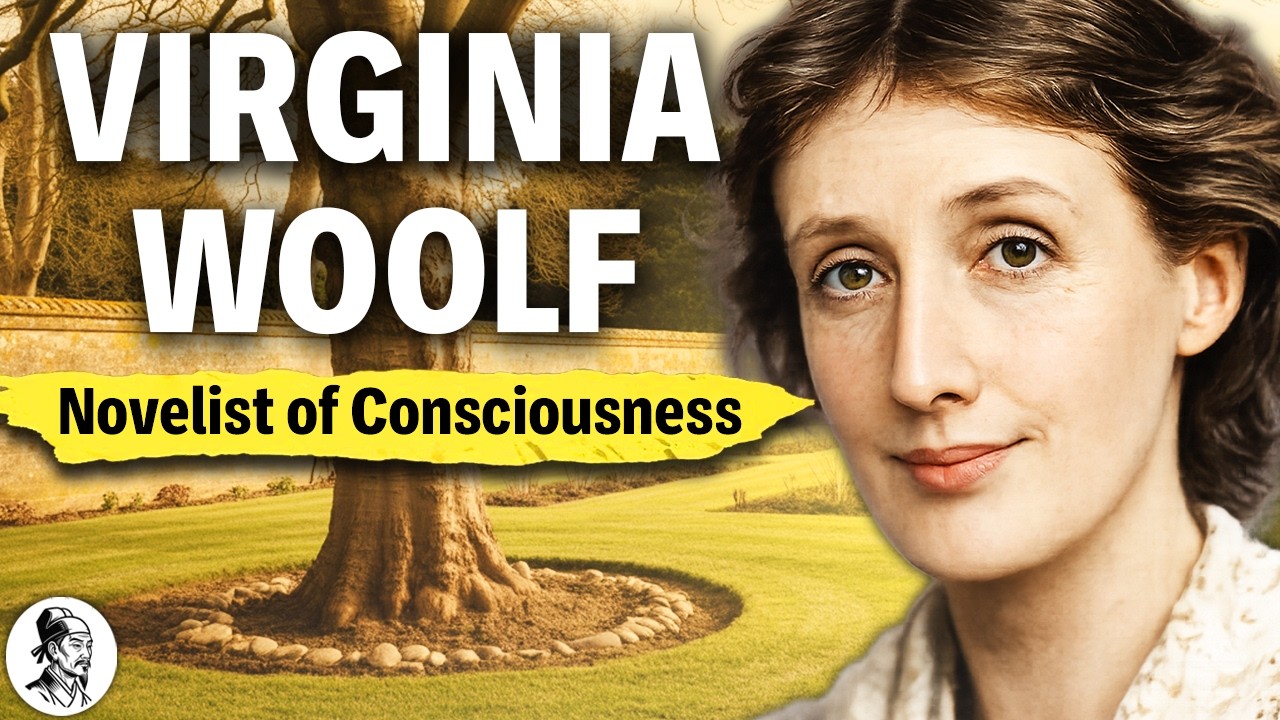
Virginia Woolf Documentary to Fall Asleep To
Keywords
Summary
151 words
Critical Evaluation
Value of the Information & Strength of the Argument
The documentary offers substantial value by providing a comprehensive and empathetic portrayal of Woolf’s life, integrating her personal struggles with her literary achievements. The argumentation is coherent and well-structured, presenting a narrative that connects her traumatic experiences and mental health challenges to her innovative writing style. It avoids oversimplification and presents multiple perspectives, such as the complexity of her marriage and her ambivalence about sexuality. The pacing is deliberate, suited for a sleep aid, but it maintains intellectual rigor throughout.
Scientific Rigor, Source Quality, Title Accuracy
The documentary demonstrates scientific rigor by grounding its narrative in well-documented biographical facts, including Woolf’s own writings and known historical events. It does not cite specific sources within the video, but the information aligns with established scholarship on Woolf. The title accurately reflects the content, as it is a biographical documentary designed for falling asleep, with a calm and soothing tone. The description provides additional context, mentioning key works and themes, which matches the content.
170 words
Title / Content Match
The title accurately reflects the content: a comprehensive biography of Virginia Woolf designed for relaxation and sleep, with a calm narrative pace.
Quality & Reliability
8/10
The documentary presents a well-researched and nuanced account of Virginia Woolf's life, drawing on her diaries, memoirs, and biographical sources. It handles sensitive topics with care and avoids sensationalism, though it does not cite specific sources within the video.
Key Moments
Markers derived by PSI from the transcript: the creator did not define chapters.
- Introduction to Virginia Woolf's suicide and her mental state.
- Childhood and family background, including her parents' previous marriages.
- Death of her mother and first mental breakdown.
- Sexual abuse by half-brothers and its impact.
- Move to Bloomsbury and formation of the Bloomsbury Group.
- Marriage to Leonard Woolf and suicide attempt.
- Founding of the Hogarth Press and early experimental writing.
- Affair with Vita Sackville-West and writing 'Mrs. Dalloway'.
- Publication of 'To the Lighthouse' and its autobiographical elements.
- Writing 'A Room of One's Own' and feminist arguments.
Cited Sources
- Mind Palace YouTube Channel — Channel link provided in the video description for subscription.
Concurring Sources
- Virginia Woolf - Wikipedia — Provides biographical details consistent with the documentary.
- The Hogarth Press - Wikipedia — Information about the press founded by the Woolfs, as mentioned in the video.
Contribution & Novelties
This documentary provides a comprehensive and accessible overview of Virginia Woolf’s life, synthesizing known biographical information into a coherent narrative. Its contribution lies in its presentation style, designed for relaxation and sleep, which may help audiences absorb literary history in a unique way. It does not present new research but offers a thoughtful synthesis.
Pour aller plus loin :
- Virginia Woolf - Wikipedia — Comprehensive overview of her life and works.
- Stream of consciousness - Wikipedia — Explanation of the literary technique she pioneered.
- Bloomsbury Group - Wikipedia — Details on the intellectual circle she was part of.
- A Room of One’s Own - Wikipedia — Context on her feminist essay.
111 words
Radar Profile
The radar profile shows high scores in quantity of information and reliability, with moderate technical level. This indicates a comprehensive and trustworthy biography that is accessible to a general audience, with a focus on narrative rather than deep literary analysis.