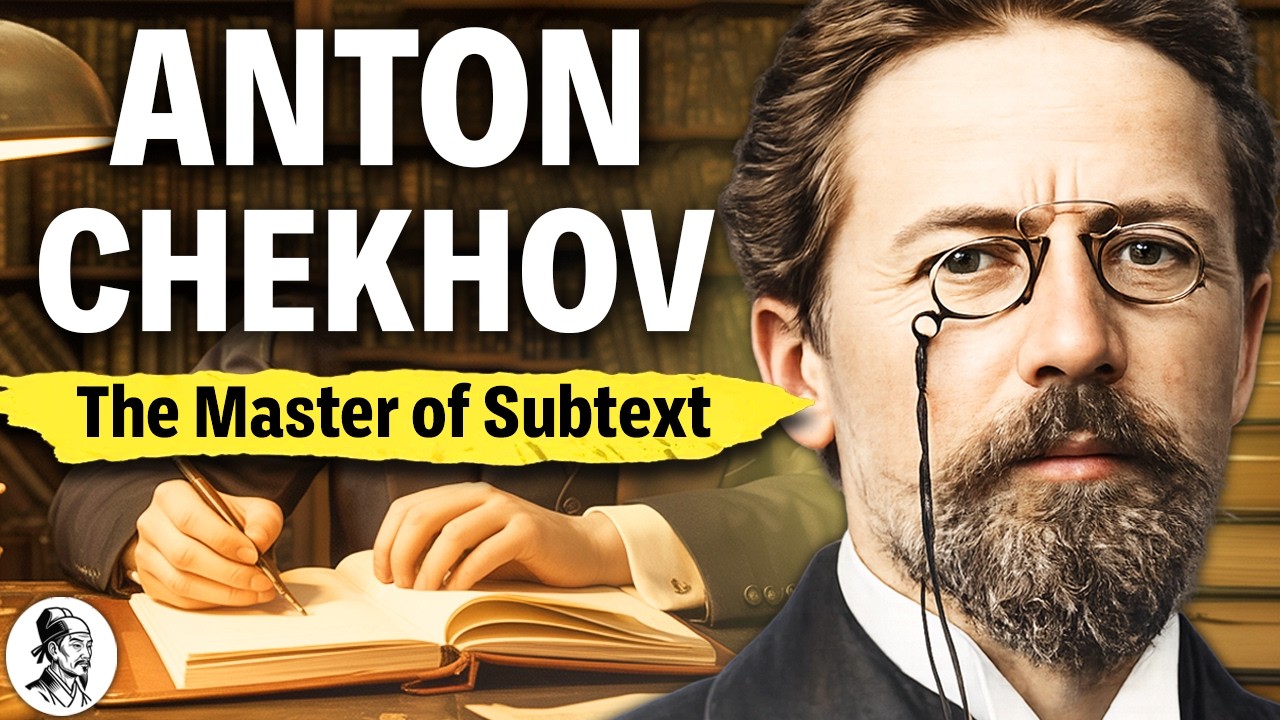
Anton Chekhov Documentary to Fall Asleep To
Keywords
Summary
139 words
Critical Evaluation
Value of the Information & Strength of the Argument
The documentary provides a comprehensive and engaging narrative of Chekhov’s life, offering valuable insights into his personal struggles and creative development. The argumentation is coherent, presenting Chekhov’s life as a series of contradictions and challenges that shaped his literary voice. The storytelling is compelling, but it relies on a narrative style rather than rigorous argumentation. The value lies in its accessibility and emotional resonance, making complex literary history approachable for a general audience. However, it lacks critical analysis of his works and does not engage with scholarly debates about his legacy.
Scientific Rigor, Source Quality, Title Accuracy
The documentary demonstrates a reasonable level of scientific rigor by adhering to well-documented biographical facts. However, it does not cite specific sources, and the narrative is presented without references to primary documents or academic works. The title accurately reflects the content, as the documentary is indeed a biographical overview designed for relaxation. The absence of explicit source citations and the dramatized presentation reduce its reliability as a scholarly resource, but it remains a useful introductory overview for those unfamiliar with Chekhov.
187 words
Title / Content Match
The title accurately reflects the content: a comprehensive biographical documentary designed to be soothing and suitable for falling asleep.
Quality & Reliability
7/10
The documentary provides a well-structured biographical narrative based on widely known facts about Chekhov's life, but it lacks explicit citations to primary sources or scholarly references. The information is generally accurate, but the absence of direct source attribution and the dramatized storytelling style reduce its reliability for academic purposes.
Key Moments
Markers derived by PSI from the transcript: the creator did not define chapters.
- Introduction to Chekhov's death and his final words about champagne, setting the tone for the biography.
- Chekhov's birth in Taganrog and his family background, including his grandfather's serfdom.
- Description of his father's tyranny and the family's financial collapse, leading to Chekhov being left alone in Taganrog.
- Chekhov's move to Moscow to study medicine and his early writing career under pseudonyms.
- The influence of Grigorovich's letter, prompting Chekhov to take his writing more seriously.
- Chekhov's medical career and his work during the cholera epidemic, alongside his literary output.
- The success of 'The Seagull' and the beginning of his collaboration with the Moscow Art Theatre.
- Diagnosis of tuberculosis and his move to Yalta, where he wrote 'Uncle Vanya' and 'The Three Sisters'.
- His marriage to Olga Knipper and the challenges of their long-distance relationship.
- The premiere of 'The Cherry Orchard' and Chekhov's declining health, leading to his death in 1904.
Cited Sources
- Mind Palace YouTube Channel — The channel's subscription link, mentioned in the video description.
Concurring Sources
- Anton Chekhov - Encyclopaedia Britannica — Provides a scholarly overview of Chekhov's life and works, consistent with the documentary's narrative.
Dissenting Sources
- No discordant sources found — The documentary aligns with mainstream biographical accounts; no conflicting sources were identified.
Contribution & Novelties
The documentary offers a comprehensive and accessible overview of Chekhov’s life, synthesizing known biographical information into a coherent narrative. Its originality lies in its presentation style, designed for relaxation and sleep, making literary history approachable for a broad audience. It does not introduce new research but serves as a valuable educational resource.
Pour aller plus loin :
- Anton Chekhov - Wikipedia — Provides a detailed and referenced biography of Chekhov.
- The Cherry Orchard - Wikipedia — Offers analysis and background of Chekhov’s final play.
- Chekhov’s Gun - Wikipedia — Explains the narrative principle attributed to Chekhov.
96 words
Radar Profile
The radar profile shows high scores in quantity of information and reliability, reflecting the comprehensive and accurate biographical content. The lower score in technical level indicates the content is accessible to a general audience, while the moderate quality of information score suggests a lack of in-depth analysis. Overall, the profile is balanced for an educational documentary.
💬 No comments were provided for analysis.