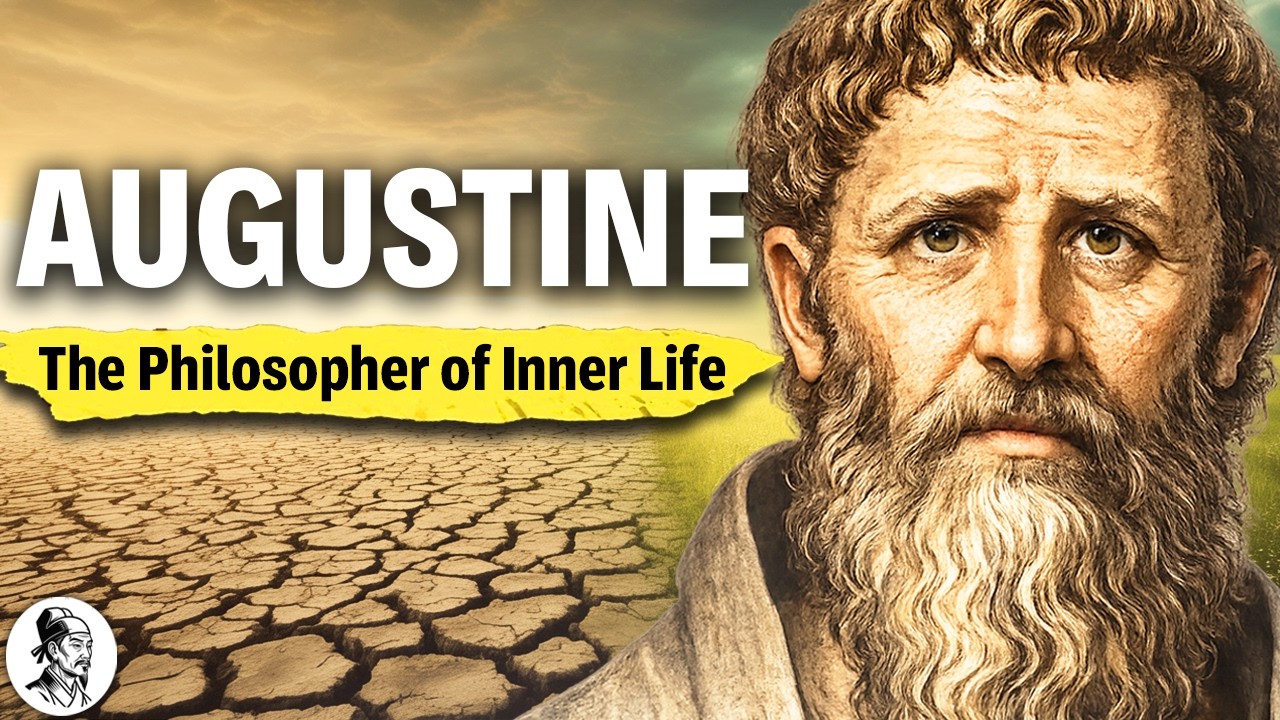
Augustine Documentary to Fall Asleep To
Keywords
Summary
154 words
Critical Evaluation
Value of the Information & Strength of the Argument
The documentary offers substantial value by presenting a detailed and accessible account of Augustine’s life, integrating historical context with personal anecdotes. The argumentation is solid, relying on well-established historical facts and Augustine’s own writings. It effectively explains the significance of his theological contributions without oversimplifying, though it occasionally glosses over complex theological debates for the sake of narrative flow. The use of primary sources like ‘Confessions’ adds authenticity, and the documentary maintains a balanced perspective on controversial aspects of Augustine’s thought, such as his views on predestination and coercion.
Scientific Rigor, Source Quality, Title Accuracy
The documentary demonstrates scientific rigor by adhering to historical consensus and citing Augustine’s own works. It does not fabricate sources and accurately represents the historical context. The title is appropriate, as the content is a biographical documentary designed for relaxation. The description mentions key works and themes, which are covered in the video. There are no comments provided, so no analysis of public reception is possible.
170 words
Title / Content Match
The title accurately reflects the content: a documentary about Augustine of Hippo designed to be soothing for sleep, with a calm narration and historical focus.
Quality & Reliability
8/10
The documentary presents a well-structured narrative based on historical consensus, with accurate references to Augustine's life and works. It avoids speculative claims and maintains a neutral tone, though it simplifies some theological nuances for a general audience.
Key Moments
Markers derived by PSI from the transcript: the creator did not define chapters.
- Introduction to Augustine's birthplace and family background in Thagaste.
- Augustine's education in rhetoric and his involvement with the 'Wreckers'.
- Augustine's move to Carthage and his encounter with Manichaeism.
- Augustine's career in Rome and Milan, and his exposure to Neoplatonism.
- The garden conversion scene and Augustine's baptism by Ambrose.
- Augustine's return to Africa, the death of his mother Monica, and his ordination as bishop.
- Augustine's conflicts with Donatists and Pelagians, and his writings on grace and predestination.
- The writing of 'Confessions' and its significance as an autobiography.
- The sack of Rome and Augustine's response in 'The City of God'.
- Augustine's death and his legacy in Western thought.
Cited Sources
- Confessions — Augustine's autobiographical work, cited as a primary source for his life and conversion.
- The City of God — Augustine's major work responding to the sack of Rome, discussed in the documentary.
Concurring Sources
- Augustine of Hippo: A Biography — Provides historical details consistent with the documentary's account.
- The Cambridge Companion to Augustine — Academic resource supporting the theological and philosophical analysis.
Dissenting Sources
- Augustine and the Problem of Evil — Some scholars interpret Augustine's views on evil differently, but the documentary's presentation is generally accepted.
Contribution & Novelties
The documentary provides a comprehensive and engaging narrative of Augustine’s life, synthesizing historical facts with psychological insights. It offers a balanced view of his theological controversies and personal struggles, making it accessible to a general audience. The focus on his early life and conversion adds depth to understanding his later works.
Pour aller plus loin :
- Augustine of Hippo — Overview of his life and thought.
- Manichaeism — The dualistic religion Augustine followed before conversion.
- Neoplatonism — Philosophical influence on Augustine’s theology.
- Donatism — The schism Augustine opposed in North Africa.
- Pelagianism — The heresy Augustine combated regarding free will and grace.
102 words
Radar Profile
The radar profile shows high scores in quantity and quality of information, with a moderate technical level. This indicates a well-researched documentary that is accessible to a broad audience, with strong reliability and educational value.