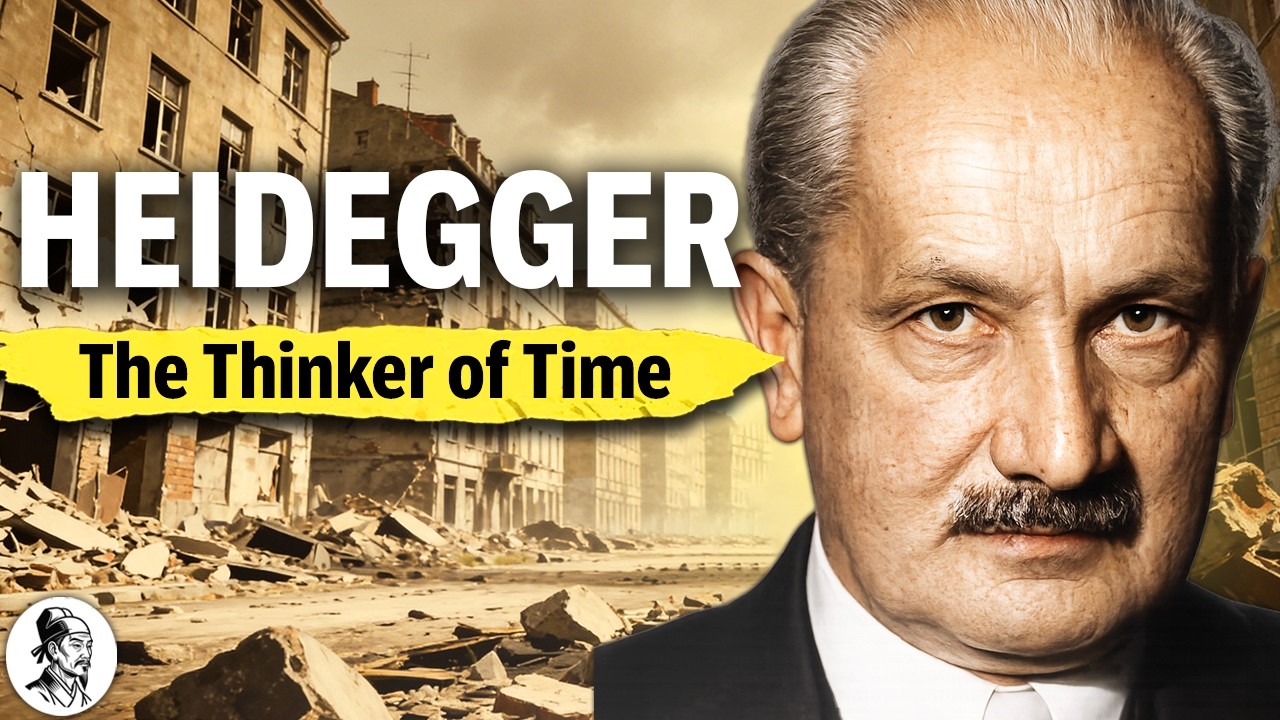
Heidegger Documentary to Fall Asleep To
Keywords
Summary
111 words
Critical Evaluation
Value of the Information & Strength of the Argument
The documentary offers a valuable synthesis of Heidegger’s complex philosophy, making it accessible to a general audience. It presents his ideas in a clear, chronological narrative, connecting his personal experiences to his philosophical development. The argumentation is generally solid, though it occasionally simplifies or omits nuances. The treatment of Heidegger’s Nazi involvement is measured, acknowledging the controversy without sensationalism. The value lies in its comprehensive overview, which serves as a good introduction for those unfamiliar with Heidegger.
Scientific Rigor, Source Quality, Title Accuracy
The documentary demonstrates reasonable scientific rigor, but it does not cite specific sources or provide references. It relies on well-known biographical facts and philosophical interpretations, but lacks direct quotes or citations from Heidegger’s works. The title accurately reflects the content, as it is indeed a documentary intended for falling asleep, with a slow pace and soothing narration. The adequacy between title and content is high, though the philosophical depth might be underestimated by the title.
167 words
Title / Content Match
The title accurately reflects the content: a documentary about Heidegger designed for falling asleep, with a calm narration and historical focus.
Quality & Reliability
7/10
The documentary provides a comprehensive overview of Heidegger's life and ideas, but lacks direct citations to primary sources and includes some speculative elements. It is generally accurate but not deeply sourced.
Key Moments
Markers derived by PSI from the transcript: the creator did not define chapters.
- Introduction to Heidegger's early life and Catholic upbringing.
- Heidegger's encounter with Brentano's work and the question of Being.
- Heidegger's shift from theology to phenomenology under Husserl.
- Development of his early lectures and the concept of Dasein.
- Publication of 'Being and Time' and its immediate impact.
- Heidegger's return to Freiburg and his inaugural lecture 'What is Metaphysics?'
- Heidegger's engagement with politics and his election as rector.
- Discussion of Heidegger's Nazi involvement and its consequences.
- Later thought on technology and the 'question concerning technology'.
- Conclusion on Heidegger's legacy and influence.
Cited Sources
- Mind Palace YouTube Channel — The channel that produced this documentary.
Concurring Sources
- Stanford Encyclopedia of Philosophy: Martin Heidegger — Provides a scholarly overview of Heidegger's life and works, consistent with the documentary's presentation.
Dissenting Sources
- Heidegger and Nazism (Wikipedia) — Some interpretations of Heidegger's Nazi involvement are more critical than the documentary's balanced approach.
Contribution & Novelties
The documentary provides a comprehensive and accessible overview of Heidegger’s life and philosophy, making complex ideas understandable to a broad audience. It uniquely combines biographical narrative with philosophical explanation, offering a holistic view. For those interested in delving deeper, the following resources are recommended:
Pour aller plus loin :
- Stanford Encyclopedia of Philosophy: Martin Heidegger — A thorough academic overview of Heidegger’s philosophy.
- Being and Time (Wikipedia) — Overview of Heidegger’s magnum opus.
- Heidegger and Nazism (Wikipedia) — Discussion of the controversy.
- Phenomenology (Internet Encyclopedia of Philosophy) — Introduction to phenomenology, the philosophical movement Heidegger contributed to.
97 words
Radar Profile
The radar profile shows high scores in quantity and quality of information, with moderate technical level and reliability. This indicates a well-rounded documentary that is informative and accessible, though not deeply technical or heavily sourced.