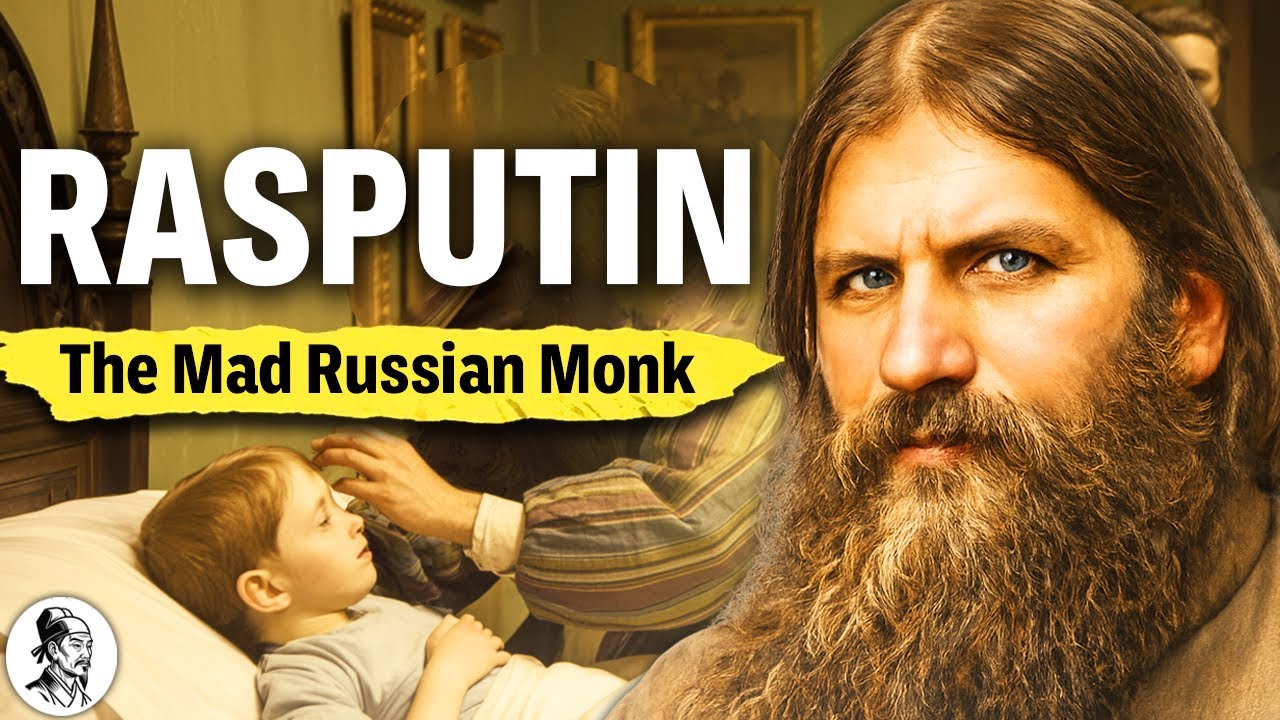
Rasputin Documentary to Fall Asleep To
Keywords
Summary
141 words
Critical Evaluation
Value of the Information & Strength of the Argument
The documentary offers a detailed and engaging narrative, synthesizing historical accounts into a coherent story. It provides valuable insights into the social and political dynamics of early 20th-century Russia, particularly the role of mysticism and the desperation of the imperial family. The argumentation is generally solid, presenting multiple perspectives on controversial events, such as Rasputin’s healing powers and his influence over the Tsarina. However, it sometimes relies on speculation and lacks direct citations, which weakens its scholarly rigor. The narrative is compelling and well-structured, making it accessible to a broad audience.
Scientific Rigor, Source Quality, Title Accuracy
The documentary demonstrates a reasonable level of scientific rigor, drawing on well-known historical events and figures. However, it does not explicitly cite sources, and some interpretations are presented without clear evidence. The title accurately reflects the content, which is a biographical documentary designed for relaxation or sleep. The lack of explicit citations and the presence of speculative elements slightly reduce its reliability, but it remains a useful introduction to Rasputin’s life and times.
179 words
Title / Content Match
The title accurately reflects the content, which is a long-form biographical documentary designed for relaxation or sleep.
Quality & Reliability
7/10
The documentary presents a coherent narrative based on historical accounts, but lacks explicit citations and includes speculative elements. It relies on well-known historical events and figures, but some interpretations are presented without clear sourcing.
Key Moments
Markers derived by PSI from the transcript: the creator did not define chapters.
- Rasputin's birth in Pokrovskoye and early life in poverty.
- Rasputin's spiritual awakening and time at Verkhoturye Monastery.
- Rasputin's arrival in St. Petersburg and introduction to high society.
- First meeting with Tsar Nicholas II and Tsarina Alexandra.
- Rasputin's role in healing Alexei's hemophilia episodes.
- Growing political influence and opposition from the establishment.
- The crisis at Spala and Rasputin's telegram that allegedly saved Alexei.
- Rasputin's influence during World War I and the collapse of the government.
- Conspiracies and the assassination of Rasputin in 1916.
- Aftermath and the fall of the Romanov dynasty.
Contribution & Novelties
The documentary provides a comprehensive and accessible narrative of Rasputin’s life, synthesizing various historical accounts into a single story. It offers a balanced perspective, acknowledging both the miraculous claims and the skeptical interpretations, which is valuable for a general audience. The focus on the social and political context helps viewers understand the broader significance of Rasputin’s influence.
Pour aller plus loin :
- Rasputin - Wikipedia — Provides a detailed and referenced overview of Rasputin’s life and legacy.
- Russian Empire - Wikipedia — Contextualizes the political and social environment of early 20th-century Russia.
- Hemophilia - Wikipedia — Explains the medical condition that affected Alexei Romanov, central to Rasputin’s influence.
108 words
Radar Profile
The radar profile shows high scores in quantity of information and global reliability, with moderate technical level. This indicates a content-rich documentary that is accessible to a general audience, but not deeply technical or heavily cited.