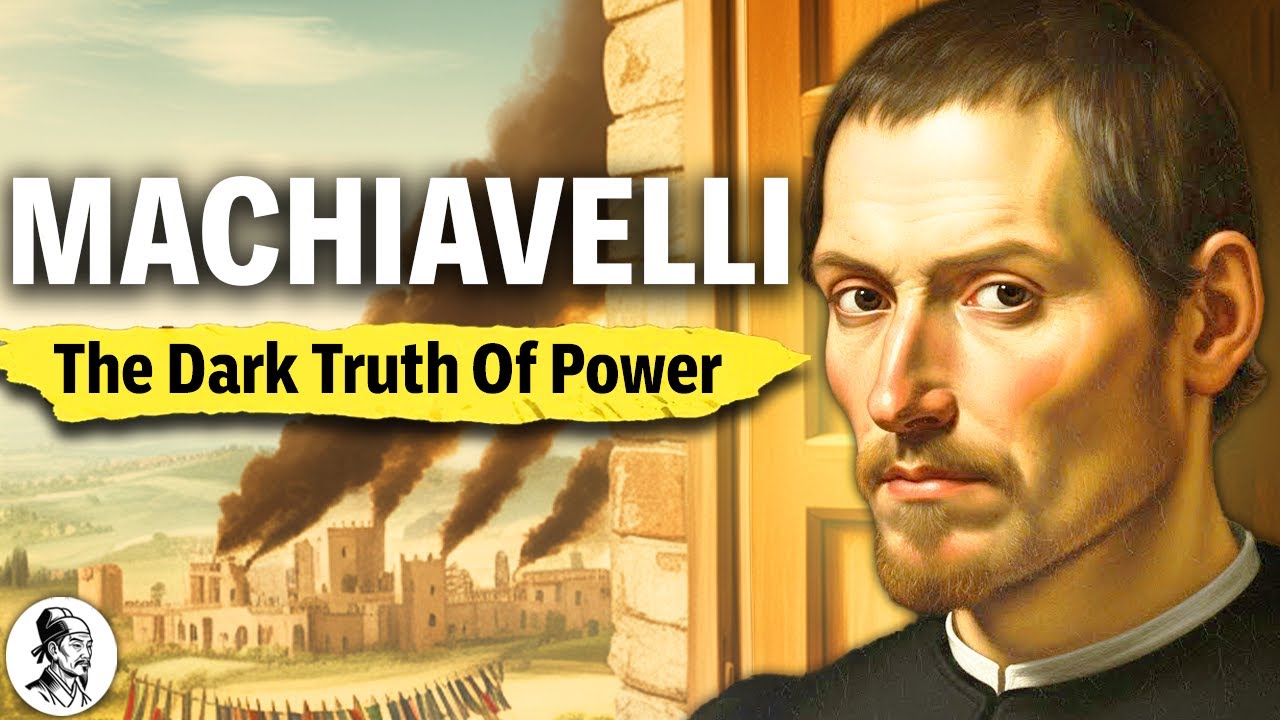
Machiavelli Documentary to Fall Asleep To
Keywords
Summary
142 words
Critical Evaluation
Value of the Information & Strength of the Argument
The documentary offers valuable insights into Machiavelli’s life and the political context of Renaissance Italy. It effectively argues that Machiavelli’s experiences, particularly his observations of Cesare Borgia and the failures of mercenary armies, directly shaped his pragmatic political philosophy. The narrative is compelling and well-structured, presenting a coherent thesis that Machiavelli’s ideas were born from practical experience rather than abstract theory. However, the argumentation sometimes relies on dramatization and psychological speculation, which, while engaging, may not be fully supported by historical evidence.
Scientific Rigor, Source Quality, Title Accuracy
The documentary demonstrates a good level of scientific rigor in its broad historical accuracy, but it lacks explicit citations to primary sources. It draws on well-known historical events and Machiavelli’s own writings, but does not reference specific scholarly works. The title accurately reflects the content, as it is a long-form documentary designed for relaxation. The description provides a clear overview of the topics covered, aligning with the actual content.
166 words
Title / Content Match
The title accurately reflects the content: a long-form documentary about Machiavelli, designed to be listened to while falling asleep.
Quality & Reliability
7/10
The documentary provides a detailed and engaging narrative of Machiavelli's life, drawing on historical events and his writings. It is well-structured and accurate in its broad strokes, but lacks explicit citations to primary sources and includes some dramatized elements. The information is reliable for a general audience, but not suitable for academic citation.
Key Moments
Markers derived by PSI from the transcript: the creator did not define chapters.
- Introduction to Machiavelli's birth in Florence and the political landscape of Renaissance Italy.
- Machiavelli's childhood and education under his father Bernardo.
- The death of Lorenzo de' Medici and the rise of Savonarola.
- Machiavelli's appointment as second chancellor and secretary to the Ten of War.
- Diplomatic mission to France and observations of King Louis XII's court.
- Encounter with Cesare Borgia and the lessons learned from his methods.
- The collapse of Borgia's power and its implications for Machiavelli's thinking.
- Machiavelli's advocacy for a citizen militia and the reconquest of Pisa.
- The return of the Medici, Machiavelli's dismissal, imprisonment, and torture.
- Exile to the farm and the writing of 'The Prince'.
Cited Sources
- The Prince by Niccolò Machiavelli — The documentary discusses 'The Prince' as Machiavelli's most famous work, written during his exile.
- Discourses on Livy by Niccolò Machiavelli — The documentary mentions Machiavelli's study of Livy, which influenced his political thought.
Concurring Sources
- Machiavelli: A Biography by Miles Unger — A modern biography that aligns with the documentary's portrayal of Machiavelli's life and times.
Dissenting Sources
- The Machiavellians: Defenders of Freedom by James Burnham — This work offers a different interpretation of Machiavelli's legacy, focusing on his influence on modern political realism.
Contribution & Novelties
The documentary provides a comprehensive and accessible narrative of Machiavelli’s life, connecting his personal experiences to his political theories. It offers a nuanced view of Machiavelli as a pragmatic thinker rather than a purely cynical one. The presentation of his exile and the writing of ‘The Prince’ adds depth to understanding his motivations.
Pour aller plus loin :
- The Prince (Wikipedia) — Overview and analysis of Machiavelli’s most famous work.
- Niccolò Machiavelli (Stanford Encyclopedia of Philosophy) — Scholarly examination of Machiavelli’s philosophy.
- Cesare Borgia (Wikipedia) — Background on the figure who influenced Machiavelli’s ideas on power.
96 words
Radar Profile
The radar profile shows high scores in quantity of information and global reliability, indicating a content-rich and generally trustworthy documentary. The moderate score in technical level suggests it is accessible to a general audience, while the lower score in information quality reflects the lack of explicit citations and some dramatization.
💬 Sur les 0 commentaires analysés, aucune tendance n'est disponible.