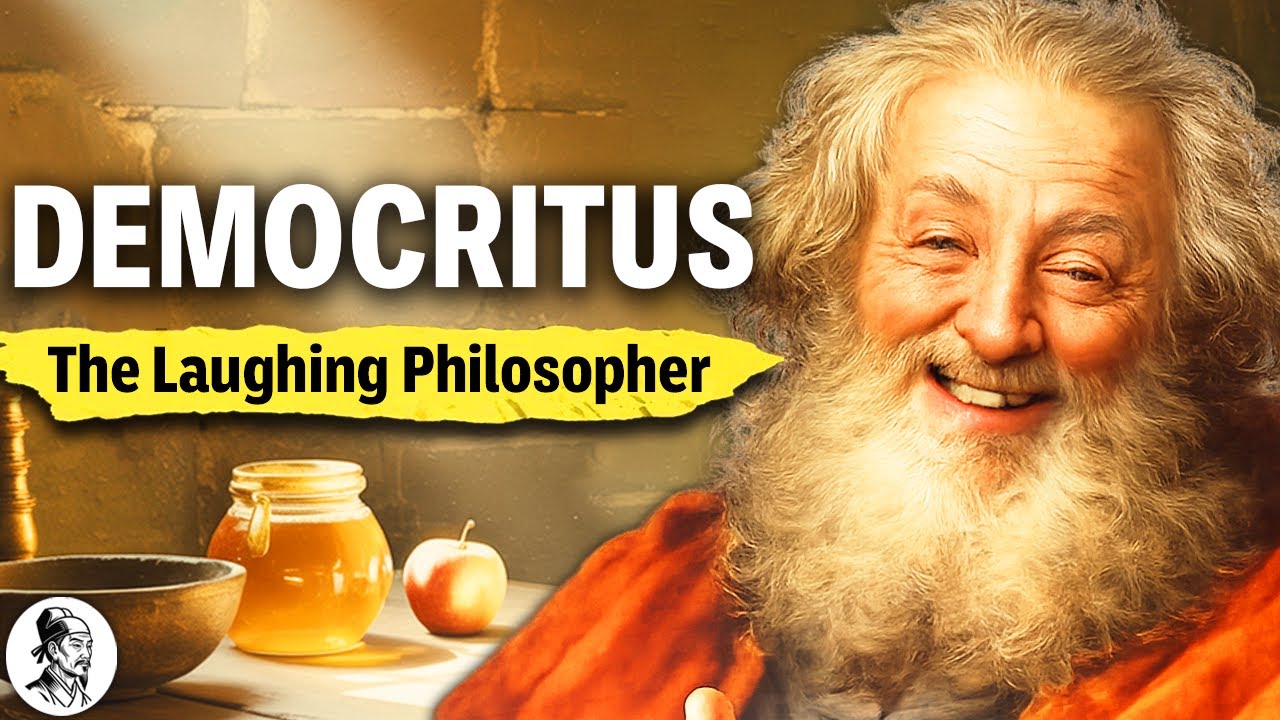
Democritus Documentary to Fall Asleep To
Keywords
Summary
136 words
Critical Evaluation
Value of the Information & Strength of the Argument
The documentary provides a valuable overview of Democritus’s life and contributions, synthesizing historical accounts and philosophical analysis. It presents a compelling argument for his significance as a precursor to modern science, while also addressing the challenges and criticisms his ideas faced. The narrative is engaging and well-structured, balancing biographical details with philosophical explanations. However, it occasionally simplifies complex philosophical debates and does not delve deeply into the nuances of Democritus’s epistemology or the full range of his ethical teachings. The argumentation is generally sound, but it relies on a narrative style rather than rigorous scholarly analysis.
Scientific Rigor, Source Quality, Title Accuracy
The documentary demonstrates a reasonable level of scientific rigor, drawing on established historical knowledge and scholarly interpretations of Democritus. It does not cite specific sources, but the content aligns with mainstream academic understanding. The title accurately reflects the content, as it is indeed a documentary about Democritus designed to be soothing and sleep-inducing. The production quality is high, with clear narration and atmospheric visuals. However, the lack of explicit citations and the occasional blending of legend with fact may reduce its reliability for academic purposes.
196 words
Title / Content Match
The title accurately reflects the content: a documentary about Democritus designed to be soothing and sleep-inducing.
Quality & Reliability
7/10
The documentary presents a coherent narrative of Democritus's life and ideas, drawing on historical sources and scholarly consensus. It clearly distinguishes between historical facts and legends, and avoids speculative claims. However, it lacks direct citations to primary sources and simplifies some philosophical nuances.
Key Moments
Markers derived by PSI from the transcript: the creator did not define chapters.
- Introduction to Democritus and his atomic theory
- Democritus's early life and education in Abdera
- Travels to Egypt and the East, learning from various cultures
- Return to Abdera and prosecution for squandering inheritance
- Development of atomic theory and explanation of natural phenomena
- The laughing philosopher: his worldview and ethics
- The problem of knowledge and the senses
- The soul as atoms and the nature of death
- Opposition from Plato and Aristotle, and the decline of atomism
- Legacy and rediscovery of Democritus's ideas
Cited Sources
- Mind Palace YouTube Channel — The channel's main page, mentioned in the description as a subscription link.
Concurring Sources
- Democritus - Internet Encyclopedia of Philosophy — Provides a detailed account of Democritus's life and philosophy, consistent with the documentary's narrative.
Dissenting Sources
- Aristotle's Physics — Aristotle's arguments against the void and atomism, which the documentary mentions but does not fully explore.
Contribution & Novelties
The documentary offers a comprehensive and accessible introduction to Democritus, highlighting his role as a pioneer of atomic theory and his influence on later scientific thought. It emphasizes the historical context and the philosophical debates surrounding his ideas, making it a valuable resource for those new to ancient philosophy. The narrative style is engaging and helps to humanize a figure often reduced to a footnote in history.
Pour aller plus loin :
- Democritus - Wikipedia — Comprehensive overview of his life and philosophy.
- Atomism - Stanford Encyclopedia of Philosophy — Detailed scholarly analysis of ancient atomism.
- The Laughing Philosopher - Britannica — Concise biographical entry with key ideas.
108 words
Radar Profile
The radar profile shows a balanced performance across all dimensions, with slightly higher scores in information quantity and quality, reflecting the documentary's comprehensive coverage. The technical level is moderate, making it accessible to a general audience, while the reliability is solid but not exceptional due to the lack of explicit citations.
💬 No comments were provided for analysis.