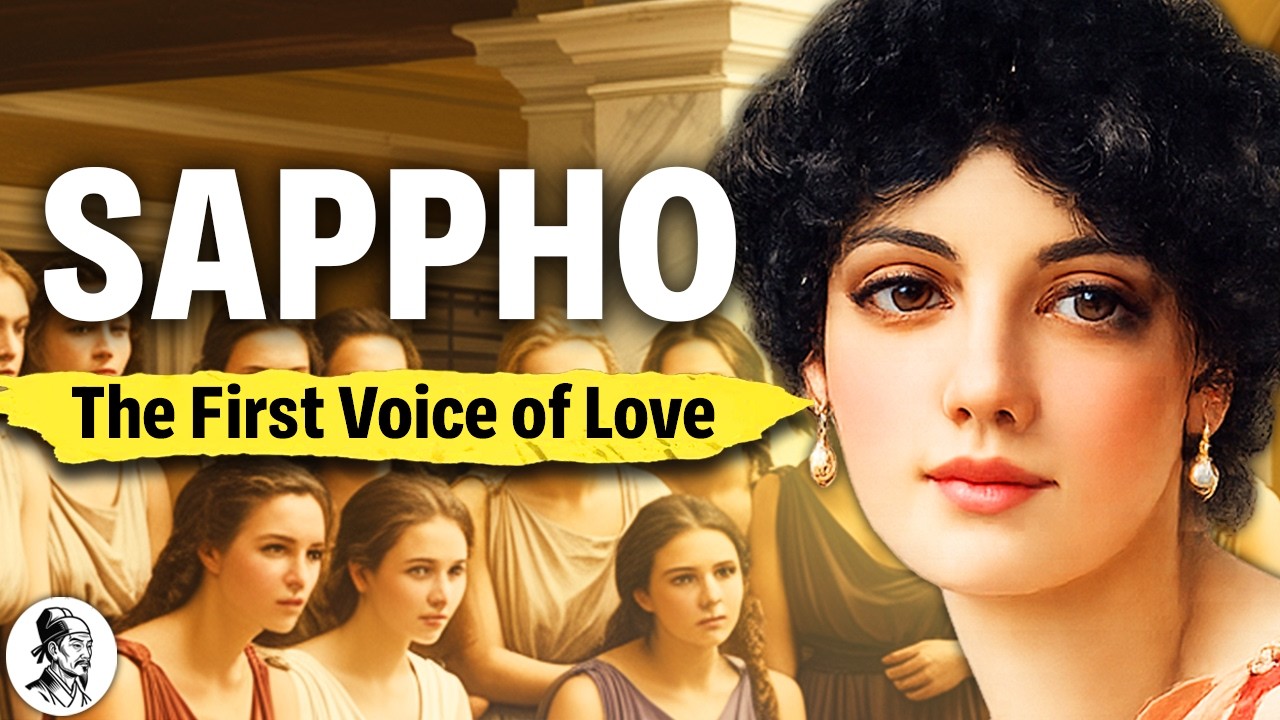
Sappho Documentary to Fall Asleep To
Keywords
Summary
173 words
Critical Evaluation
Value of the Information & Strength of the Argument
The documentary provides substantial value by synthesizing historical evidence and scholarly interpretations into an accessible narrative. It presents a balanced view, acknowledging uncertainties and debates, such as the exact dates of Sappho’s life and the nature of her relationships. The argumentation is solid, relying on ancient sources like the Suda and the Parian Chronicle, as well as modern scholarship. It effectively argues for the significance of Sappho’s poetry and the reasons for its survival and loss. The documentary also addresses the anachronism of applying modern labels like ’lesbian’ to Sappho, while affirming the clear homoerotic content of her work. Overall, the information is well-supported and presented with nuance.
Scientific Rigor, Source Quality, Title Accuracy
The documentary demonstrates scientific rigor by citing specific ancient sources (e.g., the Suda, the Parian Chronicle) and modern scholars (e.g., Sandra Boehringer, Glenn Most). It distinguishes between fact and speculation, such as the dubious ‘husband’ named Kerkylas. The quality of sources is high, and the documentary is transparent about the fragmentary nature of the evidence. The title accurately reflects the content, as it is a documentary about Sappho designed to be soothing and suitable for falling asleep. The title does not overpromise or mislead.
207 words
Title / Content Match
The title accurately reflects the content: a documentary about Sappho designed to be calming and suitable for falling asleep, with a slow pace and soothing narration.
Quality & Reliability
8/10
The documentary is well-researched, drawing on historical sources and scholarly interpretations, and presents a balanced view of Sappho's life and work. It acknowledges uncertainties and debates, and the information is consistent with current academic consensus.
Key Moments
Markers derived by PSI from the transcript: the creator did not define chapters.
- Introduction: Sappho's poetry survives only in fragments from Egyptian garbage dumps.
- Sappho's birth and family background on Lesbos.
- Exile to Sicily due to political conflicts.
- The Thiasos and Sappho's community of young women.
- Analysis of Fragment 31 and the physical symptoms of desire.
- The Ode to Aphrodite and the cycle of desire.
- The Alexandrian edition and the organization of Sappho's works.
- Roman reception and the influence on Catullus and Horace.
- Christian condemnation and the loss of her works.
- Rediscovery of fragments in Egyptian papyri and the impact on scholarship.
Cited Sources
- Suda — Byzantine encyclopedia cited for biographical details about Sappho.
- Parian Chronicle — Ancient Greek chronicle used to date Sappho's exile to Sicily.
- Fragment 31 — One of Sappho's most famous poems, discussed in detail.
- Ode to Aphrodite — The only complete poem by Sappho, quoted in full.
- Dionysius of Halicarnassus — Ancient critic who preserved the Ode to Aphrodite in his treatise.
Concurring Sources
- Sappho: A New Translation of the Complete Works — Modern scholarly translation and commentary by Diane Rayor, which aligns with the documentary's interpretations.
- The Cambridge Companion to Sappho — Academic volume covering various aspects of Sappho's poetry and reception, consistent with the documentary's content.
Dissenting Sources
- Sappho's 'Lesbian' Identity: A Modern Construct — Some scholars argue that applying modern labels like 'lesbian' to Sappho is anachronistic, but the documentary acknowledges this debate while affirming the homoerotic content.
Contribution & Novelties
The documentary offers a comprehensive and engaging overview of Sappho’s life and work, synthesizing historical evidence and modern scholarship. It provides context for the fragmentary nature of her poetry and the challenges of reconstruction. The documentary also addresses the reception history, from ancient admiration to Christian suppression and modern rediscovery, highlighting the cultural and political factors that shaped her legacy.
Pour aller plus loin :
- Sappho - Wikipedia — Comprehensive overview of Sappho’s life, poetry, and legacy.
- Sappho 31 - The Poetry Foundation — English translation and analysis of Fragment 31.
- Oxyrhynchus Papyri - Wikipedia — Information on the papyrus finds that preserved Sappho’s fragments.
105 words
Radar Profile
The radar chart shows high scores in quantity and quality of information, reflecting the documentary's thorough coverage and reliable content. The technical level is moderate, making it accessible to a general audience while still providing depth. Overall, the documentary is well-balanced and informative.
💬 No comments were provided for analysis.