Ethyl ester production and energy analyses of the transesterification of waste coconut oil
Keywords
Summary
138 words
Critical Evaluation
Value of the Information & Strength of the Argument
The value of the information lies in its practical approach to sustainable biodiesel production using waste materials and a locally sourced catalyst. The argumentation is solid, supported by experimental data and comparisons with conventional methods. The energy analysis provides a critical perspective on the process’s sustainability, highlighting both strengths and areas for improvement. The presentation is clear and logically structured, making the research accessible.
Scientific Rigor, Source Quality, Title Accuracy
The scientific rigor is evident in the detailed methodology and characterization of the catalyst. However, the video does not cite specific peer-reviewed sources, and the research appears to be presented at a conference without full publication details. The title accurately reflects the content. The video is a presentation of original research, but the lack of external references limits its verifiability.
139 words
Title / Content Match
The title accurately reflects the content, focusing on ethyl ester production and energy analysis.
Quality & Reliability
7/10
The study presents original experimental data with clear methodology, but lacks peer-review context and detailed statistical analysis.
Key Moments
Markers derived by PSI from the transcript: the creator did not define chapters.
- Introduction to the research topic and context.
- Discussion on transportation fuels and the need for sustainable alternatives.
- Definition of biodiesel and transesterification process.
- Problems with conventional transesterification inputs.
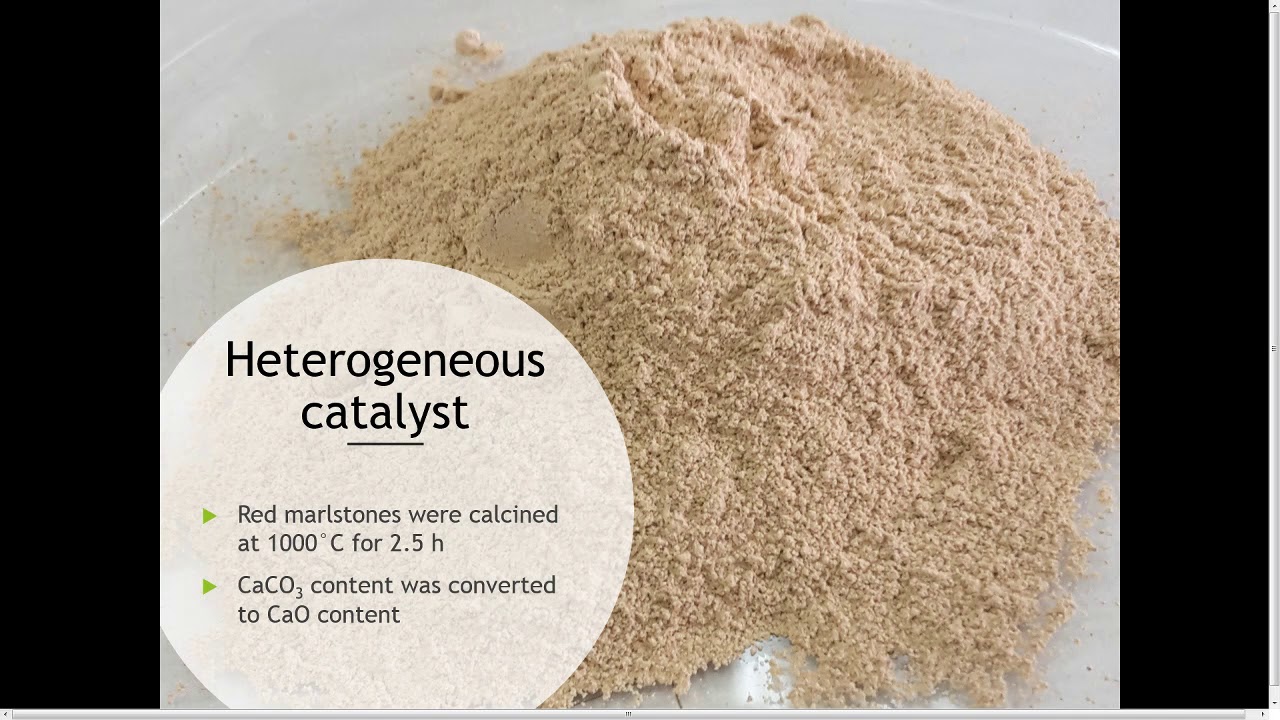
- Research approach: using waste coconut oil, ethanol, and heterogeneous catalyst.
- Two-step process: acid esterification and base transesterification.
- Catalyst preparation and characterization (SEM, EDX, basicity).
- Experimental conditions and results for ethyl ester yield.
- Energy analysis metrics and results.
- Comparison with other studies and conclusion.
Contribution & Novelties
The research contributes to sustainable biodiesel production by utilizing waste coconut oil and a natural heterogeneous catalyst from red mussel shells, reducing reliance on fossil-derived methanol and caustic catalysts. The energy analysis provides insights into the process’s efficiency and sustainability. The study’s novelty lies in the combination of waste feedstocks and a locally sourced catalyst, offering a potential low-cost solution for developing countries.
Pour aller plus loin :
- Transesterification — Overview of the reaction.
- Biodiesel production — General information on biodiesel.
- Heterogeneous catalysis — Principles of heterogeneous catalysts.
88 words
Radar Profile
The radar profile shows balanced scores across information quantity, quality, technical level, and reliability, indicating a well-rounded presentation. The high quality and technical scores reflect the detailed methodology, while the moderate quantity and reliability scores suggest room for more comprehensive data and external validation.