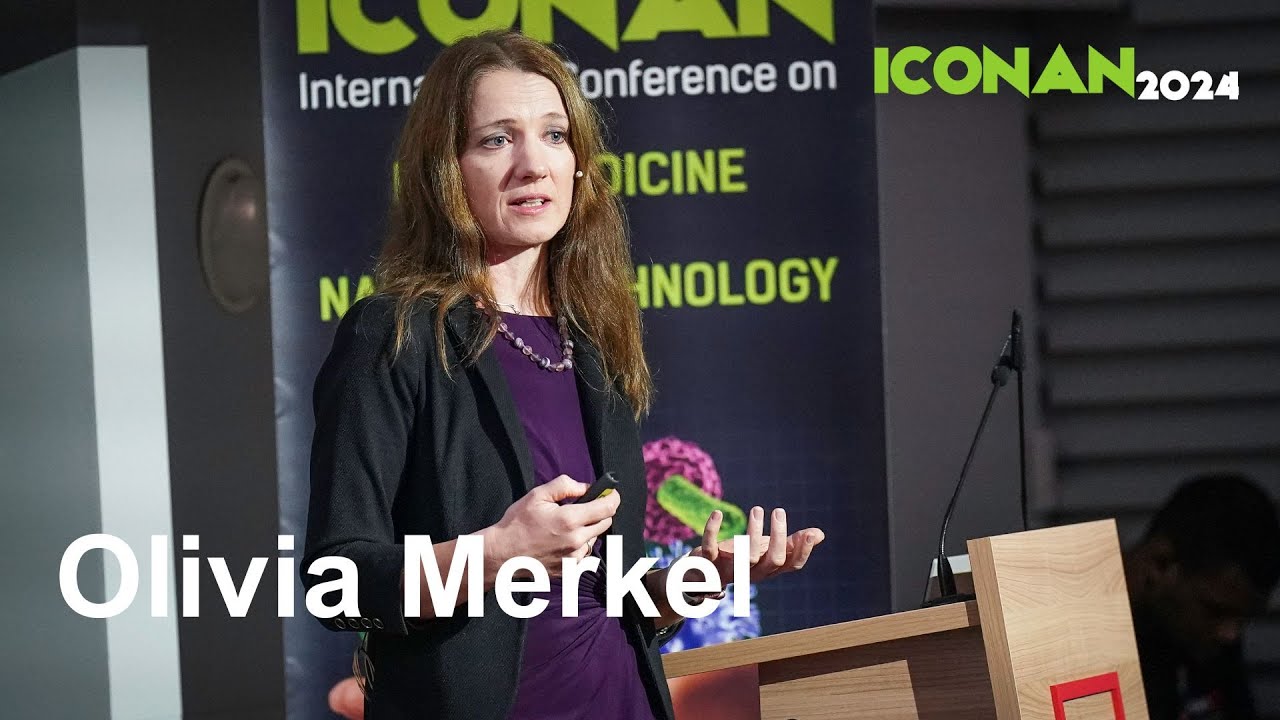
New Approaches for Therapeutic Pulmonary RNA Delivery
Keywords
Summary
168 words
Critical Evaluation
Value of the Information & Strength of the Argument
The talk provides valuable insights into the development of RNA therapeutics for pulmonary diseases, with a strong emphasis on rational design and overcoming biological barriers. The argumentation is solid, supported by experimental data from various models, including cell lines, precision-cut lung slices, and animal studies. The speaker clearly explains the rationale behind each design choice and presents results that demonstrate the potential of their approach. However, some claims are based on unpublished or ongoing research, and the lack of specific quantitative data in some slides limits the depth of evaluation.
Scientific Rigor, Source Quality, Title Accuracy
The scientific rigor is high, with detailed methodology and consideration of physiological barriers. The speaker references her own published work and collaborations, but does not provide specific citations during the talk. The title accurately reflects the content, focusing on new approaches for pulmonary RNA delivery. The presentation is well-structured and technically detailed, suitable for an expert audience. No comments were provided for analysis.
168 words
Title / Content Match
The title accurately reflects the content, which focuses on novel approaches for delivering RNA therapeutics to the lungs.
Quality & Reliability
8/10
Presentation by a professor at LMU Munich, with detailed description of experimental methods and results, including in vitro, ex vivo, and in vivo studies. Some limitations: no peer-reviewed citations provided, and results are presented as ongoing research.
Key Moments
Markers derived by PSI from the transcript: the creator did not define chapters.
- Introduction to siRNA and its mechanism of action, contrasting with mRNA vaccines.
- Advantages of pulmonary delivery: local, non-invasive, large surface area, and reduced systemic side effects.
- Challenges: mucus barrier, surfactant, cellular uptake, and endosomal escape.
- Targeting GATA3 in T cells for asthma therapy using transferrin-targeted PEI.
- Use of precision-cut lung slices as a human tissue model for asthma and SARS-CoV-2 studies.
- Development of dry powder inhalers for stable storage and delivery of RNA nanoparticles.
- Design of novel polyspermine polymers with hydrophobic modifications for improved endosomal escape.
- Use of molecular dynamics simulations and machine learning to rationally design polymers.
- Results in air-liquid interface cultures and patient-derived fibrotic lung tissue for IPF treatment.
Cited Sources
- ICONAN 2024 Conference — Conference where the talk was delivered.
Concurring Sources
- Merkel Lab Publications — Related publications from the speaker's group.
Contribution & Novelties
The talk presents a comprehensive approach to pulmonary RNA delivery, integrating rational polymer design, advanced in vitro models, and translational applications. The use of precision-cut lung slices for studying respiratory diseases and the development of dry powder formulations are notable contributions. The emphasis on machine learning for polymer design is a forward-looking strategy.
Pour aller plus loin :
- RNA interference — Overview of RNAi mechanism.
- Endosomal escape — Key barrier in RNA delivery.
- Precision-cut lung slices — Technique used in the talk.
- Dry powder inhaler — Dosage form discussed.
- GATA3 — Transcription factor targeted in asthma.
96 words
Radar Profile
The radar profile shows high scores in quantity and quality of information, with a strong technical level, but slightly lower reliability due to lack of cited sources. This indicates a technically rich presentation with a need for more rigorous referencing.