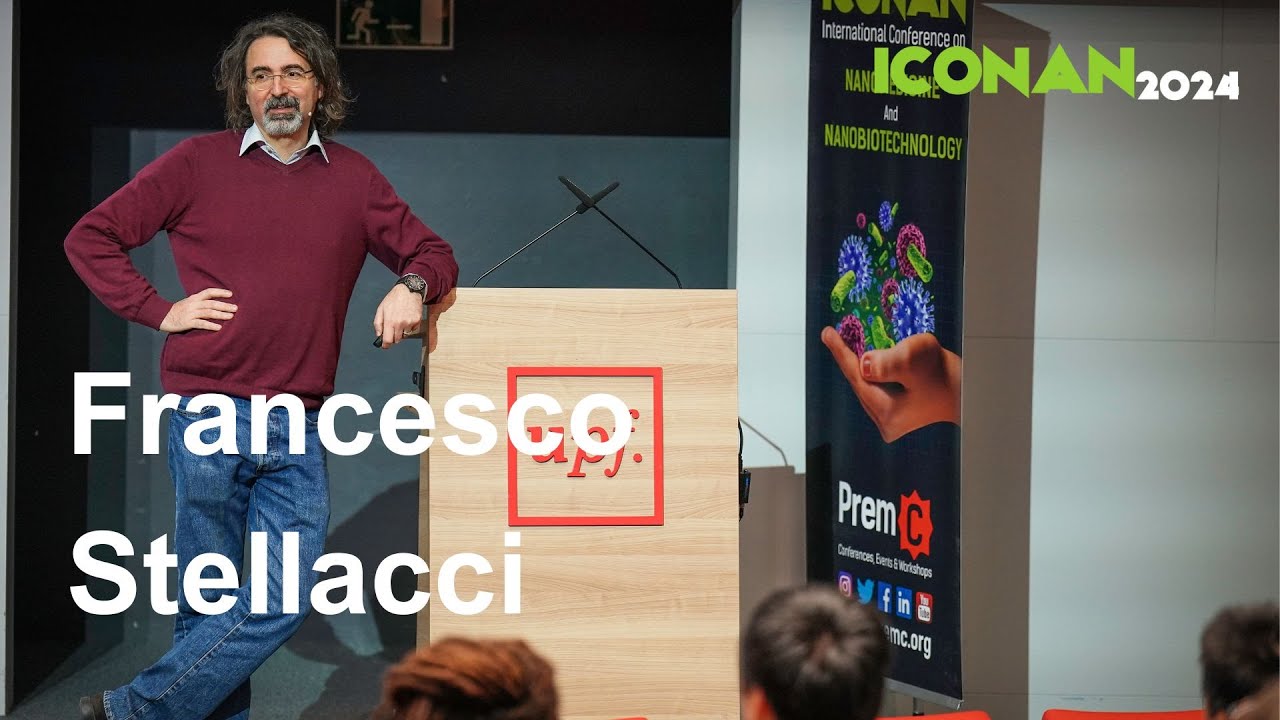
Supramolecular Broad-Spectrum Antivirals
Keywords
Summary
132 words
Critical Evaluation
Value of the Information & Strength of the Argument
The talk provides valuable insights into a novel approach to antiviral drug design, addressing a critical unmet medical need. The argumentation is logical and supported by experimental data, including in vitro, ex vivo, and in vivo studies. The speaker clearly explains the scientific rationale and addresses potential limitations, such as the need for non-toxicity and the challenges of reversible binding. The progression from nanoparticles to molecular cyclodextrin-based compounds demonstrates a thoughtful optimization process. The inclusion of independent NIH validation strengthens the credibility of the findings.
Scientific Rigor, Source Quality, Title Accuracy
The talk is scientifically rigorous, with references to established literature and prior work in the field. The speaker cites specific studies, such as the work by Sarit on gold nanoparticles, and mentions the use of FDA-approved captisol as a solubilizer. The title accurately reflects the content, focusing on supramolecular antivirals. The presentation is well-structured, with clear explanations of experimental methods and results. However, as a conference talk, it lacks detailed citations and peer-reviewed references, which are typically provided in publications.
180 words
Title / Content Match
The title accurately reflects the content, focusing on supramolecular antivirals with broad-spectrum activity.
Quality & Reliability
8/10
The talk presents original research with in vivo data, but as a conference presentation it lacks peer-reviewed details and full methodological transparency.
Key Moments
Markers derived by PSI from the transcript: the creator did not define chapters.
- Introduction to the global burden of viral infections and the lack of antiviral drugs.
- Explanation of the need for broad-spectrum antivirals and the concept of entry inhibitors.
- Discussion of the limitations of reversible binding and the idea of adding hydrophobic tails.
- Presentation of in vitro data showing irreversible virucidal activity of nanoparticles.
- Transition from nanoparticles to cyclodextrin-based molecules and their advantages.
- In vivo efficacy against influenza in mice and SARS-CoV-2 in hamsters.
- Discussion of the importance of hydrophobic interactions and the potential for broad-spectrum antivirals.
Cited Sources
- Sarit's work on gold nanoparticles as broad-spectrum antivirals — Mentioned as prior work that inspired the approach.
Concurring Sources
- Sarit et al. on gold nanoparticles — Prior work showing broad-spectrum antiviral activity of gold nanoparticles.
Contribution & Novelties
The talk presents a novel strategy for designing broad-spectrum antivirals by combining reversible entry inhibition with irreversible hydrophobic disruption of the viral envelope. This approach addresses the limitations of previous entry inhibitors and offers a potential solution for emerging viral threats. The transition from nanoparticles to small molecules like cyclodextrin derivatives enhances clinical translatability.
Pour aller plus loin :
- Cyclodextrin — Background on the core molecule used.
- Antiviral drug — General context on antiviral therapies.
- Hydrophobic effect — Key physical principle underlying the mechanism.
84 words
Radar Profile
The radar profile shows high scores in information quantity and quality, reflecting the depth of the presentation. The technical level is high, indicating a specialized audience. The global reliability is strong, supported by in vivo data and independent validation.