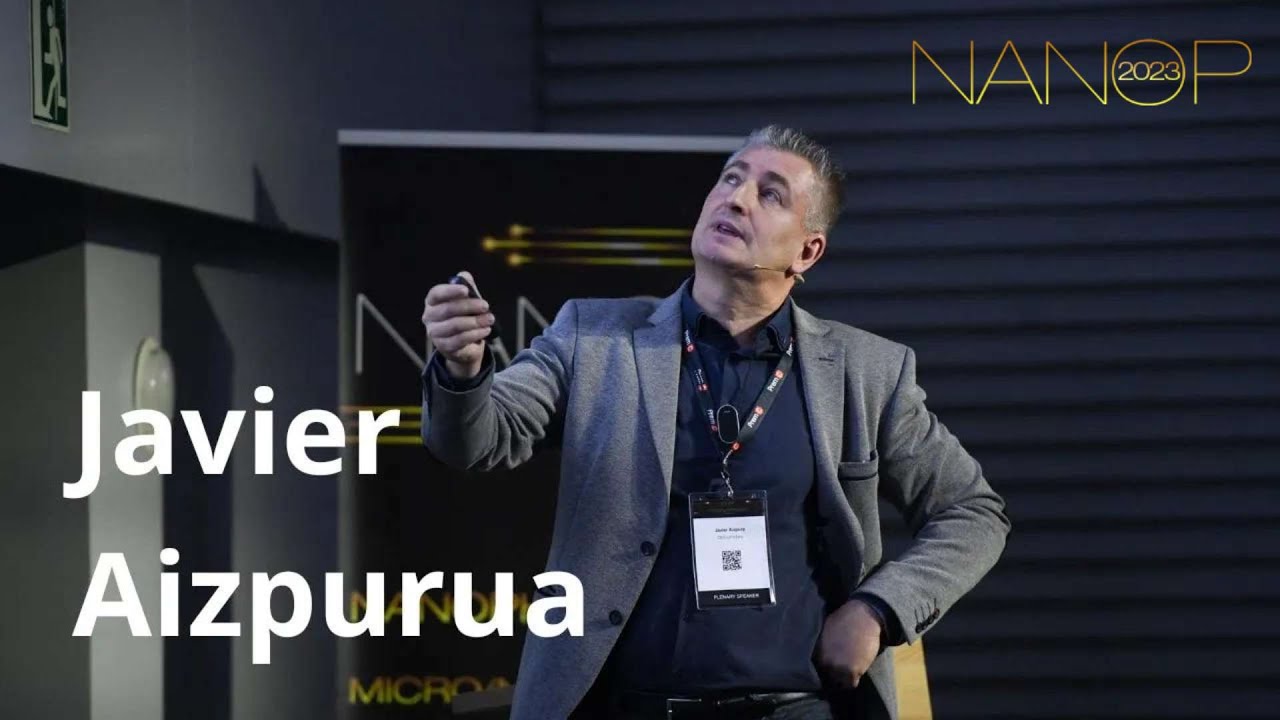
Addressing quantum effects in nanocavity-enhanced molecular spectroscopy
Keywords
Summary
194 words
Critical Evaluation
Value of the Information & Strength of the Argument
The talk provides valuable insights into the latest research on quantum effects in nanocavity-enhanced spectroscopy, highlighting the importance of picocavities for achieving sub-molecular resolution. The argumentation is solid, based on published work and collaborations with experimental groups. The speaker clearly explains complex concepts, making the content accessible to a specialized audience. The presentation of the three quantum approaches is well-structured, and the examples illustrate the theoretical framework effectively.
Scientific Rigor, Source Quality, Title Accuracy
The speaker is a leading expert in nanophotonics, and the talk is based on peer-reviewed research, though specific citations are not provided in the video. The title accurately reflects the content, focusing on quantum effects in nanocavity-enhanced molecular spectroscopy. The talk is a conference presentation, so it lacks the rigor of a formal publication, but the scientific content is reliable.
143 words
Title / Content Match
The title accurately reflects the content, which focuses on quantum effects in nanocavity-enhanced molecular spectroscopy.
Quality & Reliability
8/10
The speaker is a recognized expert in nanophotonics, and the talk is based on published research, but it is a conference presentation without peer review or detailed methodological exposition.
Key Moments
Markers derived by PSI from the transcript: the creator did not define chapters.
- Introduction to molecular spectroscopy and cavities
- Discussion of effective mode volume and quality factor
- Introduction to three quantum aspects addressed by the group
- Explanation of picocavities and their role in Raman resolution
- Electroluminescence in STM and mapping of molecular orbitals
- Cavity QED effects: Purcell factor and Lamb shift
- Introduction to molecular optomechanics
- Optomechanical coupling and feedback effects
Cited Sources
- Nanophotonics and Micro/Nano Optics International Conference — This is the video itself, which is a plenary talk at the conference.
Concurring Sources
- Plasmonics — General background on plasmonic effects relevant to nanocavities.
- Cavity quantum electrodynamics — Theoretical framework for light-matter interaction at the quantum level.
- Surface-enhanced Raman spectroscopy — Technique enhanced by nanocavities.
Contribution & Novelties
The talk provides an overview of recent advances in addressing quantum effects in nanocavity-enhanced molecular spectroscopy, particularly the concept of picocavities for sub-molecular resolution and the application of cavity QED to molecular optomechanics. It synthesizes multiple research directions from the speaker’s group, offering a coherent framework for understanding quantum effects in these systems.
Pour aller plus loin :
- Plasmonics — Background on plasmonic effects in nanocavities.
- Cavity quantum electrodynamics — Theoretical framework for light-matter interaction at the quantum level.
- Surface-enhanced Raman spectroscopy — Technique enhanced by nanocavities.
87 words
Radar Profile
The radar profile shows high scores across all dimensions, indicating a well-rounded and reliable presentation. The talk is technically deep, with strong information content and high reliability, making it suitable for an expert audience.
💬 No comments were provided for analysis.