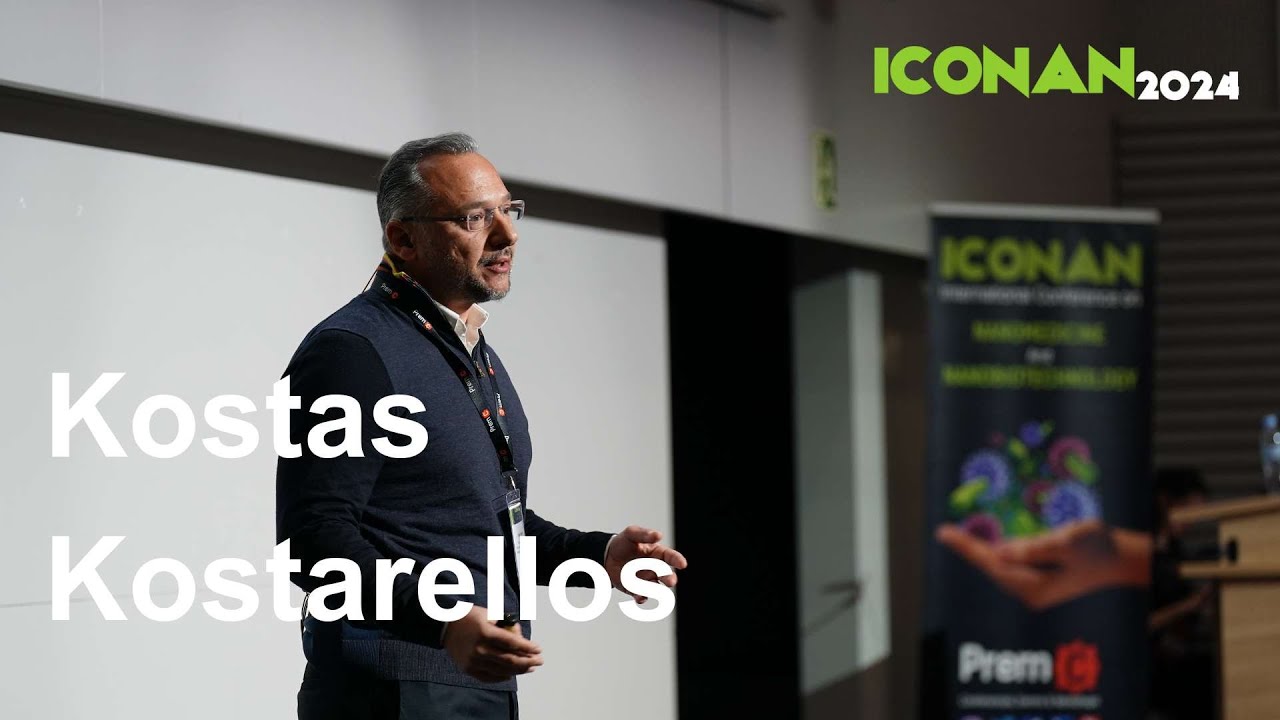
Clinical Translation of Graphene & Lessons Learnt
Keywords
Summary
152 words
Critical Evaluation
Value of the Information & Strength of the Argument
The talk provides valuable insights into the clinical translation of graphene, a material with high potential but limited clinical data. The speaker presents a rigorous approach to material characterization and safety assessment, highlighting the importance of using well-defined materials and controlling for variables. The argumentation is solid, based on peer-reviewed studies and ongoing clinical trials. The speaker also acknowledges limitations, such as the lack of dose escalation and long-term follow-up in the first study, which adds credibility. However, some claims are based on unpublished data, and the presentation is a personal account, which may introduce bias.
Scientific Rigor, Source Quality, Title Accuracy
The speaker references several peer-reviewed papers and ongoing clinical trials, but does not provide specific citations during the talk. The title accurately reflects the content, which is a comprehensive overview of the clinical translation process. The talk is scientifically rigorous, with a focus on material characterization and safety assessment. However, the lack of detailed citations and the reliance on unpublished data may limit the verifiability of some claims.
179 words
Title / Content Match
The title accurately reflects the content, which focuses on the clinical translation of graphene materials and the lessons learned from two clinical programs.
Quality & Reliability
8/10
The speaker is a leading expert in nanomedicine with extensive experience in graphene research. The talk presents results from peer-reviewed studies and ongoing clinical trials, with a balanced discussion of limitations. However, some claims are based on unpublished data and the presentation is a personal account.
Key Moments
Markers derived by PSI from the transcript: the creator did not define chapters.
- Introduction and overview of the talk's focus on clinical translation of graphene.
- Discussion of the initial challenges in establishing a clinical program for graphene, including the lack of in vivo studies.
- Description of the material characterization process, including the development of medical-grade graphene oxide.
- Presentation of preclinical safety studies, including pulmonary exposure in mice and the comparison with carbon nanotubes.
- Introduction of the first-in-human clinical trial for inhaled graphene oxide, including study design and results.
- Discussion of the second clinical program: graphene-based neural interfaces, including device fabrication and preclinical testing.
- Explanation of the scaling-up process for human use and the creation of a spin-out company.
- Conclusion and summary of lessons learned from the clinical translation programs.
Cited Sources
- Nanoscale 2015 survey of graphene-based materials in medicine — Mentioned as a paper where they surveyed the literature on graphene-based materials.
- Paper on nanoporous graphene-based film microelectrodes — Mentioned as recently published, describing the fabrication of graphene electrodes.
- Clinical trial paper on graphene oxide inhalation — Mentioned as about to be published, describing the first-in-human study.
Concurring Sources
- Graphene in medicine: a review — Supports the potential of graphene in biomedical applications.
Dissenting Sources
- Toxicity of graphene oxide: a review — Raises concerns about the potential toxicity of graphene oxide, which contrasts with the speaker's positive safety findings.
Contribution & Novelties
This talk provides a unique perspective on the clinical translation of graphene, highlighting the importance of material standardization and rigorous safety assessment. The speaker shares lessons learned from two distinct clinical programs, offering valuable insights for researchers and clinicians. The talk also raises important questions about the future of graphene-based technologies in medicine.
Pour aller plus loin :
- Graphene - Wikipedia — Provides background on graphene properties and applications.
- Nanomedicine - Wikipedia — Overview of nanomedicine and its clinical applications.
- Clinical trial - Wikipedia — Explanation of clinical trial phases and design.
92 words
Radar Profile
The radar profile shows high scores in information quantity, quality, and reliability, with a slightly lower technical level. This indicates a well-balanced presentation that is both informative and credible, though it may require some background knowledge to fully appreciate.
💬 No comments were provided for analysis.