Evaluation of a novel tool for the study of early metastasis based in B16F10 murine melanoma cells labeled with Cd-Te Quantum Dots
Keywords
Summary
178 words
Critical Evaluation
Value of the Information & Strength of the Argument
The value of the information lies in its potential to provide a new tool for studying early metastasis, which is a critical gap in cancer research. The argumentation is structured logically: from hypothesis to methodology, results, and conclusions. The authors address the toxicity issue of QDs by using NAC and show that it is possible to label cells while maintaining migratory capacity. However, the presentation lacks detailed statistical analysis and discussion of limitations, which slightly weakens the argumentation.
Scientific Rigor, Source Quality, Title Accuracy
The scientific rigor appears adequate for a conference presentation, with a clear experimental design and controls. The sources are not explicitly cited in the video, but the description mentions the authors’ affiliations and the abstract. The title accurately reflects the content. No comments are provided, so no analysis of public reception is possible.
146 words
Title / Content Match
The title accurately reflects the content, which evaluates a novel tool (QDs) for studying early metastasis in a mouse model.
Quality & Reliability
7/10
The study is presented as original research with a clear methodology, results, and conclusions. The presentation is a scientific talk, likely from a conference (ANNIC2016). The authors are affiliated with reputable institutions. However, the video is a single presentation without peer review visible, and the sample sizes and statistical details are not fully described.
Key Moments
Markers derived by PSI from the transcript: the creator did not define chapters.
- Introduction to the problem of studying metastasis and the need for imaging tools.
- Presentation of quantum dots as a labeling tool and their properties.
- Description of the biomimetic synthesis method and characterization of QDs.
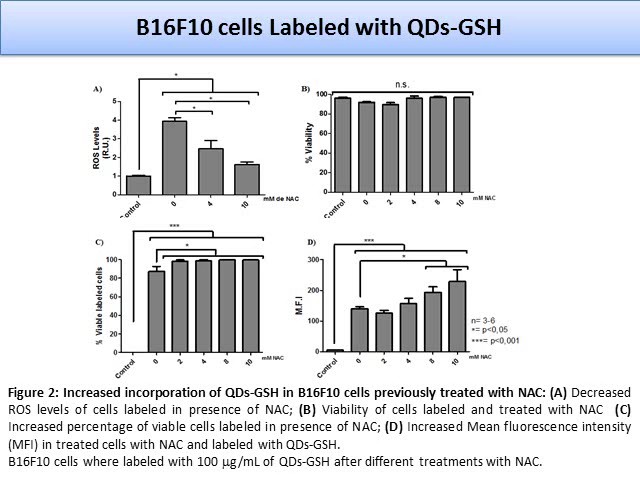
- Optimization of cell labeling with QDs and the effect of NAC on viability and uptake.
- In vitro assays: migration, invasion, and proliferation of labeled cells.
- In vivo tracking of labeled cells in mice and fluorescence imaging.
- Kinetics of cell accumulation in organs, with peak in lungs at 6 hours.
- Conclusion and potential applications of the methodology.
Cited Sources
- Abstract and author information from the video description — The description provides the abstract and authors, which are the primary source of the study.
Concurring Sources
- Quantum dots for in vivo imaging — This paper discusses the use of QDs for in vivo imaging, supporting the potential of QDs as imaging agents.
Dissenting Sources
- Toxicity of quantum dots — This study highlights the toxicity of QDs, which contrasts with the authors' approach to mitigate it with NAC.
Contribution & Novelties
The study presents a novel methodology for labeling metastatic cells with quantum dots while mitigating toxicity using NAC, allowing for short-term tracking of early metastasis. This could provide a new tool for understanding the dynamics of metastasis.
Pour aller plus loin :
- Quantum dots in bioimaging — Overview of QD properties and applications.
- Metastasis mechanisms — Background on the metastatic cascade.
- Reactive oxygen species in cancer — Role of ROS in cell signaling and toxicity.
75 words
Radar Profile
The radar profile shows high scores in quantity of information and technical level, reflecting the detailed experimental data and specialized content. The quality and reliability scores are moderate, indicating a well-structured but not fully peer-reviewed presentation.