Emulation results of fluid velocity for porous nanostructures...
Keywords
Summary
126 words
Critical Evaluation
Value of the Information & Strength of the Argument
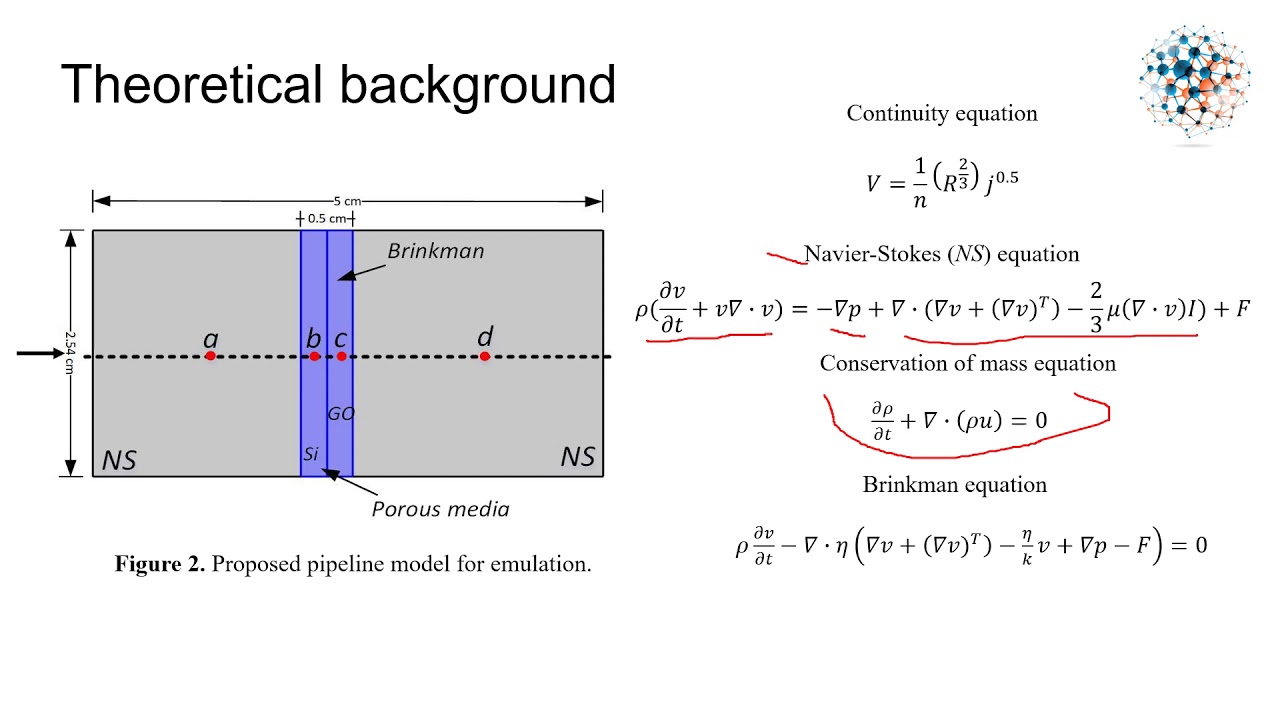
The value of the information lies in its application of established fluid dynamics equations to a novel nanostructured membrane system for water treatment. The argumentation is logical, starting with the problem of water scarcity and the potential of nanomaterials, then detailing the methodology and presenting simulation results. However, the study lacks experimental validation and comparison with existing literature, which weakens the strength of the claims. The authors acknowledge the need for future work, indicating a preliminary stage of research.
Scientific Rigor, Source Quality, Title Accuracy
The scientific rigor is moderate: the methodology is clearly described, and the use of Navier-Stokes and Brinkman equations is appropriate for the system. However, the presentation does not include error analysis or sensitivity studies, and the sources cited are not explicitly listed in the video. The title accurately reflects the content, focusing on emulation results. The lack of detailed references and peer review limits the overall reliability.
161 words
Title / Content Match
The title accurately reflects the content, which focuses on emulation results of fluid velocity in porous nanostructures for greywater treatment.
Quality & Reliability
6/10
The video presents original simulation results with clear methodology and equations, but lacks peer review and detailed validation. The presentation is concise and technical, yet the absence of error analysis and comparison with experimental data limits its reliability.
Key Moments
Markers derived by PSI from the transcript: the creator did not define chapters.
Contribution & Novelties
The work presents a novel application of combining silicon and graphene oxide membranes for greywater treatment, with a focus on fluid dynamics simulation. The use of Brinkman equation for porous media is well-established, but the specific combination and simulation setup provide a new perspective. The results offer insights into velocity profiles in such systems, which could inform future designs.
Pour aller plus loin :
- Brinkman equation — Provides background on the equation used for porous media flow.
- Graphene oxide membranes — Overview of graphene oxide membranes and their applications.
- Navier-Stokes equations — Fundamental equations for fluid flow.
97 words
Radar Profile
The radar profile shows a balanced but moderate performance across all dimensions, with a slight strength in technical level (7) and a weakness in reliability (5). This indicates a technically sound but not yet fully validated study.