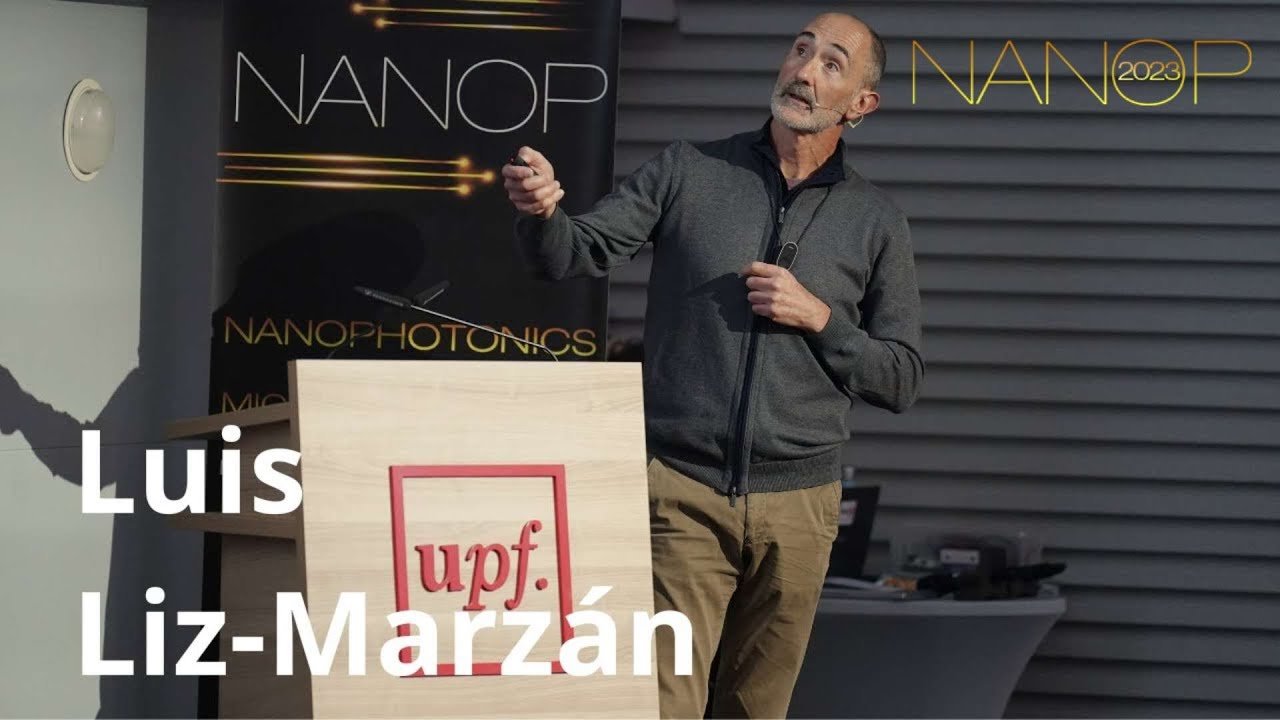
Chiral Plasmonics in Colloidal Nanoparticles
Keywords
Summary
147 words
Critical Evaluation
Value of the Information & Strength of the Argument
The talk provides valuable insights into the design and fabrication of chiral plasmonic nanostructures, showcasing a range of experimental results and theoretical explanations. The argumentation is solid, grounded in published research and supported by simulations and electron microscopy. The speaker effectively demonstrates the progression from fundamental concepts to practical applications, such as detecting amyloid fibers. However, some claims could benefit from more detailed evidence, and the presentation is more of an overview than a deep dive into specific studies.
Scientific Rigor, Source Quality, Title Accuracy
The speaker is a leading expert, and the talk references numerous peer-reviewed publications, though specific citations are not provided in the video. The title accurately reflects the content. The presentation is scientifically rigorous, with clear explanations of methods and results. The lack of explicit source citations in the video is a minor limitation, but the speaker’s authority and the inclusion of published work enhance credibility.
159 words
Title / Content Match
The title accurately reflects the content, which focuses on chiral plasmonic effects in colloidal nanoparticles, covering both assemblies and single particles.
Quality & Reliability
8/10
The speaker is a renowned expert in the field, and the talk presents a coherent overview of recent research, including peer-reviewed results. However, as a plenary lecture, it lacks detailed methodological descriptions and critical discussion of limitations.
Key Moments
Markers derived by PSI from the transcript: the creator did not define chapters.
- Introduction to chirality and its importance in chemistry and biology.
- Explanation of circular dichroism and its measurement.
- Discussion on chiral assemblies of nanoparticles and theoretical predictions.
- Experimental demonstration of CD in nanorod dimers and helical arrays.
- Use of DNA origami and amyloid fibers as templates for chiral organization.
- Introduction to imposing chirality on single particles via seeded growth.
- Results on chiral gold nanorods with wrinkled surfaces and their optical properties.
- Discussion of growth mechanisms and future directions.
Cited Sources
- CIC biomaGUNE — Institution of the speaker.
- University of Vigo — Affiliation of the speaker.
- Nanophotonics and Micro/Nano Optics International Conference — Conference where the talk was delivered.
Concurring Sources
- CIC biomaGUNE — Institution of the speaker.
- University of Vigo — Affiliation of the speaker.
Contribution & Novelties
The talk provides a comprehensive overview of recent advances in chiral plasmonics, particularly highlighting the use of colloidal chemistry to create chiral nanostructures. It showcases novel methods for inducing chirality in single nanoparticles, such as the use of chiral co-surfactants to create wrinkled nanorods with strong CD signals. The presentation also emphasizes the potential of these materials for sensing applications, such as detecting amyloid fibers.
Pour aller plus loin :
- Chirality (chemistry) — Fundamental concept of chirality.
- Circular dichroism — Spectroscopic technique used to measure chirality.
- Plasmonics — Study of plasmonic effects in metallic nanoparticles.
- DNA origami — Technique for creating nanostructures using DNA.
- Amyloid fibers — Protein aggregates associated with neurodegenerative diseases.
113 words
Radar Profile
The radar profile shows high scores in information quantity, quality, and reliability, with a slightly lower technical level, indicating a comprehensive and credible presentation accessible to a broad scientific audience.