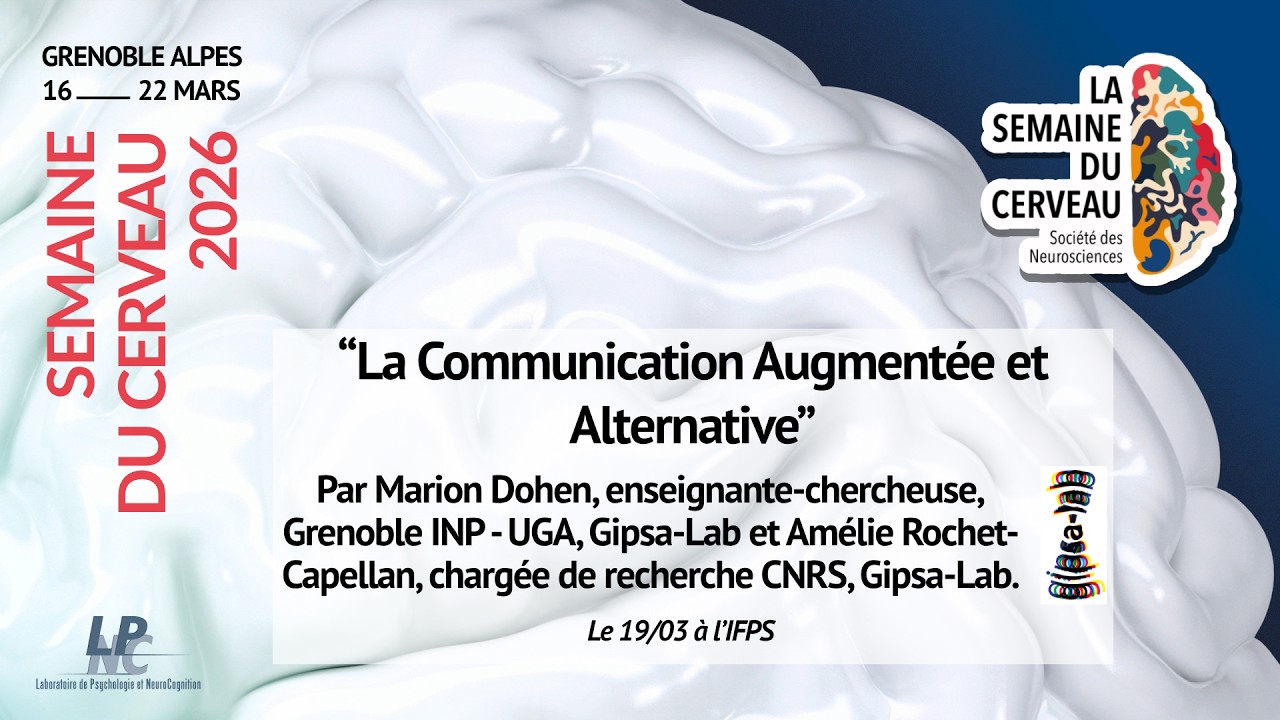
La communication augmentée et alternative (CAA) : Comment communiquer quand on ne peut pas parler
Keywords
Summary
174 words
Critical Evaluation
Value of the Information & Strength of the Argument
The video provides valuable information about AAC, a topic that is often overlooked. The speakers effectively argue for the importance of AAC by presenting statistics, real-life examples, and scientific explanations. They emphasize that speech is not the only form of communication and that AAC can empower individuals with communication disabilities. The argumentation is solid, drawing on research and clinical cases, and the speakers successfully convey the complexity of communication and the need for individualized solutions.
Scientific Rigor, Source Quality, Title Accuracy
The presentation is scientifically rigorous, with the speakers referencing established research and clinical practices. They cite the UN Convention and mention specific cases like Helen Keller and Stephen Hawking. The sources cited in the description include the FIRAH website and the researchers’ personal pages, which provide further information. The title accurately reflects the content, which is a general overview of AAC. The speakers are credible, being affiliated with GIPSA-lab, a recognized research laboratory. The video does not include any advertising or sponsored content.
173 words
Title / Content Match
The title accurately reflects the content, which focuses on explaining AAC and how it enables communication for individuals who cannot speak.
Quality & Reliability
8/10
The presentation is given by two researchers from GIPSA-lab, a recognized CNRS laboratory, with expertise in speech and cognition. They provide a comprehensive overview of AAC, supported by references to scientific literature and clinical cases. The content is well-structured and evidence-based, though it is a general introduction rather than a detailed research presentation.
Key Moments
Markers derived by PSI from the transcript: the creator did not define chapters.
- Introduction to the presentation and the speakers.
- Discussion on why some people cannot speak and what speech involves.
- Exploration of various causes of speech impairment, including environmental factors and congenital conditions.
- Introduction to the axes of describing AAC.
- Emphasis on the natural multimodality of human communication and its relevance to AAC.
- Discussion on the non-verbal nature of early communication development.
- Clarification that AAC is not just methods but also includes other aspects.
- Discussion on the individual and social stakes of AAC.
- Addressing common myths about AAC.
- Highlighting challenges to be addressed in the field of AAC.
Cited Sources
- FIRAH — Mentioned as a resource for further information on AAC.
- Amélie Rochet-Capellan's page — Speaker's academic page.
- Marion Dohen's page — Speaker's academic page.
Concurring Sources
- FIRAH — Resource for AAC information and research.
Contribution & Novelties
This video provides a comprehensive and accessible introduction to AAC, highlighting its importance for individuals with communication disabilities. It emphasizes the multimodal nature of communication and the need for individualized solutions. The speakers bring together research and clinical examples to illustrate the diversity of AAC approaches.
Pour aller plus loin :
- Augmentative and alternative communication - Wikipedia — Provides a broad overview of AAC, including its history and types.
- International Society for Augmentative and Alternative Communication (ISAAC) — Official organization promoting AAC research and practice.
- UN Convention on the Rights of Persons with Disabilities — International treaty recognizing the rights of persons with disabilities, including communication rights.
107 words
Radar Profile
The radar profile shows high scores in information quantity, quality, and reliability, with a slightly lower but still strong technical level. This indicates a well-balanced presentation that is both informative and scientifically sound, suitable for a general audience interested in AAC.