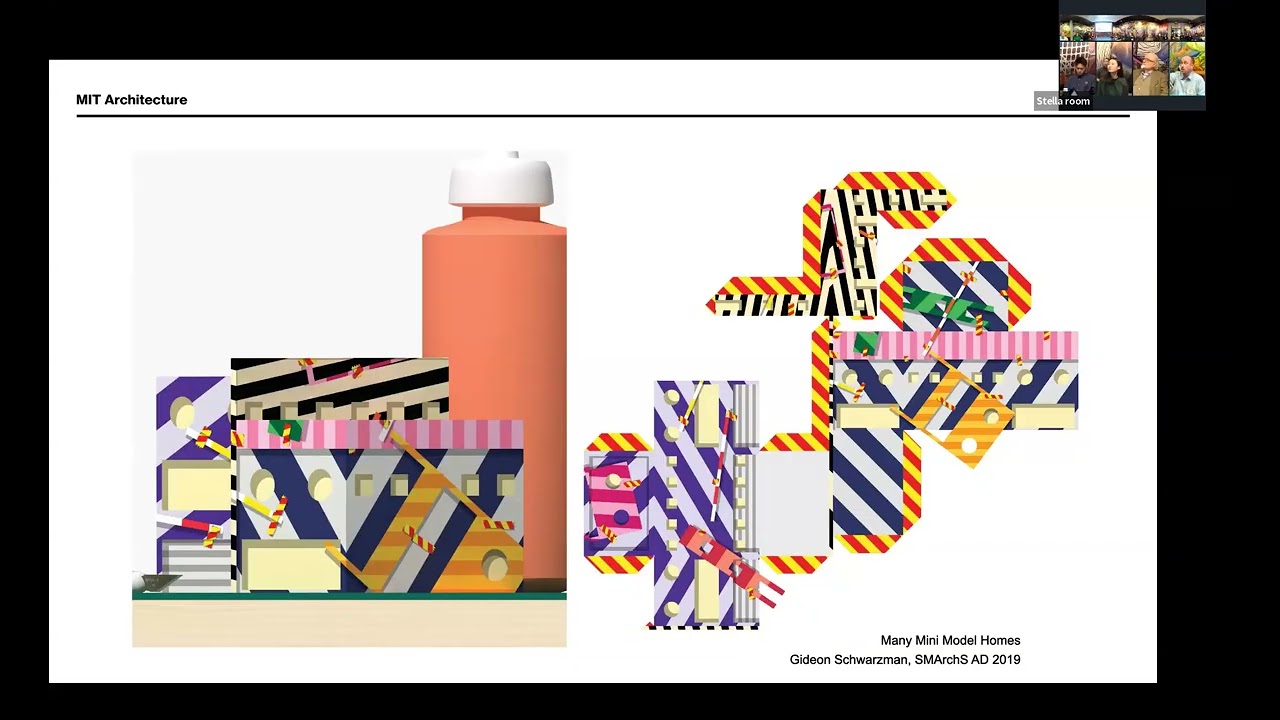
MIT Architecture Spring Open House 2026, SMArchs Session
Keywords
Summary
192 words
Critical Evaluation
Value of the Information & Strength of the Argument
The video provides valuable firsthand information about the SMArchS program, directly from faculty who are deeply involved in its administration and teaching. The argumentation is solid, as it is based on the speakers’ extensive experience and insider knowledge. They effectively communicate the program’s philosophy of balancing structure with agency, and they address practical concerns such as funding and advisor selection. The discussion of the program’s unique aspects, such as the HTC group’s approach and the AKPIA’s focus on non-Western architecture, adds depth and demonstrates the program’s intellectual rigor. However, the promotional nature of the content means that potential drawbacks or challenges are not discussed, which could be seen as a limitation in the argumentation.
Scientific Rigor, Source Quality, Title Accuracy
The video is an official MIT Architecture production, ensuring high reliability and authority. The speakers are faculty members with significant expertise and experience in their respective fields. The title accurately reflects the content, which is a session for the SMArchS program during the open house. No external sources are cited, but the information is based on the speakers’ direct involvement in the program. The content is well-structured and coherent, with clear explanations of the program’s structure and opportunities. The video does not include any advertising or sponsored content, maintaining its integrity as an informational session.
224 words
Title / Content Match
The title accurately describes the content: a session for the SMArchS program during MIT Architecture's Spring Open House.
Quality & Reliability
8/10
The video is an official MIT Architecture open house session, featuring faculty members with established expertise. The information is firsthand and authoritative, though it is promotional in nature and not peer-reviewed.
Key Moments
Markers derived by PSI from the transcript: the creator did not define chapters.
- Introduction to the SMArchS degree and its six discipline groups.
- Brandon Clifford explains the philosophy of the program as a liberal arts degree.
- Faculty introductions: Ranjit Goswami, Holly Samuelson, Skylar Tibbits, and Nasser Rabbat.
- Nasser Rabbat discusses the HTC and AKPIA programs, emphasizing their unique approaches.
- Overview of the curriculum structure and thesis requirements.
- Q&A begins: thesis advisor selection process.
- Discussion on RA and TA opportunities and funding.
- Advice on navigating the open-ended curriculum and building relationships.
- Closing remarks and transition to breakout sessions.
Contribution & Novelties
The video offers a unique insider perspective on the SMArchS program at MIT, highlighting its flexible structure and the distinct approaches of its discipline groups. It provides valuable information for prospective students, including details on funding and advisor selection that are not commonly available. The discussion of the HTC and AKPIA programs adds depth to the understanding of architectural education’s diversity.
Pour aller plus loin :
- MIT Architecture Department — Official website for more details on the program.
- SMArchS Program Overview — Specific page for the SMArchS degree.
- Aga Khan Program for Islamic Architecture — Information on the AKPIA program mentioned in the video.
- Self-Assembly Lab — Research lab directed by Skylar Tibbits, relevant to the computation group.
118 words
Radar Profile
The radar profile shows high scores in quality of information and reliability, reflecting the authoritative source and expert speakers. The quantity of information is moderate, as the video focuses on program details rather than broad content. The technical level is moderate, suitable for a general audience interested in graduate programs.