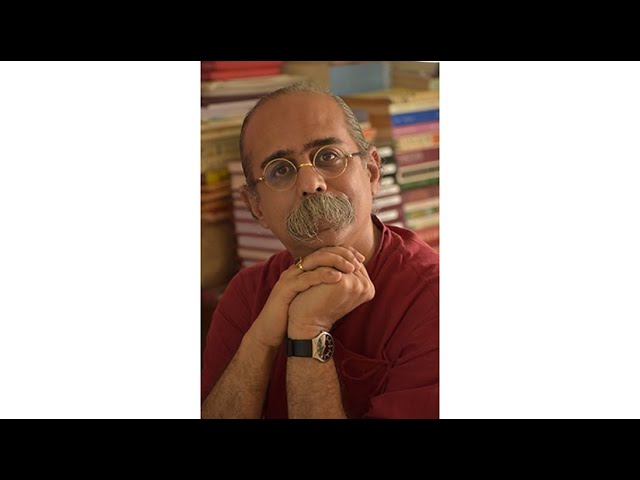
Bureaucratic Archaeology: State, Science and Past in Postcolonial India
Keywords
Summary
180 words
Critical Evaluation
Value of the Information & Strength of the Argument
The lecture provides valuable insights into the intersection of archaeology, state power, and ideology in postcolonial India. Avikunthak’s argument is well-supported by his ethnographic fieldwork and theoretical framework, drawing on concepts like Bourdieu’s theory of practice. He effectively demonstrates how bureaucratic processes and scientific claims can be co-opted to serve nationalist agendas. The personal narrative adds emotional weight and underscores the urgency of the topic. However, the argumentation is primarily based on the author’s own research and interpretations, which may not be universally accepted. The lecture is more of an expert opinion than a balanced review of multiple perspectives.
Scientific Rigor, Source Quality, Title Accuracy
The lecture is based on the speaker’s book, which is a peer-reviewed academic publication from a reputable press. Avikunthak cites his own fieldwork and references theoretical frameworks, but he does not provide a comprehensive list of sources during the talk. The title accurately reflects the content, focusing on the bureaucratic and political dimensions of archaeology. The lecture is well-structured and maintains a high level of academic rigor, though it is inherently subjective as it presents the author’s own analysis.
193 words
Title / Content Match
The title accurately reflects the content, focusing on the bureaucratic and political dimensions of archaeology in postcolonial India.
Quality & Reliability
8/10
The lecture is based on the speaker's peer-reviewed book published by Cambridge University Press, and he is a recognized scholar with a PhD from Stanford. The content is well-structured and grounded in ethnographic fieldwork, though it represents an expert opinion and interpretation rather than a systematic review.
Key Moments
Markers derived by PSI from the transcript: the creator did not define chapters.
- Introduction by Fahad Zuberi and Tianyu Jiang, acknowledging the land and introducing the speaker.
- Avikunthak reads from the preface, describing the Babri Masjid demolition and its personal impact.
- Explanation of the book's central argument: archaeology as a bureaucratic and ideological practice.
- Discussion of the ASI's hegemonic control over archaeology in India and its legal authority.
- Ethnographic details of daily practices at Harappan sites, including labor stratification.
- Analysis of how artifacts are transformed into facts and used in legal contexts, referencing Ayodhya.
- Discussion of Hindutva archaeology and its impact on heritage narratives, including the upcoming film 'Taj Story'.
- Conclusion and Q&A session begins.
Cited Sources
- Bureaucratic Archaeology: State, Science and Past in Postcolonial India — The book on which the lecture is based, published by Cambridge University Press in 2021.
Concurring Sources
- The Past as a Political Tool: Archaeology and Nationalism in India — Academic article discussing similar themes of archaeology and nationalism.
Dissenting Sources
- Response to 'Bureaucratic Archaeology' — Some scholars may argue that the ASI's practices are not solely driven by ideology but also by genuine scientific goals, and that the book overstates the influence of Hindutva.
Contribution & Novelties
The lecture offers a unique ethnographic perspective on the Archaeological Survey of India, revealing how bureaucratic practices shape archaeological knowledge and are complicit in nationalist narratives. It challenges the notion of archaeology as an objective science and highlights the entanglement of state power and ideology.
Pour aller plus loin :
- Archaeological Survey of India — Official body discussed in the lecture.
- Babri Masjid — Historical context of the demolition and subsequent disputes.
- Hindutva — Ideology influencing archaeological narratives in India.
- Indus Valley Civilisation — Also known as Harappan civilization, central to the case studies.
94 words
Radar Profile
The radar profile shows high scores in information quantity, quality, and reliability, with a slightly lower technical level, indicating a lecture that is rich in content and well-grounded but not overly technical. The overall assessment is positive, reflecting the speaker's expertise and the importance of the topic.
💬 No comments were provided for analysis.