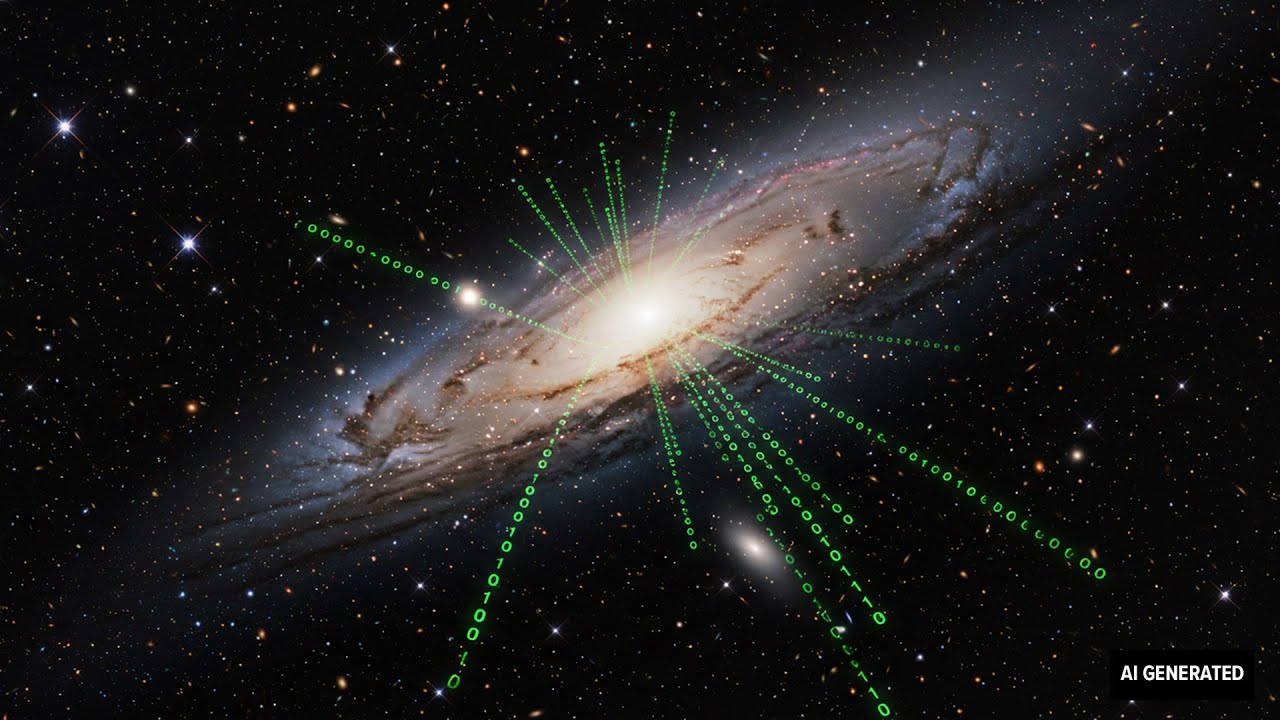
Cracking the Cosmic Code: How Software Powers the Rubin Observatory
Keywords
Summary
141 words
Critical Evaluation
The podcast provides a valuable overview of the computational challenges and solutions associated with the Rubin Observatory’s LSST project. The information is presented by leading experts in the field, lending credibility to the discussion. The episode effectively explains the scale of the data (20 TB per day) and the necessity of innovative software to handle it. The emphasis on open-source development and community collaboration is a positive aspect, highlighting the project’s commitment to accessibility and reproducibility. However, the content is somewhat high-level, aimed at a general audience, and lacks deep technical detail. The discussion focuses more on the software’s purpose and impact rather than the specific algorithms or implementation. The episode also serves as a promotional piece for Carnegie Mellon’s involvement, which may introduce a slight bias. The sources cited are primarily institutional pages, and no external scientific papers are referenced. The title accurately reflects the content, and the episode successfully conveys the importance of software in modern astronomy. Overall, the information is reliable and well-presented, but the depth is limited for an expert audience.
175 words
Title / Content Match
The title accurately reflects the content, focusing on the software and computational innovations behind the Rubin Observatory.
Quality & Reliability
8/10
The video features experts from Carnegie Mellon University discussing their work on the Rubin Observatory's software infrastructure. The information is credible, based on the speakers' expertise and the project's official context. However, it is primarily a promotional podcast, lacking detailed technical depth or independent verification.
Key Moments
Markers derived by PSI from the transcript: the creator did not define chapters.
- Introduction to the Rubin Observatory and its first images.
- Discussion of the telescope's capabilities and data generation.
- Introduction to LINCC Frameworks and its goals.
- Explanation of open-source software and community access.
- Discussion of KBMOD for detecting faint moving objects.
- Overview of incubator programs for collaborative software development.
- Future prospects and how to get involved.
Cited Sources
- Rachel Mandelbaum - CMU Expert Profile — Profile of Professor Rachel Mandelbaum, providing her credentials and expertise.
- Podcast Episode Page — Official page for this podcast episode, containing description and related links.
- Related Video: Stellar Observations: AI's Journey into the Cosmos — A previous episode of the podcast that discussed the Rubin Observatory and AI.
Concurring Sources
- Vera C. Rubin Observatory — Provides general information about the observatory and its capabilities.
- LSST: Legacy Survey of Space and Time — Details the survey's goals and data products.
Contribution & Novelties
The podcast provides insight into the software infrastructure behind the Rubin Observatory, emphasizing the importance of open-source tools and collaborative frameworks like LINCC Frameworks. It highlights specific innovations such as KBMOD for detecting faint moving objects and the concept of bringing scientists to the data. The discussion underscores the interdisciplinary nature of modern astronomy and the critical role of software engineering.
Pour aller plus loin :
- Vera C. Rubin Observatory — Overview of the observatory and its mission.
- Legacy Survey of Space and Time — Details on the LSST survey.
- Trans-Neptunian object — Background on TNOs, relevant to KBMOD.
99 words
Radar Profile
The radar profile shows high scores in quality and reliability, reflecting the expertise of the speakers and the institutional backing. The quantity of information is moderate, and the technical level is accessible, making it suitable for a broad audience. The overall balance indicates a solid but not deeply technical presentation.