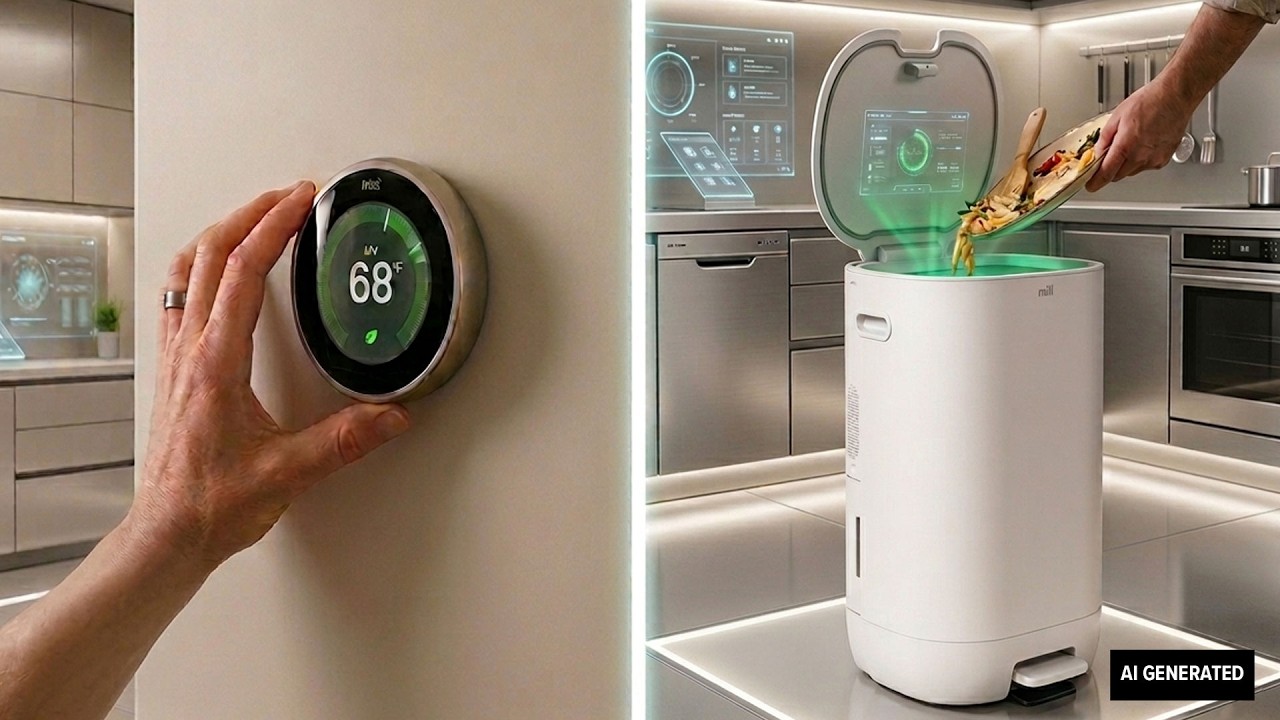
Designing for the Planet: The Clever Thermostat and Clean-Smelling Trash (with Matt Rogers)
Keywords
Summary
136 words
Critical Evaluation
The interview provides valuable insights into the design philosophy and career trajectory of a successful tech entrepreneur. Matt Rogers articulates a clear vision for integrating sustainability into product design, emphasizing that making the right choice the easy choice can drive adoption. His anecdotes from Apple and Nest illustrate the importance of cross-disciplinary teams and rapid iteration. However, the claims about energy savings and environmental impact are presented without detailed evidence or independent verification, relying on company-reported figures. The discussion is more narrative than analytical, with limited technical depth on the underlying technologies. The sources cited are primarily the companies’ own claims and the podcast itself. The title accurately reflects the content, and the episode offers a compelling case for design-led innovation in sustainability. The lack of critical examination of potential drawbacks or limitations of the products is a notable gap. Overall, the content is informative and inspiring but not deeply rigorous from a scientific standpoint.
155 words
Title / Content Match
The title accurately reflects the content, focusing on design for environmental impact through thermostat and food waste products.
Quality & Reliability
7/10
The content is an expert interview with Matt Rogers, co-founder of Nest and Mill, providing firsthand accounts of product development and impact claims. The information is credible but largely anecdotal, with no independent verification of the cited figures. The discussion is technically informed but not deeply rigorous.
Key Moments
Markers derived by PSI from the transcript: the creator did not define chapters.
- Introduction to the podcast and guest Matt Rogers.
- Matt discusses his time at CMU and initial interest in robotics.
- Internship at Apple and work on iPod manufacturing software.
- Transition to iPhone development and the Skunkworks project.
- Leaving Apple to co-found Nest and the design philosophy behind the thermostat.
- Impact of Nest on energy savings and the importance of aesthetics.
- Introduction to Mill and its food waste technology.
- Discussion on systems thinking and the future of sustainable product design.
Cited Sources
- Carnegie Mellon University podcast page — Official podcast page for the episode.
Concurring Sources
- Nest energy savings claims — Nest's official claims about energy savings.
Dissenting Sources
- Critique of Nest's energy savings claims — Independent analysis questioning the magnitude of energy savings attributed to Nest thermostats.
Contribution & Novelties
The interview provides a first-hand account of how design thinking and systems engineering can be applied to consumer products for environmental benefit. It highlights the importance of user-centric design in driving adoption of sustainable technologies.
Pour aller plus loin :
- Nest Learning Thermostat — Overview of the product and its features.
- Food waste in the United States — Context on the scale of food waste problem.
- Tony Fadell — Co-founder of Nest and former Apple executive.
76 words
Radar Profile
The radar profile shows a balanced distribution across information quantity, quality, technical level, and reliability, with slightly higher scores in quantity and reliability. This suggests a well-rounded but not deeply technical discussion, with credible but unverified claims.
💬 No comments were provided for analysis.